Start with the event that may leave the person unable to speak
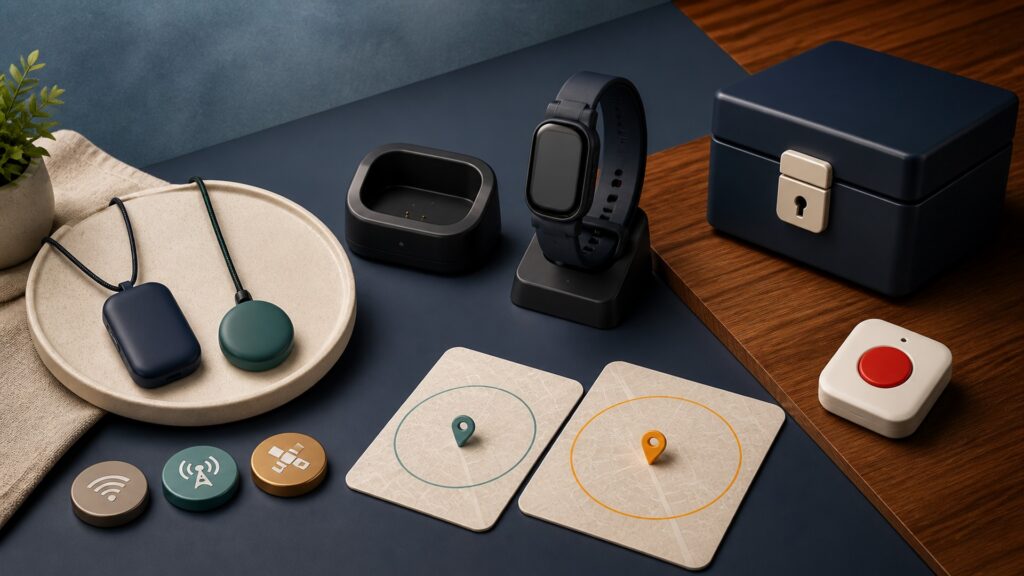
Location wearables are strongest when mobility or disappearance is central; buttons are strongest when a user recognizes distress and asks directly.
Consider an older adult who becomes disoriented during a bus transfer. A map may provide the missing clue even without a deliberate press. During chest discomfort at home, an accessible button and voice connection can communicate urgency more clearly than passive location points.
- Describe the feared event precisely
- Ask whether activation remains possible
- Determine whether address is likely known
- Include communication ability
Choose from the failure scenario, not from feature count.
Compare what reaches the recipient
A coordinate and a distress call answer different first questions.
The tracker’s viewer initially learns where its hardware appears to be. A button service learns that its user requested help and may open voice communication. Neither message alone confirms diagnosis, injury severity, or whether the device stayed with the intended person.
- Read position age on map alerts
- Confirm the press creates a clear incident
- Test voice at wearing distance
- Avoid adding meaning the signal lacks
Responders need to know exactly what the alert establishes.
Match controls to the user’s likely capacity
The best interface is usable during the event, not merely during calm setup.
Arthritis can make a small press difficult; cognitive changes can make a button’s purpose hard to remember. Conversely, a person may object to routine tracking while welcoming a voluntary call button. Include dexterity, comprehension, consent, and wearing habits in the trial.
- Test through normal clothing
- Use the person’s dominant and weaker hand
- Discuss privacy preferences openly
- Observe spontaneous use after training
Access and autonomy belong in the safety comparison.
Exercise the silent failure modes
Both systems can look normal while their response chain is broken.
For the wearable, test stale location, nonwear, dead battery, and an unavailable family viewer. For the button, test range limits, base-station power loss, accidental activation, and failed voice contact. Verify the backup rather than writing it only on paper.
- Simulate lost connectivity safely
- Confirm low-power warnings reach someone
- Practice unavailable-recipient escalation
- Keep ordinary telephone access where possible
A planned failure drill often matters more than another sensor.
Use complementary tools only when roles stay clear
Some households reasonably need both pathways, but duplication can create confusion.
If a mobile person faces disorientation and also wants a direct emergency request, assign each device a distinct purpose. Decide which alert receives priority, who answers, how records stay current, and when recurring workload outweighs benefit.
- Write one sentence describing each tool
- Separate alert sounds and contact lists
- Coordinate charging responsibilities
- Review false alarms together
Two products help only when their responsibilities remain understandable.