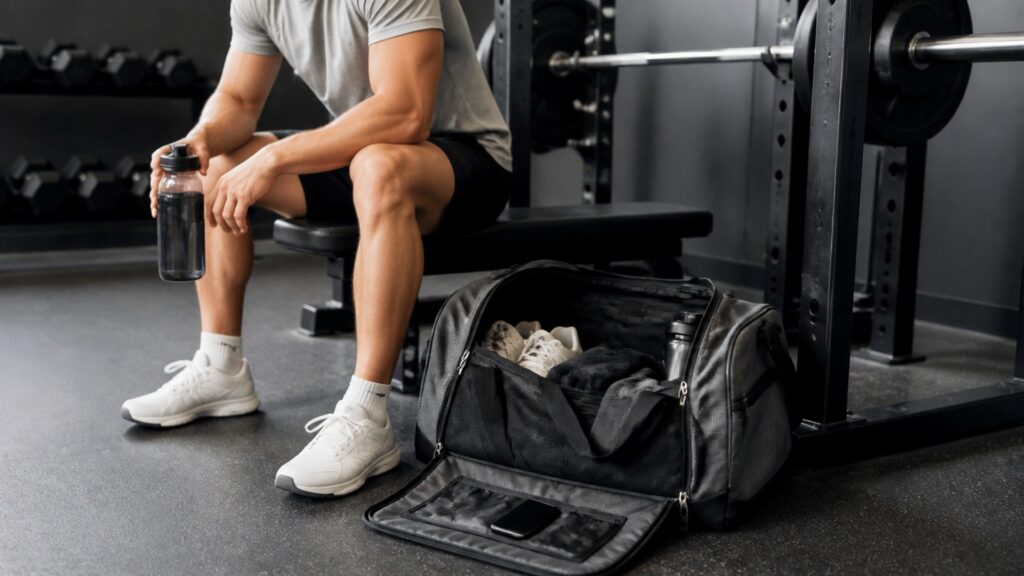
Storage Layout
Storage layout is how the bag separates shoes, clothes, bottles, electronics, and training gear.
- Example: a main compartment plus a shoe pocket and wet pocket
- Check: pack the items used most often
- Limit: too many pockets can waste space
Carry Comfort
Carry comfort is how the straps, handles, padding, and shape feel when the bag is loaded.
- Example: a shoulder strap that does not dig in during a commute
- Check: test the bag with real weight
- Limit: empty bags can feel better than packed bags
Ventilation
Ventilation helps damp shoes, towels, and clothes dry or stay separated.
- Example: a vented shoe compartment
- Check: look for airflow around wet items
- Limit: venting does not replace washing gear
Durability
Durability is how well fabric, zippers, seams, and base panels handle repeated use.
- Example: reinforced bottom fabric for locker-room floors
- Check: inspect zippers and stress points
- Limit: heavy-duty materials can add weight
Access Speed
Access speed is how quickly the user can reach common items.
- Example: a side bottle pocket or easy key pocket
- Check: find essentials without unpacking everything
- Limit: fast access can reduce security
Routine Fit
Routine fit is how well the bag matches the user's commute, locker, workout, and laundry pattern.
- Example: a compact duffel for gym and office use
- Check: compare size against the actual day
- Limit: one bag may not fit every trip