
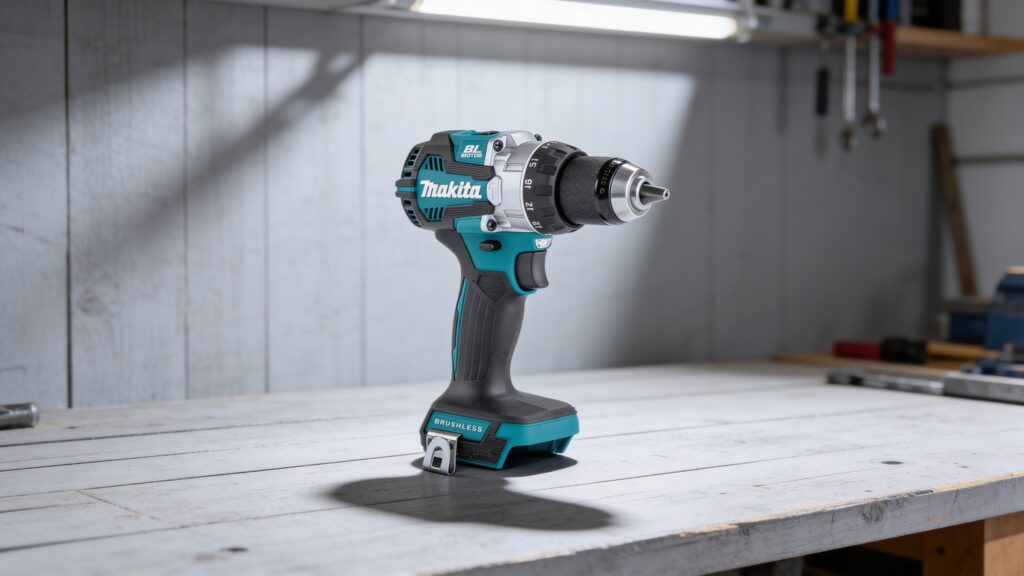
Why Hammer Drills Impact Mechanisms Matter

Hammer drill impact mechanisms are central to how these tools operate, yet the internal process is often misunderstood or oversimplified. Many assume the motion is simply a stronger form of rotation, when in reality it involves a coordinated system that converts motor energy into rapid, controlled forward strikes. This mechanical rhythm is what defines the tool’s distinctive function and structural design.

This explainer breaks down how the impact system works, from the components involved to the way motion is transferred and sustained. It clarifies the role of internal parts, how force is generated, and how timing and movement interact. By the end, readers will have a clear, practical understanding of the mechanism itself and the principles behind its operation.

By: Review Streets Research Lab
Updated: April 20, 2026
Explainer · 8–12 min read
Cordless hammer drill driving into concrete wall showing internal impact mechanism power in a professional workshop setting
What You’ll Learn

How Hammer Drill Impact Systems Work

A focused look at how internal impact components convert rotation into repeated forward strikes, clarifying how motion, timing, and force interact within the tool’s core mechanism.

  • How rotational motion is converted into rapid forward striking through internal cams
  • What synchronized movement between parts does to maintain consistent impact timing
  • How internal mass and spacing influence the frequency of repeated striking cycles
  • Why impact motion remains separate from rotation yet operates in coordination
  • How structural alignment allows repeated strikes without disrupting steady drilling motion
  • What internal wear patterns reveal about stress points inside impact mechanisms
  • How force transfer travels from motor through gears into the impact assembly

Tip: Visualize the mechanism as a timed internal tapping system layered over rotation, where repeated forward strikes are created through synchronized motion rather than added power.

Definitions

Key Parts That Make a Hammer Drill Impact System Work

Understanding the impact mechanism starts with the components that shape motion and timing, and with the common points where that process is misunderstood.

Drive Motor

The motor supplies steady rotation that the impact mechanism reconfigures into repeated forward strikes. Its speed and load response set the conditions the impact assembly works within.

  • Rotation source: Provides continuous motion for the impact cycle to draw from
  • Load response: Changes in resistance alter how smoothly the cycle stays timed
  • Heat path: Thermal buildup affects how consistently the motor can maintain motion

Transmission Path

Gears and shafts carry rotation from the motor into the impact assembly with controlled speed and leverage. This pathway stabilizes input motion so the impact cycle can repeat predictably.

  • Speed shaping: Sets the rotational rate that the impact mechanism builds upon
  • Force routing: Directs torque through aligned parts to prevent energy loss
  • Stability: Reduces irregular motion that can disrupt impact timing

Impact Driver Assembly

This is the internal unit that generates rapid forward impulses while rotation continues. It uses moving masses and contact surfaces to create repeating strike events within each cycle.

  • Impulse creation: Produces short, directed strikes rather than continuous pushing force
  • Cycle rhythm: Repeats impacts through coordinated movement between internal parts
  • Contact dynamics: Strike surfaces manage energy transfer and absorb recurring stress

Cam and Ramp Surfaces

These shaped interfaces convert rotation into a controlled rise-and-release motion inside the mechanism. Their geometry determines how motion builds, slips, and resets between strike events.

  • Motion conversion: Translates spinning input into a repeating lift-and-drop action
  • Release point: Sets when stored motion breaks free to become a strike
  • Wear pattern: Surface finish and lubrication influence long-term consistency

Rotating Chuck Interface

The chuck transmits rotation to the bit while the impact mechanism adds forward strikes behind it. Its alignment and grip help ensure motion stays centered as forces fluctuate.

  • Concentric grip: Keeps the bit centered as rotation and impacts occur together
  • Force tolerance: Manages shifting loads without letting the bit slip or chatter
  • Alignment: Reduces runout that can amplify vibration and uneven contact

Impact Rate

Impact rate describes how often the mechanism produces strike events over time. It reflects the internal timing of the cycle, not just how fast the tool is spinning.

  • Cycle timing: Each strike is tied to a repeating internal rise-and-release sequence
  • Under load: Resistance can slow the cycle and reduce how often impacts occur
  • Motion layering: Impacts ride on rotation rather than replacing rotational movement

Tip: Treat the hammer function as a timed internal oscillator layered onto rotation, where geometry and alignment control how motion becomes repeated forward impulses.

Power Path

How Rotation Is Routed Into the Impact Mechanism

The impact system does not create energy on its own; it redirects steady rotation into a timed sequence of internal movements. Tracing this path clarifies where timing is established and where losses occur.

  • Motor torque is carried through the transmission into the impact assembly
  • Internal interfaces shape rotational input into repeating rise-and-release motion
  • Stored motion is converted into brief forward impulses through controlled contact
  • Rotation continues through the spindle while impacts are added in parallel
  • Alignment keeps moving parts synchronized so the cycle resets consistently

When the pathway is stable, the mechanism can repeat strikes predictably under changing resistance.

Motors

How Motor Behavior Shapes Impact Timing

The impact mechanism depends on a steady rotational input, so motor speed and load response directly influence the rhythm of the strike cycle. Variations in rotation change how the mechanism builds and releases motion.

  • Higher rotational speed increases how quickly the internal cycle reaches release
  • Load-induced slowdowns lengthen the cycle and reduce strike frequency
  • Torque ripple can introduce irregular timing if the drive train is unstable
  • Thermal limits reduce available input motion, altering cycle consistency over time

In real use, the impact system behaves like a clock driven by rotation, not a separate source of force.

Gearing

How Gearing Sets the Conditions for the Strike Cycle

Gearing determines the speed and leverage delivered to the impact assembly, which sets the baseline for how the internal cycle repeats. This affects how smoothly the mechanism can sustain its rise, slip, and reset sequence.

  • Reduction gearing raises available torque, supporting the cycle under resistance
  • Higher gearing increases rotational rate, shortening the time between releases
  • Gear alignment affects vibration that can interfere with consistent internal contact
  • Backlash changes how abruptly motion transitions during the release phase

The impact mechanism is sensitive to what gearing delivers because its timing is built from that input.

Heat Management

How Heat Alters the Impact System’s Repeatability

Heat changes material behavior and reduces the stability of the drive conditions that the impact mechanism depends on. As temperatures rise, friction, clearances, and control limits can shift the cycle’s timing and consistency.

  • Lubrication thins or migrates, increasing friction at ramp and contact surfaces
  • Thermal expansion changes clearances, affecting how parts engage and disengage
  • Electronics may limit current, reducing rotational input that drives the cycle
  • Warmer components can amplify wear where repeated impacts concentrate stress

As the system warms, the mechanism can continue operating while its internal rhythm becomes less uniform.

User Control

How Control Inputs Influence Strike Rhythm and Contact

The impact mechanism responds to changes in rotational input, so control adjustments alter how the internal cycle builds and releases motion. Small shifts in speed can change when contact occurs and how the mechanism resets.

  • Gradual speed changes help the cycle ramp into a stable repeating pattern
  • Sudden input shifts can cause partial cycles where contact timing becomes uneven
  • Steady rotation supports consistent engagement at cam and ramp surfaces
  • Vibration and off-axis loading can disturb alignment and reduce repeatability

In practice, the impact system reflects the stability of the inputs that drive its internal timing.

Quick Reality Check

Where Impact Mechanisms Help — and Where They Don’t

A quick reality check on how the impact system behaves under load, and where limits appear as heat, friction, and control constraints accumulate.

Where the impact system helps

The impact mechanism adds repeated forward impulses while rotation continues, which can keep the bit advancing when resistance would otherwise slow steady drilling.

In dense masonry, the internal rise-and-release cycle creates short strike events that interrupt contact and reduce continuous binding at the cutting edges.

Where limits become visible

Impact behavior depends on stable rotational input, so heavy load, low battery output, or thermal limiting can slow the cycle and reduce strike consistency.

As friction rises and clearances shift with heat, the mechanism may feel harsher or less regular because contact surfaces engage and release with less uniform timing.

Common Myths

Misconceptions About Hammer Drill Impact Mechanisms

Impact mechanisms are frequently misunderstood as raw force upgrades, when they are timed motion systems with clear dependencies on alignment, load, and heat.

The hammer mode is just faster rotation

Hammer action adds a separate forward impulse cycle that runs alongside rotation. The mechanism uses internal rise-and-release motion to create short strike events, rather than simply increasing continuous rotational speed.

More impacts always means more drilling force

Impact rate describes how often strikes occur, not how much energy transfers per strike. Under load, the cycle can slow and contact conditions change, so the relationship between strike frequency and material removal is not linear.

Impacts happen at full strength every time

Each strike depends on how the internal mass builds motion before release, which varies with resistance and rotational input. When the cycle cannot build the same motion, strike events become smaller or less consistent.

Impact mechanisms replace proper bit contact

The impact cycle does not correct off-axis loading or poor alignment between tool, bit, and surface. If contact is unstable, the mechanism still strikes, but energy can dissipate into vibration and uneven engagement rather than directed forward motion.

If impacts feel weak, the mechanism failed

Changes in feel often come from input conditions that drive the cycle, such as reduced rotational speed, thermal limiting, or increased friction at contact surfaces. The mechanism may still be operating, but its timing and release behavior shift as conditions change.

Tip: Think of the hammer function as a clocked internal cycle that turns steady rotation into repeated impulses, with timing and contact quality determining how much motion becomes useful striking.

FAQ

Frequently Asked Questions About Hammer Drill Impact Mechanisms

Clear explanations addressing common questions about how impact systems generate motion, respond to load, and behave under changing thermal and mechanical conditions.

What actually creates the hammering action inside the mechanism?

The hammering effect comes from a rise-and-release cycle inside the impact assembly, where shaped surfaces build motion and then slip to create repeated forward strikes. This process runs alongside rotation, turning steady input motion into timed impulses that help break material contact.

Why do impacts feel stronger at certain drilling speeds?

Impact strength is tied to how much motion the mechanism can build before release, which depends on rotational speed and resistance. When timing aligns with load conditions, the cycle stores more motion before slipping, producing more noticeable strike events.

Does impact mode replace the need for steady rotation?

No, the impact system depends on continuous rotation to drive its internal cycle. The forward strikes are layered onto spinning motion, and without stable rotational input, the mechanism cannot build or release motion consistently.

Why can the hammer action feel less consistent under heavy load?

Heavy resistance slows rotational input, which lengthens the rise-and-release cycle and reduces how much motion is stored before each strike. As timing shifts, the impacts may feel less frequent or less pronounced even though the mechanism is still operating.

What causes the impact mechanism to sound harsher over time?

Repeated contact between moving parts gradually changes surface finish, lubrication distribution, and internal clearances. These small changes can alter how parts engage and release, which affects the sound and feel of the strike cycle.

Why does heat affect how the hammer mechanism behaves?

Heat changes friction, material expansion, and lubrication performance, all of which influence how smoothly parts move through the rise-and-release cycle. As temperatures increase, timing can shift slightly and internal contact may feel less uniform.

Can impact motion continue even when rotation slows down?

The mechanism relies on rotation to build motion, so when rotational speed drops, the cycle slows as well. Impacts may still occur, but they happen less frequently because the system has less motion available to store and release.

Why do vibrations change when drilling different materials?

Different materials create different resistance patterns, which affect how the internal cycle builds and releases motion. Variations in contact and load can shift the rhythm of the strikes, changing how vibration is transmitted through the tool body.

Tip: When impact behavior changes, think in terms of timing and input conditions, since rotational speed, resistance, heat, and alignment all shape how the internal cycle builds and releases motion.

Bottom Line

Impact mechanisms convert rotation into timed forward impulses through internal release cycles. Their behavior follows input speed, load, friction, and alignment, which together determine how consistently the strike rhythm forms and resets.

With this mechanism-level model, changes in sound, vibration, and progress read as timing shifts and contact conditions rather than vague notions of “more power.”

Next Steps

Go Deeper or Compare Your Options

Now that you understand why hammer drill impact mechanisms matter, these pages show where to go next for broader context, practical distinctions, and tool selection guidance.

Hammer Drill Roundups

A broader survey of hammer drill options that helps you see how different tool designs, feature sets, and intended uses fit different kinds of work.

Hammer Drill Comparisons

A focused look at how two tools differ in impact behavior, drilling control, size, and job fit, making real-world differences easier to understand.

Hammer Drill Buying Guides

A practical guide to the features, drilling demands, and project considerations that matter most when choosing a hammer drill for your needs.

Quick Summary

Hammer Drill Impact Mechanisms Explained

  • Impact mechanisms convert rotation into timed forward impulses through internal release cycles
  • Strike frequency depends on rotational input speed, resistance, and mechanical alignment conditions
  • Gearing and transmission shape how motion reaches the impact assembly consistently
  • Heat and friction alter clearances, affecting timing, sound, and strike consistency
  • Impact action layers forward impulses onto rotation rather than replacing rotational motion