
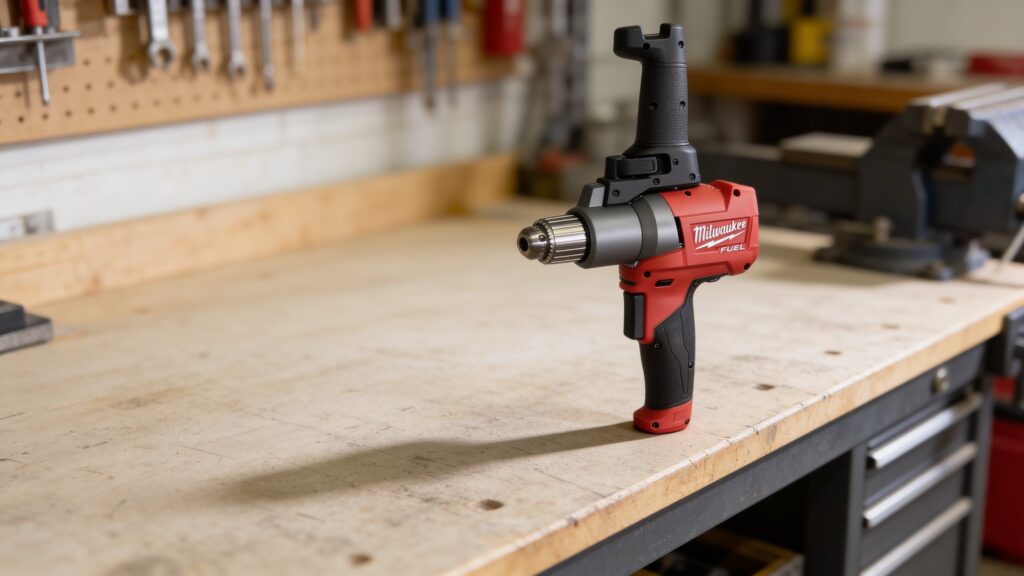
Why High-Torque Mixing Drills Matters

High torque in mixing drills is often reduced to a simple measure of power, yet it represents a specific mechanical function within the tool’s drive system. Torque determines the rotational force applied to dense materials such as mortar, concrete, or heavy compounds. Misunderstandings arise when torque is confused with speed alone, overlooking how gear reduction, motor design, and load resistance interact during demanding mixing applications.

This explainer outlines how high torque is generated, how it differs from high rotational speed, and how internal components manage resistance under load. By the end, readers will understand the mechanical principles that define torque performance and why it plays a critical role in controlled, sustained material mixing.

By: Review Streets Research Lab
Updated: April 19, 2026
Explainer · 8–12 min read
High-torque mixing drill blending thick mortar in a construction bucket on a job site
What You’ll Learn

How High-Torque Mixing Drills Function Under Load

A focused explanation of how rotational force is generated, transferred, and sustained when dense materials resist movement inside a mixing system.

  • How motor output is converted into sustained rotational force
  • Why gear reduction increases torque while reducing rotational speed
  • How resistance from dense materials affects current draw
  • What causes stalling when torque exceeds mechanical capacity
  • How internal components manage heat during extended mixing loads
  • Why trigger modulation influences torque delivery under resistance
  • How torque differs from speed in practical mixing dynamics

Tip: Torque is rotational force over time, governed by motor strength, gearing ratios, and load resistance working together.

Definitions

Key Parts That Shape High-Torque Mixing Performance

Understanding torque-driven mixing starts with the core components that generate rotation, manage resistance, and transmit force through the tool without losing control.

Power Supply

The energy source that feeds the motor and determines how much current can be delivered when thick material load increases. Output stability matters under sustained resistance.

  • Current capacity: Supports torque when load spikes during dense mixing
  • Voltage stability: Affects how consistently the motor can maintain rotation
  • Heat rise: Limits sustained output as internal resistance increases

Electronic Control

The control circuit that translates trigger input into regulated power flow, shaping how torque is applied as resistance changes. It also constrains current to protect components.

  • Modulation: Adjusts power delivery to match changing mixing resistance
  • Current limiting: Caps draw to prevent damaging overcurrent conditions
  • Thermal logic: Reduces output when temperatures approach safe thresholds

Motor Assembly

The motor converts electrical energy into rotation, and its design determines how effectively it produces torque at lower speeds. Heat and magnetic efficiency govern sustained load handling.

  • Torque curve: Describes how force output changes across speed range
  • Efficiency: Higher efficiency reduces waste heat under heavy resistance
  • Cooling path: Moves heat away from windings during prolonged mixing

Gear Reduction

The gearing that trades rotational speed for higher twisting force at the output shaft. Reduction ratios determine how much mechanical advantage is available when material drag increases.

  • Ratio: Sets the speed-to-torque tradeoff delivered to the output
  • Load sharing: Spreads stress across gear teeth under sustained resistance
  • Mechanical losses: Friction and alignment affect usable torque transmission

Output Coupling

The interface that transfers rotation from the tool to the mixing paddle or shaft. Grip integrity and alignment affect how cleanly torque reaches the material under load.

  • Clamping force: Prevents shaft slip when torque rises during thick mixing
  • Runout: Off-center rotation increases vibration and uneven material movement
  • Contact condition: Wear and debris reduce friction and holding stability

High Torque

Rotational force available at the output when resistance is high and speed is reduced. In mixing, torque is the capacity to keep turning as material viscosity and drag increase.

  • Peak output: Short-duration force during startup or sudden resistance changes
  • Sustained output: Continuous force limited by heat, current, and gearing
  • Load response: How torque delivery behaves as resistance varies mid-mix

Tip: Treat torque as a system output shaped by power delivery, motor behavior, gear reduction, and how efficiently the output coupling transmits force.

Power Path

How Torque Is Generated and Delivered to the Mixing Paddle

High-torque mixing depends on a continuous chain that converts electrical input into controlled rotational force at low speed. Each stage shapes how the system responds as material resistance rises.

  • The power source supplies current that increases as load and drag increase
  • The controller meters current to match trigger input and resistance changes
  • The motor produces rotational energy with a torque curve shaped by design
  • Gear reduction converts motor speed into higher output twisting force
  • The output coupling transfers torque to the shaft without slip or wobble

Real mixing behavior reflects the weakest link in the chain once resistance becomes dominant.

Motors

How Motor Design Shapes Torque Under Continuous Resistance

In mixing, the motor is asked to produce force at relatively low rotational speeds while resisting stall conditions. Windings, magnets, and control strategy determine how smoothly torque remains available as load fluctuates.

  • Motor torque curve defines how force output changes as speed drops
  • Electrical efficiency sets how much input becomes rotation versus waste heat
  • Thermal capacity limits sustained torque as winding temperatures rise
  • Control resolution influences how steadily torque responds to changing viscosity

When the motor approaches its limits, torque delivery becomes less stable and more heat-limited.

Gearing

How Gear Reduction Converts Speed Into Mixing Force

Gear reduction is the mechanical lever that makes high torque possible by trading rotational speed for output force. The ratio and gear train integrity govern how much of the motor’s work reaches the load.

  • Higher reduction increases output torque while lowering paddle speed
  • Gear tooth contact and alignment affect smoothness under heavy resistance
  • Internal friction and lubrication losses reduce usable torque at the output
  • Shock loads from thick material can stress gears during start and restart

The gearbox determines whether torque arrives as steady rotation or as uneven surges under load.

Heat Management

Why High-Torque Mixing Is Often Limited by Temperature

Dense mixing raises current demand, and higher current produces heat across the power source, electronics, and motor windings. As temperatures climb, the system typically reduces output to protect components and maintain stability.

  • Power sources heat as internal resistance increases under high current draw
  • Controllers generate heat while switching and limiting current to the motor
  • Motor windings heat quickly when torque demand keeps speed low
  • Reduced airflow at lower speeds slows heat removal during sustained mixing

Temperature control is the practical boundary that separates brief force peaks from continuous torque.

User Control

How Control Inputs Shape Torque Application in the Mix

Mixing torque is not only generated but also applied through the control interface as resistance changes in real time. The relationship between trigger modulation, inertia, and load determines whether rotation stays predictable.

  • Smoother trigger modulation produces steadier current changes under rising resistance
  • Controlled ramp-up reduces sudden torque spikes during initial material engagement
  • Tool balance affects how reaction forces translate into wrist and arm movement
  • Vibration from off-center rotation disrupts control and changes load behavior

Stable control keeps torque delivery aligned with the material’s changing resistance profile.

Quick Reality Check

Where High-Torque Mixing Holds Up — and Where It Fades

A quick balance of how torque-driven mixing behaves under resistance, and why real limits usually come from heat, power delivery, and control.

Where Torque Helps Most

High torque supports steady rotation when viscosity and drag rise, because gear reduction and motor output keep twisting force available at lower speeds.

In thick mortar or heavy compound, the system can maintain paddle movement as resistance changes, provided current supply and drivetrain efficiency remain stable.

Where Limits Appear First

Torque delivery can taper during extended mixing as batteries, electronics, and windings heat up, forcing current limits that reduce available force.

When material binds or the paddle is overloaded, the tool may stall abruptly because the required torque exceeds what the motor, gearing, and coupling can transmit.

Common Myths

Misconceptions About High-Torque Mixing Drill Behavior

Torque-heavy mixing is often judged by simple numbers or feel, but real behavior is set by gearing, current limits, heat, and load resistance.

Torque is the same as mixing speed

Torque describes twisting force, while speed describes how fast rotation occurs. Gear reduction can increase torque while lowering speed, which is why a slower rotation can still push through dense material resistance.

High torque guarantees no stalling

Stalling occurs when required torque exceeds what the motor, gearing, and controller can supply at that moment. Binding material, sudden viscosity changes, or current limiting can interrupt rotation even in torque-focused systems.

Peak torque explains real mixing performance

Peak torque is a brief capability during short events like startup or momentary resistance. Sustained mixing is limited by heat buildup and current delivery, so continuous torque under load is often the more informative behavior.

More current always means more usable torque

More current can increase motor output, but only within what electronics and windings can safely handle. As temperature rises, systems often cap current to protect components, reducing torque even when resistance remains high.

Mixing resistance stays consistent through the batch

Resistance shifts as dry pockets hydrate, aggregates move, and viscosity changes during blending. The load can spike unpredictably, so torque delivery becomes a dynamic interaction between material behavior, gearing, and control response.

Tip: Think of torque as a managed output created by motor behavior, gear reduction, and thermal current limits reacting to a changing mixing load.

FAQ

Frequently Asked Questions About High-Torque Mixing Drill Mechanics

Clear answers to common questions about how torque is produced, managed, and limited when dense materials create sustained resistance during mixing.

What actually determines how “strong” a mixing drill feels under load?

It is a chain: available current from the power source, controller limits, the motor’s torque curve at low speed, gear reduction ratio, and how quickly heat builds in windings and electronics. The feel comes from how smoothly that system maintains rotation as resistance rises.

Does higher RPM mean a drill can handle thicker materials?

Not necessarily. Thick materials primarily demand torque, which is often produced by running at lower speeds with gear reduction and higher current. Higher RPM can increase shear rate, but without sufficient torque the system may slow sharply when viscosity and drag increase.

What does “high torque” mean in practical mixing terms?

High torque is the rotational force available at the output shaft when resistance is significant and speed drops. In mixing, it describes the capacity to keep turning as the paddle pushes through dense material, governed by motor output, gearing, and the current the controller allows.

Why does a mixing drill slow down or shut off mid-mix?

Slowdown usually reflects current limiting or thermal protection as internal temperature rises. Shutoff can occur when load spikes exceed safe thresholds for the controller, power source, or motor windings. These protections keep components within operating limits when resistance becomes too high.

When does low speed matter more than high speed?

Low speed matters when resistance is high and the system needs mechanical advantage to maintain rotation. High speed matters when resistance is moderate and the goal is faster circulation. When the load increases, effective torque usually comes from reduction rather than raw RPM.

What role does the controller play in torque delivery?

The controller regulates how much current reaches the motor and how smoothly it changes with trigger input. It shapes torque response as viscosity changes, and it enforces limits to prevent overcurrent and overheating. Under heavy mixing, controller behavior can determine whether output stays steady or pulses.

Why does the paddle sometimes wobble or feel unstable?

Instability usually comes from runout, uneven clamping, or a bent shaft that creates off-center rotation. That eccentric motion increases vibration and can change the load as the paddle sweeps through the material. The result is a mix of mechanical shake and fluctuating resistance at the motor.

What matters more for torque: the power source or the drivetrain?

Both set the ceiling, but they limit torque in different ways. The power source and controller limit current, which caps motor output, while the drivetrain determines how effectively that output becomes torque at the shaft. If either side constrains the system, sustained torque under load will drop.

Tip: When mixing output changes, trace it through the chain: load resistance, torque demand, current limits, heat buildup, and how gearing converts motor output at low speed.

Bottom Line

High-torque mixing is a system of force, gearing, and heat limits. Motor output, gear reduction, current delivery, and thermal constraints together determine whether rotational force remains steady as material resistance increases.

Understanding this chain clarifies why mixing behavior changes under load and why sustained torque depends on how efficiently the entire system manages resistance and temperature.

Next Steps

Go Deeper or Compare Your Options

If you want to keep building on the basics, these are the clearest places to go next for broader context, product distinctions, and decision guidance.

High-Torque Mixing Drill Lists

A focused roundup page for exploring high-torque mixing drills by application, handling style, and overall fit for heavier mixing tasks.

Quick Summary

Why High-Torque Mixing Matters

  • Torque is rotational force sustained against rising material resistance
  • Gear reduction converts motor speed into usable mixing force
  • Current delivery and heat limits cap sustained torque output
  • Load changes dynamically as viscosity shifts during blending
  • System stability depends on motor, gearing, and control integration