
Stable Fit
Stable fit means the pack stays close without bouncing, rubbing, or restricting breathing.
- Example: a vest-style pack that stays still on a downhill run
- Check: test it loaded and moving
- Limit: too-tight straps can create pressure
Safety factors matter in hydration packs because the pack sits on the body while the user moves, sweats, drinks, and sometimes travels through heat, traffic, trails, or low-light conditions. The concern is not only whether the pack holds water, but whether it stays stable, clean, reachable, and appropriate for the session.
A safer hydration pack setup reduces rubbing, leaking, distraction, overheating, and poor fluid planning. It also makes cleaning and refill decisions easier before small problems turn into avoidable training interruptions.
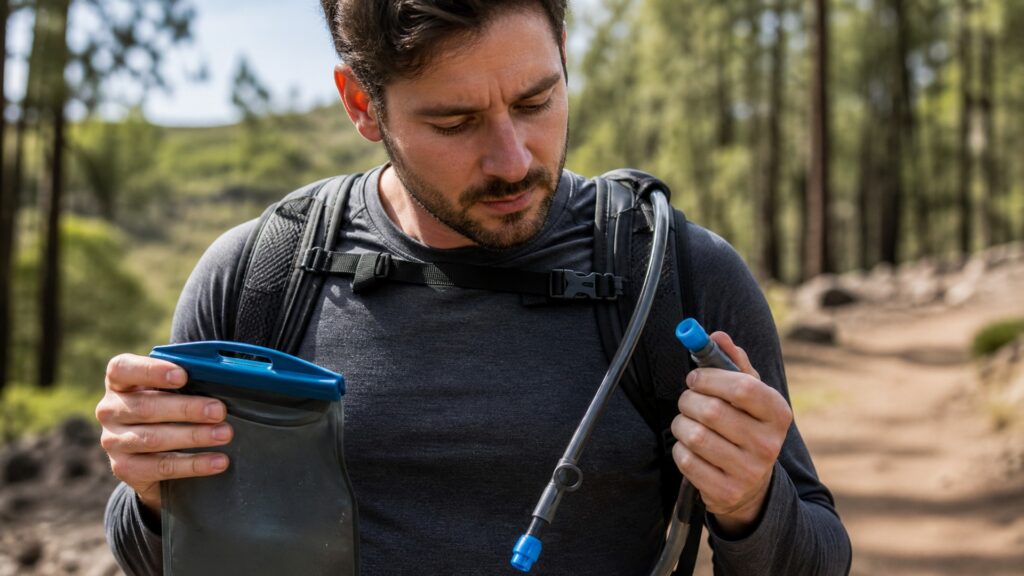
A practical look at fit, water access, heat, cleaning, visibility, and route planning.
Tip: Judge the gear by the problem it solves during the workout, not by the size of the feature list.
These concepts keep the decision tied to real training conditions, comfort, and setup.
Stable fit means the pack stays close without bouncing, rubbing, or restricting breathing.
Drink access is how easily the user can sip without stopping or looking down for long.
Heat load is the extra warmth created by wearing water and fabric on the back.
A clean water path means the reservoir, hose, and valve are rinsed, dried, and safe to drink from.
Load planning is choosing enough water and gear without carrying unnecessary weight.
Visibility is how easily the user can be seen during outdoor movement.
Tip: The right hydration setup is the one that stays comfortable, accessible, and clean enough to use repeatedly.
Bounce and rubbing can pull attention away from the workout. A hydration pack should stay close enough to move with the body while still allowing normal breathing and arm swing.
Stable carry reduces distraction and skin irritation.
The hose and bite valve should make drinking simple. If the user has to twist, look down, or fight with a loose tube, the pack can become distracting during movement.
Easy access supports safer pacing and better attention.
A full reservoir adds weight and warmth. In hot conditions, the user needs enough fluid without carrying so much that the pack feels heavy, hot, or unstable.
The safest capacity is enough water without unnecessary load.
Reservoirs, hoses, and valves can hold moisture after training. Cleaning matters because taste, odor, and residue can make the pack unpleasant or questionable to use.
A clean pack is easier to trust and use again.
Outdoor sessions can add traffic, trail conditions, weather, and low light. The pack should support the route rather than create extra distraction or hidden weight.
Safety depends on the pack, the route, and the plan working together.
Safety-focused selection reduces preventable problems but does not replace good judgment.
They reduce bounce, rubbing, leaking, and poor access.
They support better planning for heat, water, and route conditions.
They cannot guarantee comfort for every body or weather condition.
They do not replace hydration planning or route awareness.
A pack can be simple and still need safety checks.
Fit, hose access, cleaning, heat, and visibility also matter.
Extra water can add heat and fatigue when it is not needed.
Overtightening can restrict breathing or cause pressure points.
Cleaning also affects residue, odor, and confidence in the water path.
Tip: A hydration pack is useful only when it makes drinking easier without creating new friction.
Short answers for practical training and gear decisions.
Stable loaded fit usually matters most because it affects comfort, attention, and movement.
They can add warmth on the back, especially when full or used in hot weather.
Rinse after use, clean more thoroughly after drink mixes, and dry it fully before storage.
They help for road, dawn, dusk, or low-light use, but lights may still be needed.
Choose a pack that carries enough water, stays stable, remains clean, and fits the route.
Safety factors matter because a hydration pack affects movement, drinking access, heat, cleaning, and route awareness during training.
The best setup keeps water reachable without creating bounce, rubbing, avoidable weight, or hygiene problems.
Use these Review Streets paths to compare related categories and practical next decisions.
Explore the hydration pack category.
Review the core parts before checking safety.
See how motion changes fit and comfort.
Choose a retailer
Prices checked regularly. We may earn a commission at no cost to you.