
Workout Role
Workout role is the job the pack performs during the session.
- Example: carrying water for a long trail run
- Check: name the job before choosing capacity
- Limit: a pack can be unnecessary when the role is unclear
Workout role matters in hydration packs because the pack should match what the session asks from the user. A short indoor workout, a long trail run, a hot-weather hike, and an outdoor ride all create different hydration and carry needs.
A hydration pack is most useful when it solves a specific role: keeping water reachable, carrying fuel, holding small essentials, or reducing stops. Without that role, it can become extra weight and extra cleaning.
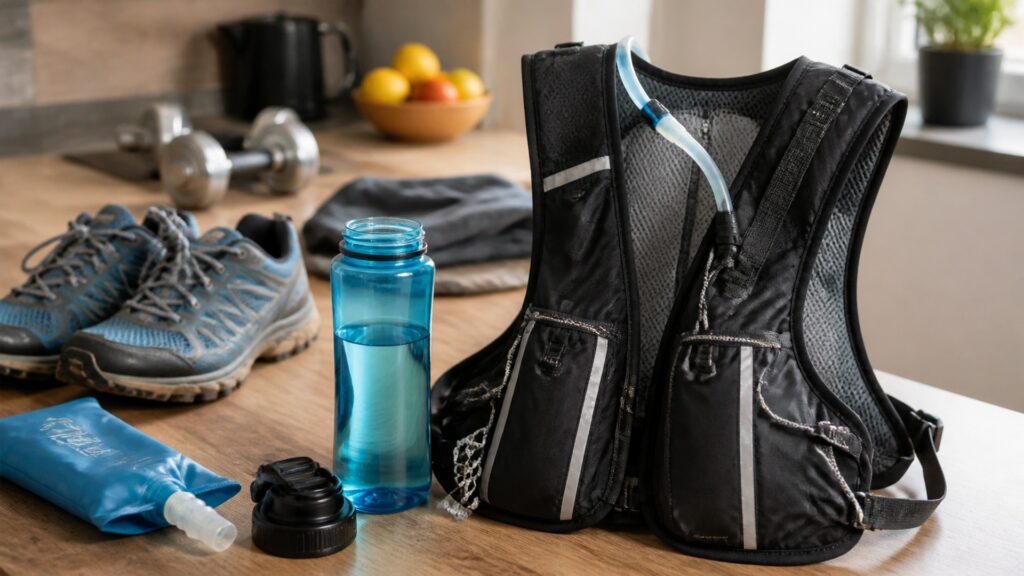
A practical way to decide whether the pack is for water access, fuel carry, route support, or longer outdoor time.
Tip: Judge the gear by the problem it solves during the workout, not by the size of the feature list.
These concepts keep the decision tied to real training conditions, comfort, and setup.
Workout role is the job the pack performs during the session.
Water access is the ability to drink when the body needs it without disrupting the session.
Fuel carry is storage for gels, snacks, electrolytes, or small nutrition items.
Route support is carrying essentials for distance, weather, or limited refill access.
Session length is how long the user expects to be away from easy water access.
Simplicity means using the lowest-friction hydration option that works.
Tip: The right hydration setup is the one that stays comfortable, accessible, and clean enough to use repeatedly.
The best hydration pack choice starts with the session. If the user only needs a few sips near a treadmill, a pack may be excessive. If the user is away from refill points, the pack has a clear role.
The role keeps the purchase practical.
Running, hiking, riding, and outdoor conditioning can make water access inconvenient. A pack helps when the session would otherwise require awkward stops or under-carrying fluids.
Duration and route conditions make the pack more useful.
A hydration pack can be more gear than the workout needs. For short gym sessions, indoor cardio, or easy refill access, a bottle is often cleaner and simpler.
Simplicity is part of good equipment choice.
Storage can be useful for phone, keys, snacks, layers, or tools. It becomes a problem when it encourages carrying items that do not support the workout.
Storage should support the role, not expand it without reason.
A pack that solves a real workout problem is more likely to be cleaned, refilled, and reused. A pack with no clear role becomes one more item to manage.
A clear role turns the pack from clutter into useful gear.
Role-based selection keeps hydration gear tied to real sessions.
It shows whether the pack should carry water, fuel, essentials, or all three.
It prevents overbuying capacity for short or stationary workouts.
It still requires judgment about heat, effort, and refill access.
One pack may not fit every activity equally well.
A hydration pack should not be treated as automatically useful for every workout.
Many indoor or short sessions are better served by a bottle.
Extra storage helps only when the carried items are needed.
Water needs change with heat, duration, and refill access.
Comfort matters, but the pack still needs a clear purpose.
Tip: A hydration pack is useful only when it makes drinking easier without creating new friction.
Short answers for practical training and gear decisions.
Longer mobile sessions with limited water access are usually the strongest fit.
A bottle is often better for short, indoor, or stationary workouts.
No. Choose capacity after identifying activity, duration, heat, and refill access.
They matter when fuel or essentials need to be reachable during the session.
Use a hydration pack when it solves a specific workout role, not just because it can carry water.
Workout role matters because hydration packs should solve a clear session need: water access, fuel carry, essentials, or route support.
The best pack is the one that fits the activity without adding unnecessary weight, storage, or cleanup.
Use these Review Streets paths to compare related categories and practical next decisions.
Explore the hydration pack category.
Review how pack design affects the workout.
Check fit, heat, cleaning, and route factors.
Choose a retailer
Prices checked regularly. We may earn a commission at no cost to you.