Why Luxury Sedans Safety Factors Matters

Luxury sedans can offer extensive safety equipment, but price and comfort are not a safety rating. Protection depends on the specific vehicle's crash performance, correct restraint use, fitted assistance systems, condition, and the decisions made by its driver. A long equipment list is useful only when its functions and limits are understood.

The luxury setting creates some particular checks: adjustable rear comfort seats, complex controls, optional assistance packages, and powerful or very quiet propulsion can change the experience without removing risk. Evaluate the actual car and its passengers, then use its features within the manufacturer's instructions.

By: Review Streets Research Lab
Updated: October 5, 2026
Explainer · 8-12 min read
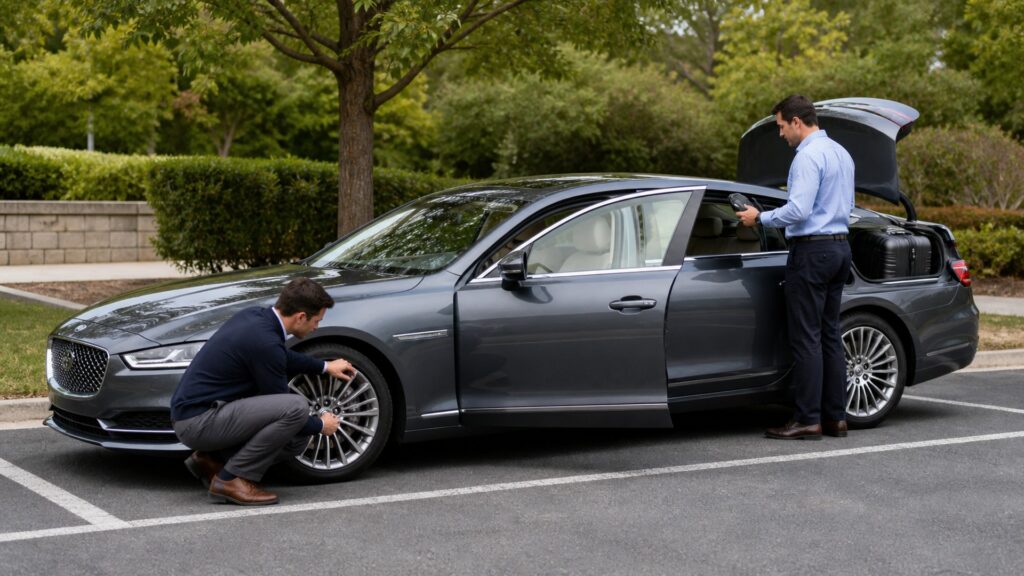
luxury sedans explainer hero image for Review Streets
What You'll Learn

Connect Safety Features to Real Use

Assess evidence, fit, operation, and condition together.

  • Check safety results for the exact model and year
  • Use seating and restraints as instructed
  • Identify the actual assistance functions and limits
  • Set up cabin controls before driving
  • Maintain the tires, brakes, visibility, and relevant sensors

Tip: A feature's name is not enough: confirm what is fitted, when it operates, and what the driver must still do.

Definitions

Six Safety Concepts Behind the Equipment List

Separate what protects occupants from what assists the driver.

Crash-test evidence

Published results describe a vehicle's performance under specified test conditions.

  • Example: checking the applicable model-year test results
  • Check: read test scope and comparison guidance
  • Limit: a rating is not a guarantee for every crash or a universal cross-class ranking

Restraint fit

Belts, seats, head restraints, and child restraints need correct positioning and use.

  • Example: adjusting a rear passenger's seating position and belt fit
  • Check: follow both vehicle and child-restraint instructions where relevant
  • Limit: a comfortable reclined position is not automatically suitable while traveling

Driver assistance

Fitted functions can warn or assist with particular driving tasks within limits.

  • Example: a lane-support function helping under its specified conditions
  • Check: identify the function, operating limits, and driver responsibilities
  • Limit: ordinary assistance is not a promise that the car can drive itself

Operating conditions

A system's capabilities depend on the environment and the conditions allowed by its design.

  • Example: a camera-based function being limited by obscured visibility
  • Check: read availability messages and the manufacturer's restrictions
  • Limit: the absence of an alert does not establish that a hazard is absent

Control workload

Operating unfamiliar displays and settings can compete with attention needed for driving.

  • Example: searching through seat or navigation menus in motion
  • Check: learn and configure frequently used functions while parked
  • Limit: a sophisticated interface does not make every interaction appropriate while moving

Vehicle condition

Tires, brakes, lights, glass, and other systems must remain fit for their intended use.

  • Example: a damaged tire or obscured sensor affecting normal operation
  • Check: follow inspections, warnings, repair procedures, and recall information
  • Limit: advanced chassis or assistance equipment cannot compensate for every defect

Tip: Consider the driver, occupants, vehicle, and environment as one safety problem rather than relying on a single feature.

Evidence

Start With the Exact Car's Results and Equipment

Look up the model and year rather than using a brand's reputation as the conclusion. Read the applicable crash-test results and the testing organization's comparison limitations. Confirm optional safety equipment on the actual vehicle; another example of the same model may have different hardware or functions. The absence of a published result should remain an evidence gap, not be treated as a favorable score.

  • Match results to the relevant model and year.
  • Read individual tests and comparison guidance.
  • Verify the fitted assistance package and its documentation.

A purchase decision becomes clearer when it distinguishes measured crash performance from equipment availability and from the owner's expectations about a premium badge.

Occupants

Make Comfort Settings Compatible With Restraints

Rear-seat comfort deserves attention beyond legroom. Adjust seats, belts, and head restraints according to the vehicle instructions, and check restrictions on reclining or other comfort positions while moving. Child restraints must fit the approved seating position and be installed according to both manuals. A large cabin or powered seat does not establish correct belt geometry or a suitable child-seat installation.

  • Use the specified traveling posture and adjustments.
  • Check child-restraint fit in the intended seat.
  • Keep luggage and loose cabin objects appropriately secured.

Set up the people who actually travel in the car. A showroom comfort demonstration is not a substitute for checking their normal restrained seating arrangement.

Assistance

Understand Which Task the System Actually Performs

A warning, an emergency intervention, and sustained steering or speed assistance are different functions. Ordinary assistance requires the driver to meet its supervision requirements, including hands-free systems that still require attention. If a vehicle has a conditional automated-driving function, use only its expressly permitted conditions and follow its activation and takeover instructions. Do not transfer assumptions from one system to another.

  • Read the specific function's manual before use.
  • Recognize availability, limitation, and takeover messages.
  • Keep cameras and sensors maintained as instructed.

Weather, visibility, roads, and other factors can limit functions. Know the required response when assistance becomes unavailable; equipment should not encourage shorter following gaps or reduced attention.

Driver attention

Prepare the Cabin Before the Journey

A luxury sedan may put many adjustments behind displays, touch controls, or configurable menus. Learn important functions and set navigation, seating, mirrors, and routine cabin preferences before moving. Quiet operation and strong acceleration can also make subjective impressions a poor guide to speed. Use the vehicle's instruments and drive for the road, traffic, and visibility rather than the cabin's sense of isolation.

  • Practice essential controls while parked.
  • Stop safely before making an involved adjustment.
  • Maintain appropriate speed and following distance.

Passenger convenience should support a calm trip. It should not turn the driver's attention toward entertainment, menus, or unfamiliar settings when the road requires it.

Condition

Keep the Physical Safety Systems Ready

Check tires and maintain the brakes, lights, wipers, and other systems according to the vehicle's requirements. Advanced suspension and all-wheel drive, when fitted, do not remove tire-grip limits. Report warnings and changes in braking or steering promptly. After relevant repairs, confirm that required checks and calibrations were performed; a camera image or cleared warning alone does not prove every function is correctly restored.

  • Use approved tire fitment and specified pressures.
  • Follow sensor-cleaning and repair guidance.
  • Check applicable recalls and arrange required work.

Safety equipment depends on the underlying vehicle being in suitable condition. Treat an unexplained operational change as information to investigate, even when the car still feels refined.

Quick Reality Check

A Useful Safety Assessment

Look for evidence that matches both the car and the way it will be used.

Stronger Evidence

Applicable crash results, verified equipment, and understood operating limits.

Correct occupant setup and documented attention to current condition.

Weak Substitutes

A premium price, quiet cabin, or long list of feature names.

Assuming an assistance system sees every hazard or removes its specified driver responsibilities.

Common Myths

Luxury Sedan Safety Misconceptions

Comfort and capability must not be confused with protection guarantees.

A more expensive sedan is automatically safer.

Use the specific car's evidence, equipment, fit, and condition instead of price alone.

Hands-free always means attention-free.

Hands-free assistance can still require active supervision; follow the actual system's instructions.

Rear comfort seats can be used in any position while traveling.

Use only positions and restraint arrangements permitted by the manufacturer.

All-wheel drive makes braking grip unlimited.

Tire-road grip remains limited; drivetrain equipment does not remove stopping constraints.

Tip: Verify the function and use it correctly rather than assigning abilities from its name.

FAQ

Luxury Sedan Safety Questions

Answers that keep equipment in context.

Where should I begin a safety comparison?

With applicable model-year crash evidence, actual fitted features, occupant fit, and current vehicle condition.

Do all luxury sedans have the same assistance features?

No. Equipment, software functions, and operating limits vary by vehicle and package.

Can I rely on a warning to identify every hazard?

No. Detection has limits, and no alert is not proof of a clear path.

What should rear passengers check?

Permitted seating posture, belt and head-restraint adjustment, and correct child-restraint installation where needed.

Why ask about calibration after repairs?

Some affected systems require specific checks or calibration under the manufacturer's repair procedures.

Bottom Line

Luxury sedan safety matters because comfort and advanced equipment help only when the actual vehicle, occupants, and driver work within their limits.

Use model-specific evidence, correct restraints, understood assistance, attentive driving, and timely maintenance together.

Next Steps

Go Deeper or Compare Your Options

Use these Review Streets paths to compare related categories and practical next decisions.

Technical references: NHTSA rating resources; NHTSA driver assistance; NHTSA child restraints; Mercedes-Benz DRIVE PILOT manuals; NHTSA tire guidance. Use the manual and ratings for your own model year and configuration.