Why Luxury Sedans Maintenance Role Matters

Maintenance helps a luxury sedan keep the qualities that make it pleasant to use: composed motion, quiet operation, responsive controls, and dependable cabin equipment. Those qualities depend on working mechanical and electrical systems. Upholstery care alone cannot preserve them, and a high purchase price does not remove normal wear.

The right plan belongs to the specific model, powertrain, and fitted equipment. A combustion sedan, a plug-in hybrid, and an electric sedan do not share every service item. Optional suspension, different front and rear tires, and elaborate seat or climate systems add further differences. Start with the vehicle's maintenance information, then connect symptoms and inspection findings to that plan.

By: Review Streets Research Lab
Updated: October 5, 2026
Explainer · 8-12 min read
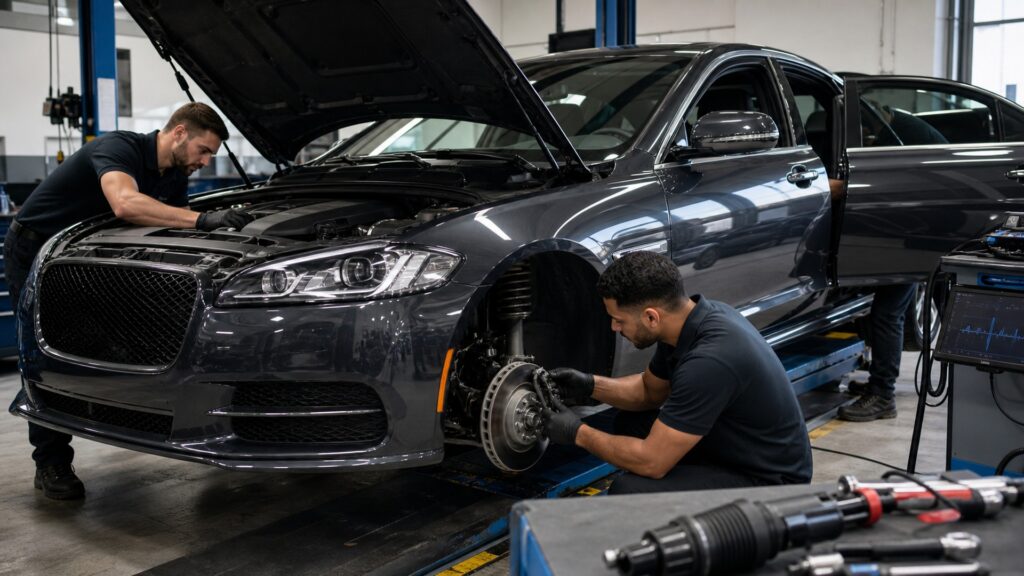
luxury sedans explainer hero image for Review Streets
What You'll Learn

Preserve the Systems Behind the Comfort

Use the actual service requirements to protect everyday operation as well as refinement.

  • Match scheduled work to the model and powertrain
  • Understand what service reminders do and do not cover
  • Inspect tires and chassis when ride quality changes
  • Include electrical and cabin equipment in fault reporting
  • Keep records that explain completed work and remaining needs

Tip: A quiet cabin can make a car feel healthy; it is not a substitute for scheduled inspection or attention to warnings.

Definitions

Six Maintenance Concepts Worth Knowing

Each concept connects a maintenance decision to a system the owner actually uses.

Service schedule

The manufacturer's plan identifies work by time, mileage, operating conditions, or specified indicators.

  • Example: a time-based fluid service becoming due despite low mileage
  • Check: use the correct model-year and powertrain information
  • Limit: a generic brand checklist may omit configuration-specific work

Condition-based reminder

Some reminders estimate or monitor selected service needs using vehicle information.

  • Example: a display indicating an approaching service requirement
  • Check: read what each displayed item represents
  • Limit: the display does not necessarily monitor every wear item or fluid condition

Fluid specification

A specified fluid must meet the requirements of the system receiving it.

  • Example: a technician selecting the correct brake fluid or engine oil specification
  • Check: check the approved specification and service procedure
  • Limit: similar color or viscosity alone does not establish compatibility

Tire configuration

Size, construction, load capability, and front-to-rear arrangement affect tire service choices.

  • Example: different front and rear sizes limiting rotation options
  • Check: compare the fitted tires with approved fitment and rotation instructions
  • Limit: one rotation pattern is not suitable for every luxury sedan

Chassis condition

Tires, steering, suspension, and related components influence how the body rides and responds.

  • Example: a new vibration or uneven tire wear prompting inspection
  • Check: record when the symptom appears and arrange diagnosis
  • Limit: an electronic suspension mode cannot repair a worn or damaged component

Service record

A useful record identifies dates, mileage, work, findings, and relevant parts or specifications.

  • Example: an invoice explaining a diagnosed fault and the completed repair
  • Check: retain the details and outstanding recommendations
  • Limit: a reminder reset alone does not prove the work was performed

Tip: Treat reminders, owner observations, and professional inspection as complementary sources of information.

Service planning

Begin With the Actual Powertrain and Schedule

Identify the car's exact model year, propulsion system, and service documentation before arranging routine work. Engine oil service belongs to an engine-equipped vehicle; an electric sedan still needs attention to other systems. Low annual mileage also does not eliminate calendar-based requirements. The useful question is which tasks apply to this car now, rather than which package has the most impressive name.

  • Read time and mileage requirements together.
  • Confirm any instructions for the actual operating conditions.
  • Ask which services apply to the fitted powertrain.

For a recently purchased used car, compare documented history with the applicable schedule and have gaps assessed instead of assuming every past task was completed.

Ride quality

Investigate Changes in Tires and Chassis

A luxury sedan's ride is produced by the whole tire and chassis combination. A new pull, vibration, unusual noise, or change in body control deserves investigation even if the cabin remains comfortable. Where adaptive dampers or air suspension are fitted, their warnings and symptoms also need the correct diagnostic process. Their presence does not make ordinary tire inspection unnecessary.

  • Use the specified cold tire pressures and loading guidance.
  • Look for damage and uneven wear; follow permitted rotation practices.
  • Describe whether the change appears at a speed, over bumps, or during braking.

Avoid compensating for a fault by changing driving modes or guessing at parts. A clear symptom description helps a qualified technician distinguish tire, wheel, alignment, and suspension causes.

Braking and fluids

Keep Essential Service Separate From Perceived Smoothness

Smooth acceleration and braking do not prove that every service item is current. Follow the vehicle's brake inspection and fluid requirements, and report altered pedal feel, warning messages, or unusual braking behavior promptly. Electrified cars may recover energy while slowing, but they still have friction brakes that require care. The maintenance plan must cover those components as well as the propulsion system.

  • Use the specified fluids and procedures.
  • Have new braking symptoms assessed rather than waiting for routine service.
  • Check the actual maintenance requirements for electrified systems.

Do not treat energy recovery as a reason to ignore brake condition, and leave high-voltage service to appropriately qualified personnel.

Electrical equipment

Report Cabin and Assistance Faults Precisely

Powered seats, climate functions, displays, cameras, and assistance features vary by equipment package. Record which feature fails and the conditions surrounding it. Electrical problems can have several causes, so a weak auxiliary battery should not be assumed to explain every fault. After glass, body, or chassis repairs, ask whether the manufacturer's procedures require checks or calibration for affected systems.

  • Record the exact warning or failed function.
  • Check the manual before disconnecting or resetting equipment.
  • Ask whether relevant repair procedures and calibrations were completed.

Repeatedly clearing a message without diagnosis can hide useful evidence. Keep the distinction between a temporary operating limitation and a persistent equipment fault clear.

Ownership records

Use History to Plan the Next Decision

Keep invoices with enough detail to show what was inspected, replaced, diagnosed, or deferred. This helps the next technician understand recurring concerns and helps the owner budget for known work. A full service visit should end with a clear explanation of completed tasks and remaining findings. Cosmetic condition and an attractive service stamp are less informative than an understandable record of the car's actual needs.

  • Retain dates, mileage, and work descriptions.
  • Separate urgent faults from routine future requirements.
  • Track recurring symptoms and the response to prior repairs.

Records support informed ownership and resale discussions, but they cannot guarantee future reliability or eliminate the need to inspect the car's current condition.

Quick Reality Check

What Useful Maintenance Accomplishes

The goal is an accurately serviced vehicle with understandable remaining needs.

A Sound Approach

The plan matches the powertrain, fitted equipment, and documented history.

Changes in ride, braking, or electrical operation receive appropriate attention.

An Incomplete Approach

Only visible surfaces receive care while scheduled work remains uncertain.

Service reminders are reset or warnings dismissed without confirming the underlying work.

Common Myths

Maintenance Misconceptions

Luxury equipment changes the service details, not the need to understand them.

A low-mileage car does not need regular service.

Some requirements depend on elapsed time; consult the actual schedule.

Electric luxury sedans have no maintenance needs.

They still require model-specific care for tires, brakes, fluids where applicable, and other systems.

Every luxury sedan should rotate tires the same way.

Sizes and tire construction can limit rotation; use the permitted procedure.

An electronic reset proves a fault is fixed.

A reset is not evidence of diagnosis or a completed repair.

Tip: Ask for work that applies to the actual vehicle and an explanation you can retain with its history.

FAQ

Luxury Sedan Maintenance Questions

Practical distinctions for planning service.

Should I wait for a warning before servicing the car?

No. Follow scheduled requirements and inspections as well as relevant indicators.

Does every luxury sedan have air suspension?

No. Confirm the fitted equipment before applying any system-specific advice.

Why keep detailed invoices?

They show what was done and help resolve gaps or recurring symptoms.

Can I use one service schedule for different powertrains?

Only where the manufacturer explicitly makes the same requirement applicable; otherwise use each vehicle's documentation.

Does good maintenance guarantee trouble-free ownership?

No. It supports condition and informed decisions, but faults and wear can still occur.

Bottom Line

Luxury sedan maintenance matters because comfort and dependable operation rely on systems that need correct, timely care.

Follow the actual schedule, investigate meaningful changes, and keep records that make the car's condition easier to understand.

Next Steps

Go Deeper or Compare Your Options

Use these Review Streets paths to compare related categories and practical next decisions.

Technical references: BMW model-year 2026 maintenance information; Mercedes-Benz service information; DOE electric-vehicle maintenance; NHTSA tires. Use the manual and ratings for your own model year and configuration.