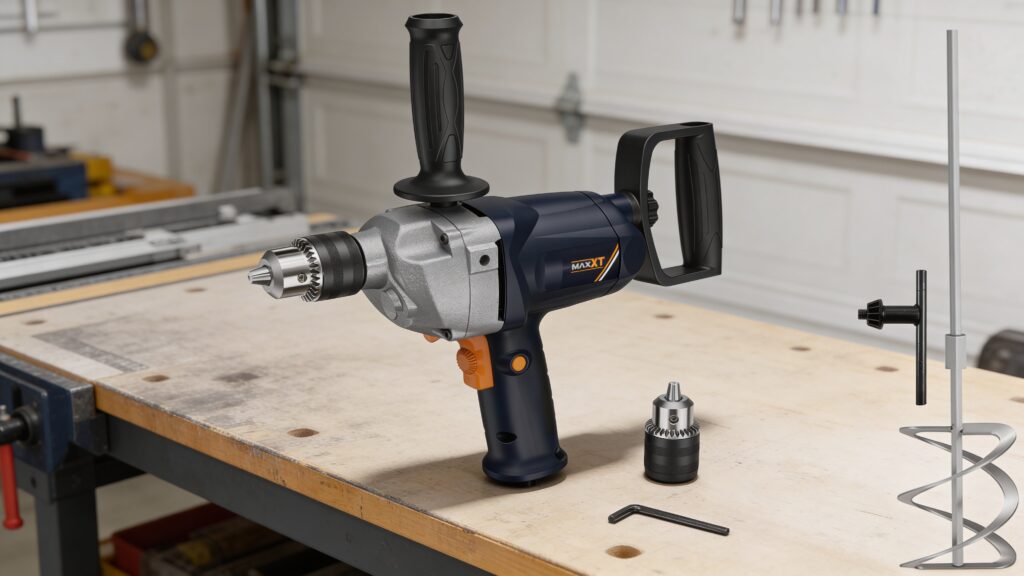
Torque is the defining mechanical force behind a mixing drill’s ability to rotate dense materials under resistance. It is often misunderstood as interchangeable with speed or wattage, yet torque refers specifically to rotational force delivered at the spindle. In mixing applications, resistance increases as materials thicken, and without sufficient torque, rotation slows or stalls regardless of motor size or advertised power ratings.
This explainer outlines how torque is generated within a mixing drill, how gearing influences force delivery, and why sustained rotational force differs from high revolutions per minute. By the end, readers will understand the mechanical relationship between motor output, gear reduction, and load resistance in mixing systems.