
Pressure Control
Pressure control is the ability to adjust how much force the roller applies.
- Example: supporting more body weight with the arms
- Check: keep pressure tolerable and adjustable
- Limit: more pressure is not automatically better
Workout role matters for muscle recovery rollers because the roller is a support tool, not the workout itself. Its job is to help with pressure, preparation, cooldown, or comfort around training.
That role affects which roller makes sense. A pre-workout mobility routine, a post-run cooldown, and a general soreness-management habit can call for different firmness, size, texture, and session length.
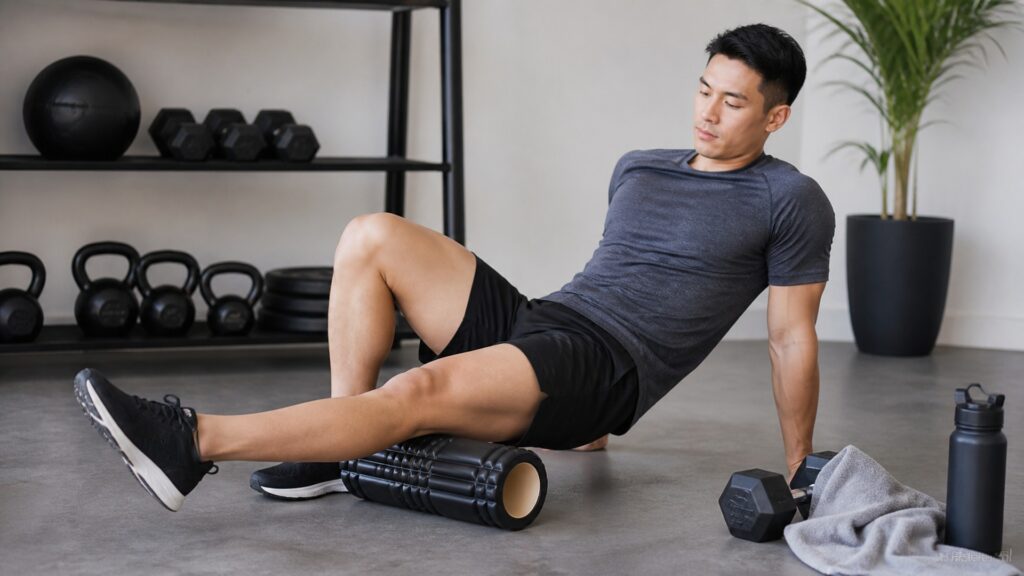
A practical look at warmup, cooldown, recovery, and routine fit.
Tip: Choose the roller for the job it will repeat most often: warmup, cooldown, travel, or targeted recovery support.
These concepts explain how rollers apply pressure and where their limits begin.
Pressure control is the ability to adjust how much force the roller applies.
Target area is the muscle group or region the user is trying to reach.
Roller density is how firm the roller feels under body weight.
Surface texture changes how pressure is distributed across the tissue.
Routine timing is when rolling fits before, after, or between workouts.
Comfort boundary is the point where useful pressure turns into guarding or sharp pain.
Tip: A roller is useful when the user can control pressure, target the right area, and still move comfortably afterward.
A recovery roller does not create strength, cardio, or skill work. It helps the user apply pressure before or after those activities.
The roller is useful when its role stays clear.
Pre-workout rolling should help an area feel ready to move, not exhaust the user or create soreness before the session begins.
Warmup use should support movement quality.
Post-workout rolling can help the user settle down and address areas that feel tight. The pressure should still be tolerable, especially after hard sessions.
Cooldown use should leave the user feeling better, not beaten up.
A roller that is too firm, bulky, awkward, or painful may not get used. Routine fit includes storage, portability, target access, and comfort.
Consistency matters more than an extreme sensation.
A clear role prevents random overuse. The user should know what area is being addressed, why it matters, and when the session is done.
Workout role turns rolling into a targeted support habit.
A clear role keeps rolling useful without overstating the tool.
It matches the roller to warmup, cooldown, or recovery support.
It keeps pressure sessions focused and repeatable.
It cannot replace training, sleep, or load management.
It does not make painful rolling automatically productive.
A roller is useful support, not a complete recovery system.
Rolling supports the routine around training but does not replace exercise.
Long sessions can add irritation without adding value.
The best roller is the one that fits the role and can be used correctly.
Warmup, cooldown, travel, and targeted recovery can require different choices.
Tip: Let the workout role determine the tool, not the other way around.
Short answers about how rollers fit before and after training.
It determines whether the roller should prioritize warmup, cooldown, target access, portability, or comfort.
Not necessarily. Use it when it helps a specific area feel more ready or comfortable.
No. It can support recovery habits, but sleep, training load, nutrition, and time still matter.
Pressure control usually matters most because it affects comfort and consistency.
Choose a roller that supports the repeated role it will actually play in your routine.
Muscle recovery roller workout role matters because the tool should support a specific moment around training.
The best roller for the job is controllable, tolerable, easy to position, and matched to warmup, cooldown, or targeted recovery support.
Use these Review Streets paths to compare related fitness categories and practical buying decisions.
Explore the recovery roller category before comparing specific tools.
Compare related recovery tools and therapy-focused fitness gear.
Review the related category or explainer before deciding.
Choose a retailer
Prices checked regularly. We may earn a commission at no cost to you.