Why Passenger Vans Maintenance Role Matters

Passenger-van maintenance keeps both the road vehicle and the occupied cabin ready for service. Tires, brakes, and fluids need attention, but so do seats, belts, doors, steps, lighting, and climate control. A van that starts normally may still have a defect that prevents it from carrying its intended passengers.

The work pattern matters too. A shuttle can accumulate hours of idling, repeated stops, and frequent door use without covering many miles. A van used only on weekends can sit long enough for age and storage conditions to matter. Maintenance should follow the exact vehicle's instructions and actual duty, with a clear process for dealing with faults between scheduled services.

By: Review Streets Research Lab
Updated: October 6, 2026
Explainer · 8-12 min read
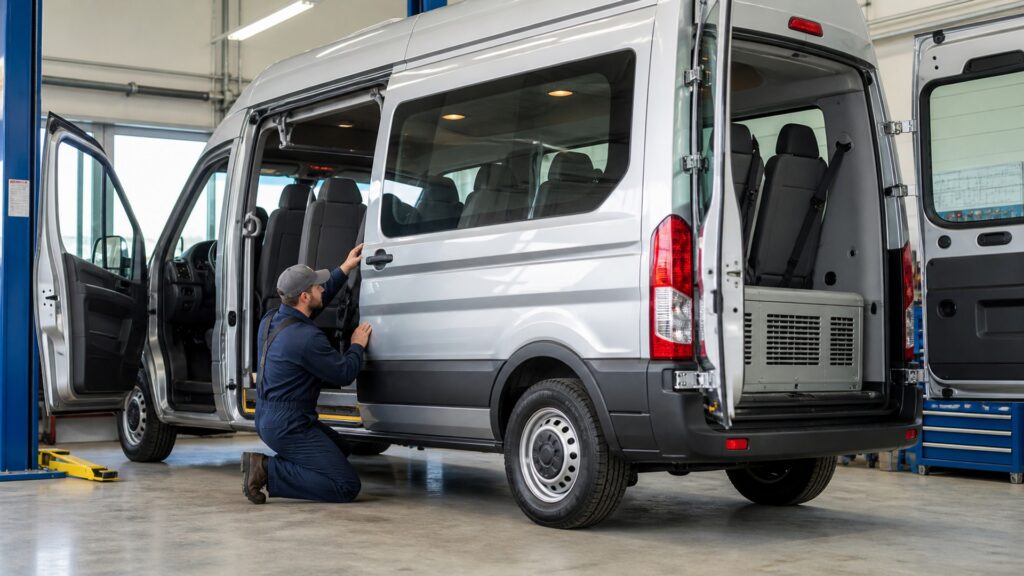
passenger vans explainer hero image for Review Streets
What You'll Learn

Keep the Vehicle and Passenger Cabin Ready

Build the maintenance plan around how the van is used and what passengers rely on.

  • Why odometer mileage is only one maintenance input
  • What tire checks add to scheduled workshop visits
  • Which passenger-cabin components need routine attention
  • How drivers should report and hand over defects
  • Why repairs need a documented return-to-service decision

Tip: Keep the chassis service schedule and any conversion-equipment instructions together.

Definitions

The Building Blocks of Passenger-Van Upkeep

Separate planned service, daily observation, and fault correction.

Preventive maintenance

Preventive maintenance is planned inspection and service intended to keep equipment in working condition.

  • Example: a scheduled brake inspection and fluid service
  • Check: the model-specific service schedule
  • Limit: planned visits do not replace attention to a fault between visits

Operating duty

Operating duty is the pattern of work that places demands on the vehicle.

  • Example: short shuttle trips with long waiting periods
  • Check: idling, stops, loads, and operating environment
  • Limit: equal mileage can represent different use

Cold tire pressure

Cold tire pressure is pressure checked before driving has warmed the tires, under the conditions described by the manufacturer.

  • Example: checking a parked van before its first trip
  • Check: the specified pressures on the vehicle placard and in its instructions
  • Limit: the tire sidewall maximum is not the vehicle's recommended setting

Passenger-cabin inspection

A passenger-cabin inspection checks the equipment occupants use to sit, enter, exit, and travel.

  • Example: checking a belt buckle and a sliding-door latch
  • Check: the condition and operation of the actual fitted equipment
  • Limit: a clean cabin can still contain a defect

Defect report

A defect report records a fault or abnormal behavior so the responsible person can assess and correct it.

  • Example: noting which rear door failed to latch and when it happened
  • Check: clear identification, symptoms, and follow-up
  • Limit: telling the next driver informally can leave the fault unresolved

Return to service

Return to service is the decision that a vehicle or affected equipment is ready for its intended use after a defect is addressed.

  • Example: recording a completed repair and the required functional check
  • Check: who approved release and what was verified
  • Limit: a repair booking does not establish that the van is ready

Tip: A schedule tells you when planned service is due; a new fault needs its own response.

Duty

Service Needs Follow the Route as Well as the Odometer

An airport shuttle may run short loops, wait with the engine on, and return to the curb repeatedly. Another van may cover the same distance in uninterrupted highway travel. Those patterns need not fall under the same maintenance provisions. Consult the exact vehicle's schedule for time, distance, operating-hour, or special-use requirements instead of borrowing an interval from a different model.

  • Record mileage and operating hours where available.
  • Identify the service provisions that match the actual use.
  • Keep calendar-based checks visible for lightly used vehicles.

Ford's special-operating-conditions guidance includes extended idling and low-speed commercial duty. It demonstrates why low mileage alone is not a reason to defer service.

Reference: Ford special-use maintenance guidance.

Tires

Tire Condition Needs Attention Between Workshop Visits

A tire can lose pressure or suffer damage after the last scheduled service. Before a trip, inspect the tires and use the pressure instructions for the exact vehicle; front and rear requirements may differ. The spare also needs attention. A tire that appears to have adequate tread can still need evaluation because of damage or age, especially on a van that spends long periods parked.

  • Use a gauge rather than judging inflation by appearance.
  • Look for visible cuts, cracking, or other damage.
  • Check the spare and follow the specified inspection and replacement guidance.

NHTSA's TireWise information explains pressure, wear, and aging considerations. Its separate 15-passenger-van guidance emphasizes checking tires before each trip for that vehicle class.

Reference: NHTSA TireWise, NHTSA 15-passenger-van guidance.

Cabin

Seats and Doors Are Working Equipment

A passenger cabin contains mechanisms used on every trip: belt buckles, seat locks where fitted, door latches, steps, and handholds. Repeated boarding can expose loose fittings or damaged surfaces. Inspect according to the vehicle and equipment instructions, and report faults by location so a technician can find them. Cleaning is useful, but it cannot confirm that a seat or restraint attachment is secure.

  • Check fitted seats and restraints for obvious damage or malfunction.
  • Look at doors, steps, handholds, and cabin lighting.
  • Include conversion equipment such as lifts in its own prescribed checks.

A faulty restraint or door needs an appropriate assessment before the affected seating or vehicle returns to passenger service.

Trip reliability

Comfort and Visibility Faults Can Disrupt the Assignment

Rear climate control, defogging, wipers, and lighting affect whether a planned trip is workable. Discovering a rear-airflow fault during a hot-weather pickup leaves little opportunity to arrange a substitute. Check the equipment the route will depend on before the group boards, and make servicing accessible: a fault hidden behind luggage or trim still needs a report and repair.

  • Test front and rear cabin functions as fitted.
  • Report warning lights and abnormal sounds or smells.
  • Plan service access and backup transport before a busy period.

A comfortable cabin cannot compensate for a mechanical fault, and a mechanically sound van may still be unsuitable for a trip if essential passenger equipment is unavailable.

Responsibility

Close the Loop from Driver Report to Repair

Suppose a driver notices a rear door that sometimes fails to latch. The useful response identifies the vehicle, door, symptom, and circumstances, then reaches the person responsible for the service decision. That person arranges assessment and determines whether the van must be held from use. After repair, the record should show what was done and what check supported release. The next driver needs the outcome, not just the original complaint.

  • Give drivers a clear route for reporting faults.
  • Record the disposition of each report.
  • Verify completion before treating a repair as closed.

This handover prevents a familiar fault from becoming an unexamined feature of the daily route.

Quick Reality Check

Scheduled Service and Between-Trip Checks

These activities answer different questions and support each other.

Planned workshop service

Covers scheduled inspection, adjustment, and replacement for the exact vehicle.

Creates a documented opportunity to address wear and upcoming service needs.

Driver observations

Can identify fresh damage, a malfunction, or a change since the last visit.

Need a reporting and response process; observation alone does not repair the defect.

Common Myths

Misconceptions About Passenger-Van Maintenance

Readiness depends on more than a recent oil change.

Low mileage means little maintenance is needed

Time, storage, idling, and operating conditions can still matter. Use the applicable schedule.

The tire-pressure warning replaces a gauge check

A warning system does not remove the need for the prescribed pressure and condition checks.

A clean passenger cabin is ready for service

Cleaning does not test seat locks, restraints, door latches, or other mechanisms.

A booked repair means the fault is handled

The service decision remains open until the required assessment, repair, and release are completed.

Tip: Keep a fault visible until its outcome is recorded and communicated.

FAQ

Questions About Maintaining Passenger Vans

Practical answers for owners, drivers, and service coordinators.

How often should a passenger van be serviced?

Use the schedule for its exact model, powertrain, and operating conditions, plus the instructions for any added equipment. There is no single interval that suits all vans.

Why does idling matter if mileage is low?

An engine can operate for substantial time while the odometer barely changes. Manufacturers may specify different service provisions for that duty.

Should rear-seat equipment be checked too?

Yes. Include the fitted seats, restraints, entry equipment, doors, and relevant cabin systems in the prescribed inspections.

Can a driver decide that an intermittent fault is harmless?

An intermittent fault still needs reporting and an appropriate assessment. Familiarity with it does not establish that it is acceptable.

What records are useful?

Keep service dates, mileage or hours where relevant, reported defects, repairs, and release checks, along with vehicle and conversion-equipment instructions.

Bottom Line

Passenger-van maintenance supports reliable transport by keeping both the road vehicle and the occupied cabin fit for their intended use.

Follow the actual duty and model-specific schedule, make faults easy to report, and verify the outcome before returning affected equipment to service.

Next Steps

Go Deeper or Compare Your Options

Use these Review Streets paths to compare related categories and practical next decisions.