
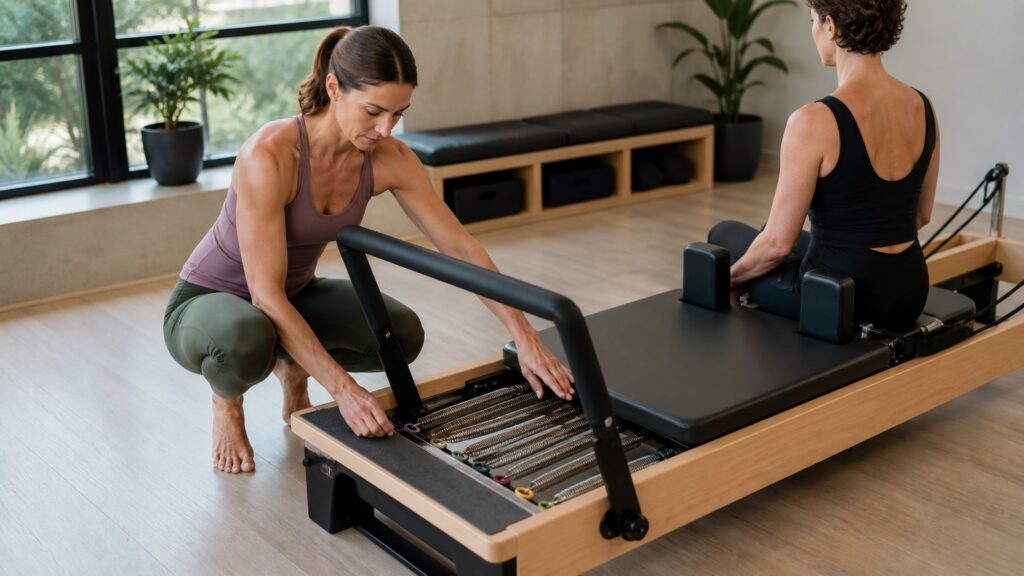
Why Pilates Equipment Safety Factors Matters

Safety factors matter in Pilates equipment because springs, straps, moving platforms, rings, blocks, and props can change load, range, and stability. The right setup can make a movement safer and clearer. The wrong setup can create strain, slipping, or loss of control.

Safe Pilates equipment use depends on matching the tool to the user's ability, checking setup, controlling range, and respecting pain or fatigue. Equipment should support movement quality, not pressure the user into positions or resistance they cannot control.

By: Review Streets Research Lab
Updated: October 5, 2026
Explainer · 8-12 min read
pilates equipment safety factors explainer hero image for Review Streets
What You'll Learn

How To Use Pilates Equipment With Better Control

A practical look at setup, resistance, range, support, supervision, and the warning signs that equipment is not helping.

  • Why setup matters before resistance or range
  • How springs, straps, and props can change risk
  • When support improves safety and when it hides poor control
  • Why pain, fatigue, and loss of form should stop the progression
  • How beginners can choose lower-risk tools
  • When professional instruction is the safer path

Tip: Use heart rate as one signal inside the workout, then confirm it with effort, pacing, recovery, and how the session actually feels.

Definitions

Key Concepts Behind Pilates Equipment Safety Factors Matters

These terms keep the heart rate data tied to practical training decisions instead of isolated numbers.

Guided Resistance

Guided resistance uses springs, bands, straps, rings, or machines to control how effort is applied.

  • Example: a reformer spring adding resistance during a leg press
  • Check: match resistance to control and range
  • Limit: too much resistance can distort form

Alignment Support

Alignment support helps the user keep joints and posture organized during movement.

  • Example: using a ring or strap to keep the movement path clean
  • Check: watch whether support improves control
  • Limit: support does not replace instruction

Core Control

Core control is the ability to stabilize the trunk while limbs move.

  • Example: keeping the pelvis steady during a reformer exercise
  • Check: reduce range when the trunk shifts
  • Limit: bracing too hard can reduce fluid movement

Range Management

Range management controls how far the body moves during an exercise.

  • Example: using a strap to keep a stretch within a comfortable range
  • Check: stay in a range the user can control
  • Limit: larger range is not always better

Progression

Progression is the planned increase in challenge as control improves.

  • Example: adding spring tension or a more demanding position
  • Check: change one variable at a time
  • Limit: rushing progression can reduce technique

Practice Fit

Practice fit is how well the equipment matches the user's routine, space, and skill level.

  • Example: using small props at home instead of a full reformer
  • Check: choose equipment the user will use consistently
  • Limit: larger equipment is not automatically more useful

Tip: Heart rate data gets more useful when the sensor signal, workout context, and training goal all line up.

Setup

The Equipment Must Be Set Up Correctly

Pilates equipment can change force and position quickly. Springs, straps, bars, and moving surfaces should be secured and adjusted before the exercise begins.

  • Check attachments before loading movement.
  • Use settings appropriate to the user's level.
  • Do not rush unfamiliar equipment.

Safe movement starts before the first rep.

Resistance

Resistance Should Stay Controllable

Too much resistance can pull the body out of alignment or cause the user to brace and compensate. Too little resistance can also reduce feedback on some equipment.

  • Choose resistance the user can move smoothly.
  • Stop when alignment breaks down.
  • Progress in small steps.

The safest resistance is the one the user can control.

Range

Range Should Fit The Body That Day

Pilates equipment can support range, but it can also encourage users to go too far. Flexibility, fatigue, soreness, and experience all affect safe range.

  • Stay out of painful range.
  • Use props to reduce strain.
  • Treat shaking or compensation as useful feedback.

Supported range still needs limits.

Instruction

Complex Equipment Benefits From Guidance

Some Pilates equipment is simple enough for careful home use. Larger or more complex systems may require instruction, especially when springs, platforms, and straps interact.

  • Learn setup before adding challenge.
  • Use professional guidance for reformers and unfamiliar apparatus.
  • Keep home routines simple when instruction is limited.

Guidance lowers the chance of using the right tool the wrong way.

Practical Check

The Tool Should Make Movement Safer Or Clearer

If the equipment makes a movement confusing, painful, unstable, or rushed, it is not serving the session. A simpler variation may be safer and more effective.

  • Choose simpler tools when needed.
  • Stop when pain or dizziness appears.
  • Prioritize repeatable control over advanced variations.

Safety and quality should rise together.

Quick Reality Check

Where Safety Factors Help And Where They Stop

Safety-aware equipment choices keep Pilates practice controlled and realistic.

Where They Help

They guide setup, resistance, range, and progression.

They help users choose simpler tools when complex gear is not needed.

Where They Fall Short

They cannot replace medical guidance after injury or illness.

They cannot make advanced equipment safe without proper setup and instruction.

Common Myths

Misconceptions About Pilates Equipment Safety

Pilates equipment can support safe movement, but it still needs judgment.

Support means there is no risk

Support can reduce strain, but poor setup or excessive range can still cause problems.

More resistance means better training

Resistance is useful only when control stays clean.

Props are always harmless

Even simple props can be misused if they force range or hide pain.

Advanced equipment is safer because it guides movement

Guidance helps only when the equipment is adjusted and used correctly.

Tip: Treat unusual readings as reasons to check the situation, not as commands to ignore your body.

FAQ

Frequently Asked Questions About Pilates Equipment Safety

Short answers for using heart rate data in real training decisions.

What should I check before using Pilates equipment?

Check setup, attachments, resistance level, surface stability, and whether the movement feels controlled.

Is Pilates equipment safe for beginners?

It can be, especially with simple tools and clear instruction. Complex apparatus may need supervision.

How do I know resistance is too high?

Resistance is too high when form changes, breathing becomes strained, or movement becomes jerky.

Should pain ever be ignored during Pilates equipment work?

No. Pain is a reason to stop, adjust, or get qualified guidance.

What is the practical takeaway?

Pilates equipment is safest when setup, resistance, range, and instruction match the user's ability.

Bottom Line

Safety factors matter because Pilates equipment can change load, range, stability, and control.

The safest setup is the one that makes movement clearer without pushing beyond the user's current ability.

Next Steps

Go Deeper or Compare Your Options

Use these Review Streets paths to compare related categories and practical next decisions.