
Elastic Tension
Elastic tension is resistance created as the band stretches.
- Example: a band row getting harder near the end of the pull
- Check: notice where tension peaks
- Limit: exact resistance is harder to measure than a fixed weight
Movement pattern matters with resistance bands because the band pulls along its line of stretch. A small change in anchor point, body angle, or stance can change which muscles work and where the exercise feels hardest.
Good band training matches the resistance path to the movement. When the path is wrong, the band can pull the user out of position or make the hardest part of the exercise happen in the wrong place.
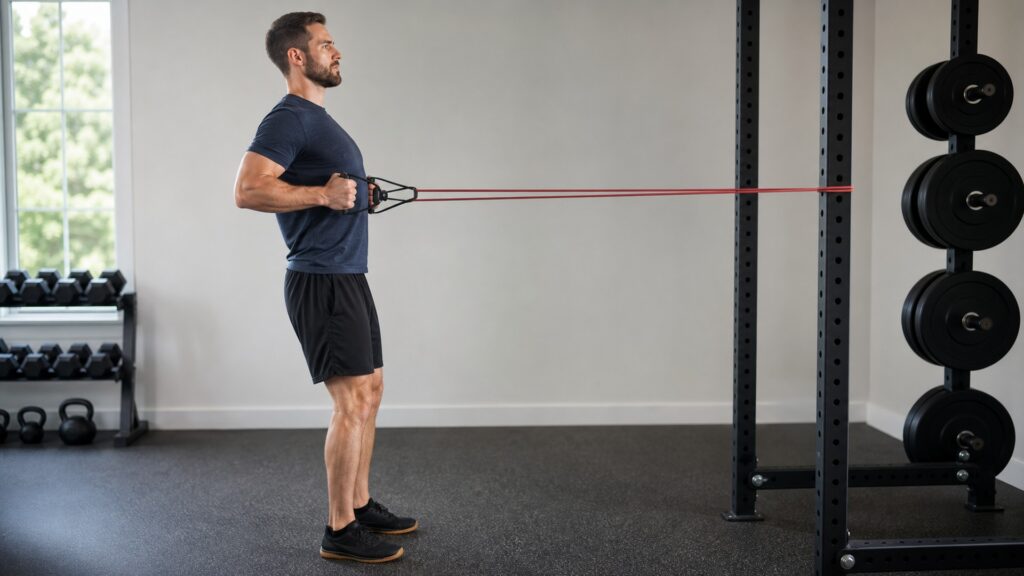
A practical guide to how resistance bands create tension, where they fit, and what to check before using them.
Tip: With bands, the movement pattern includes the anchor, the user's stance, and the line of pull.
These concepts explain how elastic tension, setup, and resistance path affect band training.
Elastic tension is resistance created as the band stretches.
Anchor point is where the band is fixed or held to create a line of pull.
Resistance curve is how difficulty changes through the range of motion.
Assistance uses band tension to reduce or guide bodyweight during a movement.
Portability is how easily equipment travels and stores.
Band wear is damage that weakens elastic material over time.
Tip: With bands, setup is part of the resistance. Anchor point, stretch length, and band condition all matter.
A band does not simply add weight. It pulls back toward its anchor or holding point, which changes the movement pattern.
The line of pull is the core movement-pattern decision.
High, low, and mid-height anchors can turn the same band into very different exercises. Rows, presses, chops, and pull-aparts all depend on placement.
Anchor height should match the pattern being trained.
Bands usually get harder as they stretch. That can be useful when the end range needs challenge, but it can also distort the pattern.
A useful pattern stays controlled through the full range.
The user's stance, distance, and torso angle all affect the band path. Moving even a small amount can change the resistance.
The body is part of the band setup.
Bands work well for many pulls, presses, rotations, assistance drills, and accessories. They are weaker when the exercise needs fixed vertical load or exact measurement.
Movement fit keeps band training useful.
Band patterns are flexible, but that flexibility has to be controlled.
They create resistance from directions that free weights cannot.
They support rows, presses, rotations, assistance, and warmup patterns.
They can pull the user out of position if setup is wrong.
They are less direct for some fixed-load strength patterns.
Band setup matters as much as the exercise name.
Anchor placement changes the movement.
Too much stretch can distort posture or range.
Bands pull along a line of tension, not straight down through gravity.
Poor setup can make the wrong muscles do the work.
Tip: Use the band path as deliberately as the exercise itself.
Short answers for practical band training and equipment decisions.
Because the band pulls along its stretch path and changes the exercise direction.
Use the anchor that lines up with the intended movement.
They can mimic some cable angles, but tension and smoothness are different.
Use the same band, anchor, stance, and range each time.
Band movement patterns work best when anchor, stance, and pull direction match the goal.
Movement pattern matters because resistance bands pull along a setup-dependent line of tension.
The best band exercises match anchor point, body position, and tension curve to the intended movement.
Use these Review Streets paths to compare related categories and practical next decisions.
Review elastic tension and band setup basics.
Explore the resistance bands category.
Compare related strength-training tools.
Choose a retailer
Prices checked regularly. We may earn a commission at no cost to you.