
Elastic Tension
Elastic tension is resistance created as the band stretches.
- Example: a band row getting harder near the end of the pull
- Check: notice where tension peaks
- Limit: exact resistance is harder to measure than a fixed weight
Safety factors matter with resistance bands because bands stretch, recoil, and depend on anchors. A band that slips, snaps, or pulls from the wrong angle can change a simple exercise quickly.
Safe band training starts with inspecting the band, choosing a secure anchor, controlling the return, and keeping the line of pull away from the face and vulnerable joints.
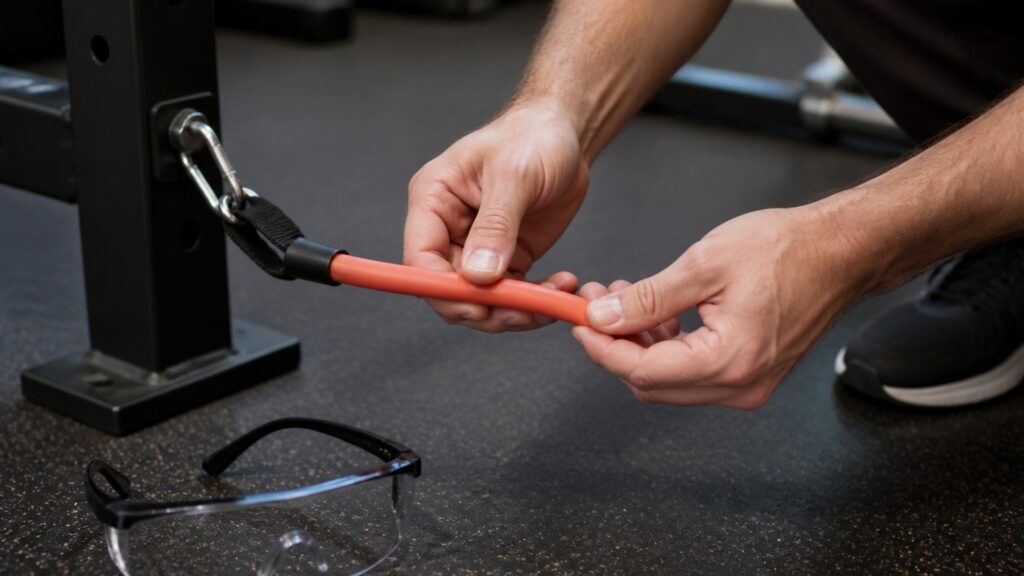
A practical guide to how resistance bands create tension, where they fit, and what to check before using them.
Tip: A resistance band is only as reliable as its material, anchor, and setup.
These concepts explain how elastic tension, setup, and resistance path affect band training.
Elastic tension is resistance created as the band stretches.
Anchor point is where the band is fixed or held to create a line of pull.
Resistance curve is how difficulty changes through the range of motion.
Assistance uses band tension to reduce or guide bodyweight during a movement.
Portability is how easily equipment travels and stores.
Band wear is damage that weakens elastic material over time.
Tip: With bands, setup is part of the resistance. Anchor point, stretch length, and band condition all matter.
Bands wear down with use, storage, sunlight, and sharp edges. Small cracks or thinning can become bigger problems under stretch.
Inspection is the first safety step.
A band anchor has to hold against the direction and amount of pull. A weak anchor can release suddenly.
Anchor security protects the whole exercise.
Bands pull back as they shorten. Letting them snap back can stress joints, hit the body, or damage the band.
The return is part of the rep.
The band should not pull across the face, neck, or unstable joints unless the setup is controlled and appropriate.
A clear path reduces avoidable risk.
More stretch creates more tension, but overstretching can change the exercise and stress the band.
Progress should not depend on reckless stretch.
Good checks make band training more reliable, but they cannot remove every risk.
They catch worn bands, weak anchors, and poor recoil control.
They keep setup consistent and predictable.
They cannot make damaged bands safe.
They cannot replace judgment when pain or unstable setup appears.
Bands look simple, but elastic tension still needs respect.
Bands can slip, snap, or pull from unsafe angles.
Anchor strength and surface matter.
Overstretching can damage the band or distort the exercise.
Visible wear is a reason to replace them.
Tip: Simple safety checks prevent most avoidable band problems.
Short answers for practical band training and equipment decisions.
Inspect the band for cracks, cuts, thinning, and weak handles or seams.
A good anchor is stable, smooth enough not to cut the band, and aligned with the pull.
Yes, especially if worn, overstretched, or used against sharp surfaces.
Control the return and stay out of the direct recoil path.
Use bands only when the material, anchor, and line of pull are secure.
Resistance band safety factors matter because bands stretch, recoil, and depend on secure setup.
Inspect the band, anchor it well, control the return, and keep the line of pull clear.
Use these Review Streets paths to compare related categories and practical next decisions.
Review elastic tension and band setup basics.
Explore the resistance bands category.
Compare related strength-training tools.
Choose a retailer
Prices checked regularly. We may earn a commission at no cost to you.