
Elastic Tension
Elastic tension is resistance created as the band stretches.
- Example: a band row getting harder near the end of the pull
- Check: notice where tension peaks
- Limit: exact resistance is harder to measure than a fixed weight
Workout role matters with resistance bands because bands can warm up, assist, strengthen, add tension, support mobility, or make travel workouts possible. Each role changes how the band should be anchored, stretched, and progressed.
A band used for pull-up assistance should not be judged the same way as a band used for rows, shoulder warmups, or resisted squats. The role decides whether the goal is support, challenge, control, or convenience.
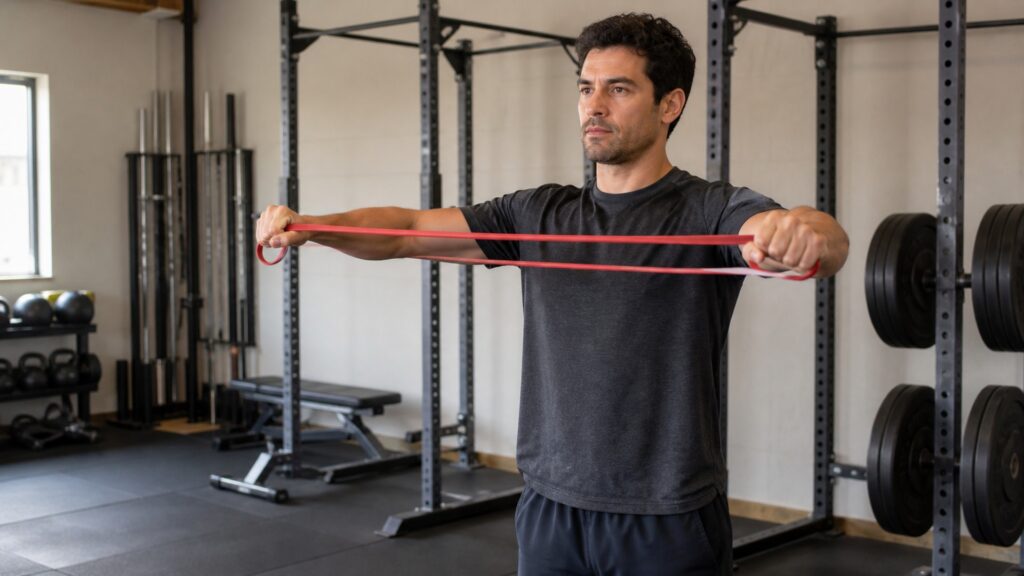
A practical guide to how resistance bands create tension, where they fit, and what to check before using them.
Tip: The same band can help or challenge the user. The role decides which one it should do.
These concepts explain how elastic tension, setup, and resistance path affect band training.
Elastic tension is resistance created as the band stretches.
Anchor point is where the band is fixed or held to create a line of pull.
Resistance curve is how difficulty changes through the range of motion.
Assistance uses band tension to reduce or guide bodyweight during a movement.
Portability is how easily equipment travels and stores.
Band wear is damage that weakens elastic material over time.
Tip: With bands, setup is part of the resistance. Anchor point, stretch length, and band condition all matter.
Light bands can prepare joints and muscles before heavier work. The goal is control and readiness, not exhaustion.
Warmup work should make the main workout better.
Bands can assist pull-ups, dips, mobility drills, and range practice. The band reduces part of the load so the user can practice the pattern.
Assistance should build toward less help over time.
Bands can make rows, presses, squats, hinges, and accessories harder when setup is consistent. They are less exact than fixed weights but still useful.
Strength work needs repeatable setup.
Bands are easy to pack and can create useful resistance without much equipment. The limitation is that anchors and exercise options vary by location.
Travel role is about useful options with minimal gear.
A band can be a warmup tool, assistance tool, strength tool, or convenience tool. The user should judge success based on that role.
Clear roles make band training easier to evaluate.
Bands become more useful when their job is clear.
They support warmups, assistance, accessories, travel workouts, and mobility work.
They add resistance without much storage or setup.
They are less precise for heavy strength tracking.
They depend on anchors, band condition, and setup consistency.
Bands are not just one-purpose accessories.
Bands can assist, warm up, and add resistance.
Assisted reps can build skill and capacity when progressed.
Bands can support useful travel sessions when planned well.
They fit many roles, but not every training goal.
Tip: Choose band work by the role it serves in the session.
Short answers for practical band training and equipment decisions.
They are especially useful for warmups, assistance, accessories, travel, and angled tension.
Yes for some goals, especially when portability and elastic tension fit the plan.
They can be, if the setup is simple and the tension is manageable.
Track tension level, anchor, reps, range, tempo, and assistance.
Resistance bands work best when their role in the workout is clear.
Resistance band workout role matters because bands can support, challenge, warm up, or simplify training depending on setup.
The best band work uses tension, anchor point, reps, and range to serve a specific role.
Use these Review Streets paths to compare related categories and practical next decisions.
Review elastic tension and band setup basics.
Explore the resistance bands category.
Compare related strength-training tools.
Choose a retailer
Prices checked regularly. We may earn a commission at no cost to you.