
Ground Contact
Ground contact is how the shoe meets the surface with each stride.
- Example: outsole grip on wet pavement
- Check: match traction to surface
- Limit: traction cannot fix every footing risk
Safety factors matter because running shoes affect contact with the ground on every stride. Fit, traction, cushioning, stability, surface match, wear, and visibility all influence whether a shoe helps the runner stay comfortable and controlled.
A safer running shoe is not just protective on paper. It should fit securely, grip the intended surface, feel stable at the runner's pace, and avoid creating rubbing, slipping, or awkward movement over distance.
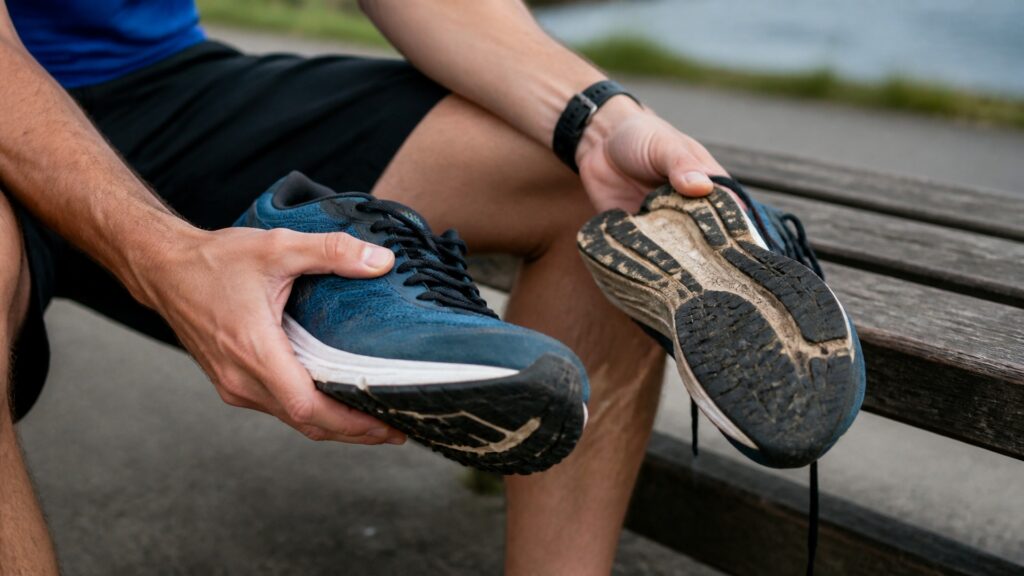
A practical look at fit, traction, wear, cushioning, stability, and surface choice.
Tip: Shoe safety starts with the surface, the fit, and the repeated stride.
These concepts explain how shoes affect control and comfort.
Ground contact is how the shoe meets the surface with each stride.
Cushioning response is how the midsole absorbs and returns force during running.
Fit security is how well the shoe holds the foot without slipping, squeezing, or rubbing.
Ride geometry is how the shoe shape guides transition from landing to toe-off.
Surface match is how well the shoe fits road, trail, track, treadmill, or mixed terrain.
Training role is the type of run the shoe is best suited to support.
Tip: A safe shoe is one the runner can control over the intended route.
Heel slip, toe pressure, squeezing, and rubbing can distract the runner and change movement. Fit problems often grow as distance, sweat, and fatigue increase.
Fit is a safety factor because discomfort changes movement.
Road, trail, treadmill, wet pavement, gravel, and track surfaces all ask different things from the outsole. A worn or mismatched outsole can reduce confidence and control.
Traction is part of route safety.
Cushioning and geometry should not make the runner feel wobbly or disconnected from the route. A shoe can be soft and still feel wrong for a person's stride.
A stable ride helps the runner stay confident.
Shoes lose outsole grip, cushioning feel, and upper security over time. The change may be gradual enough that the runner notices only after discomfort appears.
Wear matters when it changes how the shoe works.
A shoe that works on a dry road may be the wrong choice for muddy trails or icy sidewalks. Conditions should influence footwear choice before the run starts.
The route should shape the safety decision.
Running shoes reduce risk when fit, grip, and ride match the run.
They support ground contact, traction, cushioning, and repeated stride comfort.
They can improve confidence on the intended surface.
A popular shoe can still fit poorly.
A cushioned shoe can still feel unstable or grip poorly.
A safe shoe is not defined by one feature.
Cushioning helps only when it feels stable and appropriate.
Loose or wet surfaces may need more traction.
Some rubbing or pressure problems get worse, not better.
A new shoe with the wrong fit or surface match can create problems.
Tip: Safety depends on fit, surface, wear, and control working together.
Short answers about fit, traction, wear, and route choice.
Fit is usually first, because slipping, rubbing, or pressure can change the run quickly.
Match the outsole to the surface and avoid worn soles on slick or loose routes.
Yes. Some soft shoes can feel wobbly or uncontrolled for certain runners.
Replace them when grip, cushioning, fit security, or comfort noticeably changes.
Choose running shoes that fit securely, grip the route, and stay controlled through repeated miles.
Safety factors matter because running shoes affect ground contact, fit, traction, cushioning, and control with every stride.
The safest choice is the shoe that fits the runner and the route, not just the shoe with the most protective claims.
Use these Review Streets paths to compare related categories and practical next decisions.
Compare shoes with fluid-carrying gear.
Decide when footwear is the priority.
Explore related running gear categories.
Choose a retailer
Prices checked regularly. We may earn a commission at no cost to you.