
Ground Contact
Ground contact is how the shoe meets the surface with each stride.
- Example: outsole grip on wet pavement
- Check: match traction to surface
- Limit: traction cannot fix every footing risk
Training function matters because running shoes affect how each run feels, not just how the shoe looks on a shelf. Cushioning, fit, traction, stability, weight, geometry, and durability all influence whether the shoe supports easy mileage, speed work, long runs, trails, or daily training.
The best running shoe is not simply the softest, lightest, or most expensive option. It is the shoe that supports the runner's actual workouts with stable fit, appropriate ground feel, and comfort that holds up over the intended distance.
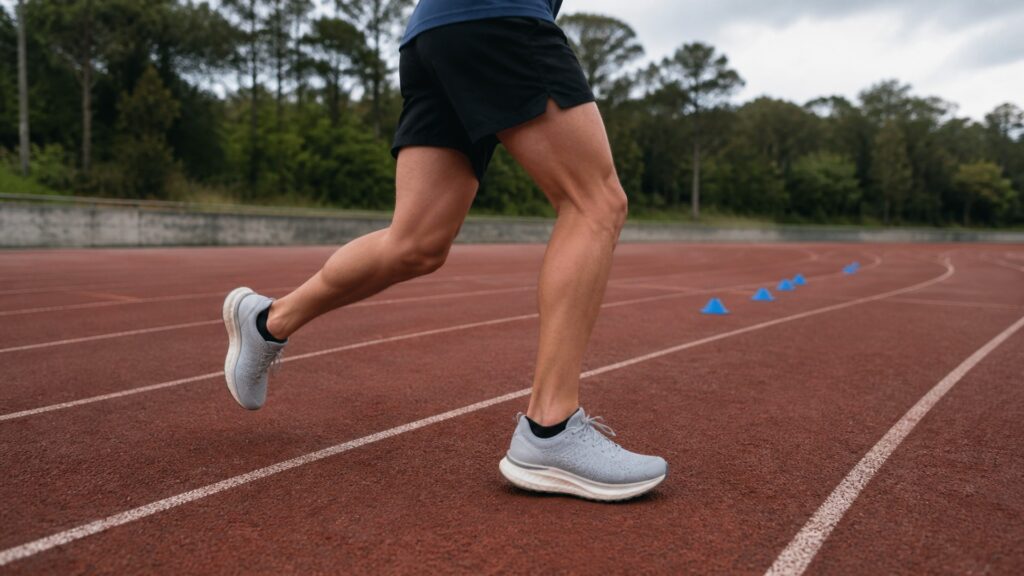
A practical look at fit, cushioning, traction, geometry, surface, and training role.
Tip: Choose running shoes by the workout they need to support.
These concepts explain how running shoes affect training.
Ground contact is how the shoe meets the surface with each stride.
Cushioning response is how the midsole absorbs and returns force during running.
Fit security is how well the shoe holds the foot without slipping, squeezing, or rubbing.
Ride geometry is how the shoe shape guides transition from landing to toe-off.
Surface match is how well the shoe fits road, trail, track, treadmill, or mixed terrain.
Training role is the type of run the shoe is best suited to support.
Tip: A shoe's useful function appears during repeated miles, not during a quick try-on.
A shoe cannot support training if the foot slips, rubs, or feels squeezed. Fit affects comfort, confidence, and how the runner handles changes in pace or terrain.
Secure fit is the foundation of shoe function.
Easy runs, long runs, and faster sessions may ask for different cushioning feel. A soft shoe can be comfortable, but it may not feel stable or responsive for every runner.
Cushioning works best when it fits the training demand.
Road, trail, track, treadmill, and mixed routes place different demands on the outsole. A shoe that feels good on pavement may not grip loose dirt or wet surfaces well.
Ground contact is part of training function.
Rocker shapes, heel-to-toe drop, sole width, and stiffness can change how the runner transitions through each stride.
A good ride supports the runner's natural rhythm.
Some runners use one versatile shoe. Others rotate shoes for daily mileage, long runs, trails, or faster efforts. The important point is matching the shoe to the session.
Training function improves when the shoe has a clear role.
Running shoes help when their design matches the runner and the workout.
Good fit, cushioning, traction, and geometry can make training more comfortable and repeatable.
The right shoe can support specific surfaces and workout types.
Feature claims can distract from fit and route needs.
A popular shoe can still be wrong for a runner's stride or session.
The best shoe is not defined by one feature.
Soft cushioning can be comfortable, but some runners need more stability or responsiveness.
Weight matters, but fit, grip, and ride can matter more.
Some shoes are versatile, but different sessions may benefit from different roles.
Fit is personal and has to be tested on the runner's foot.
Tip: Judge the shoe by how it performs during the run you need it for.
Short answers about fit, cushioning, surface, and training use.
Fit security matters first, followed by comfort, traction, cushioning, and match to the workout.
Not always, but some runners benefit from different shoes for daily miles, long runs, trails, or faster sessions.
It should feel comfortable and controlled over the distance and pace you plan to run.
Replace them when wear changes comfort, traction, stability, or repeated-run feel.
Choose running shoes for fit and training role, not just features or popularity.
Running shoe training function matters because shoes affect fit, ground contact, cushioning, traction, and workout comfort.
The best shoe supports the runner's actual mileage, pace, surface, and training role.
Use these Review Streets paths to compare related categories and practical next decisions.
Compare shoes with fluid-carrying gear.
Decide when footwear is the priority.
Explore related running gear categories.
Choose a retailer
Prices checked regularly. We may earn a commission at no cost to you.