
Ground Contact
Ground contact is how the shoe meets the surface with each stride.
- Example: outsole grip on wet pavement
- Check: match traction to surface
- Limit: traction cannot fix every footing risk
Workout role matters because running shoes should match the kind of run they support. Easy mileage, long runs, speed work, trail routes, recovery days, treadmill sessions, and race efforts can ask for different fit, cushioning, weight, traction, and ride feel.
A shoe does not have to be perfect for every workout. It should be clear whether it is serving daily comfort, long-distance durability, faster turnover, trail grip, race efficiency, or simple beginner-friendly support.
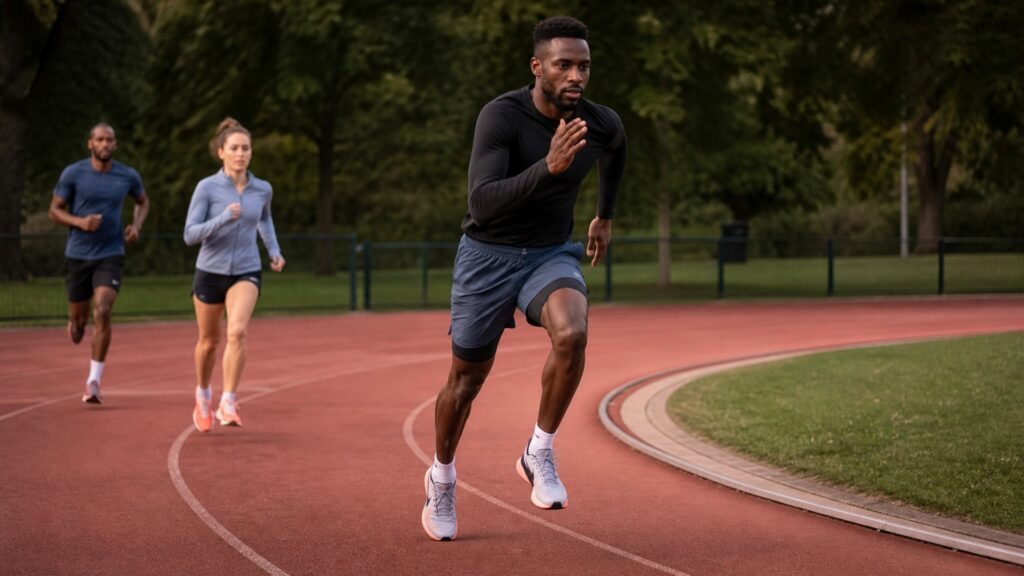
A practical look at daily trainers, long-run shoes, speed shoes, trail shoes, recovery shoes, and race-day choices.
Tip: Let the workout choose the shoe role, not the other way around.
These concepts explain how shoe choice changes by session.
Ground contact is how the shoe meets the surface with each stride.
Cushioning response is how the midsole absorbs and returns force during running.
Fit security is how well the shoe holds the foot without slipping, squeezing, or rubbing.
Ride geometry is how the shoe shape guides transition from landing to toe-off.
Surface match is how well the shoe fits road, trail, track, treadmill, or mixed terrain.
Training role is the type of run the shoe is best suited to support.
Tip: A shoe's role is useful only when it supports the workout's demand.
Daily training shoes usually need comfort, durability, and stable fit across repeated miles. They do not need to feel dramatic to be useful.
The daily shoe earns value through consistency.
A long-run shoe should stay comfortable as the body tires. Small fit or stability problems can become larger after many miles.
Long-run shoes should protect rhythm over time.
Intervals, tempo runs, and race-pace work may benefit from lighter weight, firmer response, or a more forward-rolling geometry.
Speed shoes should support faster movement, not just feel exciting.
Trail shoes usually prioritize grip, protection, and uneven-surface control. Road shoes usually prioritize smooth pavement transitions and lower weight.
Surface often decides the shoe role.
Some runners use one versatile shoe. Others use a simple rotation so each shoe has a clearer purpose.
The right role makes each shoe easier to judge.
Workout role helps when it keeps shoe choice tied to the run's demands.
It matches cushioning, traction, durability, and weight to the workout.
It prevents using a specialty shoe for every run by default.
Too many shoes can confuse simple training.
A shoe can be good but still wrong for a specific session.
One shoe does not have to win every category.
Race-focused shoes may be less durable or less comfortable for daily mileage.
A reliable daily trainer is often the most useful shoe in a rotation.
Trail outsoles and structure can feel different on pavement.
Many runners do well with one or two well-chosen shoes.
Tip: Choose shoe roles that match real training needs.
Short answers about matching shoes to sessions.
Not always. One versatile shoe can work, but different roles can help when training varies.
A good daily trainer is comfortable, durable, secure, and suitable for repeated mileage.
Use them when the workout benefits from their ride, but test them before important efforts.
Use trail shoes when surface, grip, protection, or terrain control matters.
Match the shoe to the workout's distance, pace, surface, and comfort needs.
Running shoe workout role matters because different sessions ask for different balances of comfort, grip, durability, weight, and ride.
The best shoe choice supports the specific run instead of trying to be ideal for every run.
Use these Review Streets paths to compare related categories and practical next decisions.
Compare shoes with fluid-carrying gear.
Decide when footwear is the priority.
Explore related running gear categories.
Choose a retailer
Prices checked regularly. We may earn a commission at no cost to you.