
Mixing Insert
A mixing insert helps break up powder as liquid moves through the bottle.
- Example: a wire ball or grid inside the shaker
- Check: see whether clumps remain after shaking
- Limit: some thick formulas still stay gritty
Movement pattern matters in shaker bottles because the bottle is used while being shaken, carried, opened, placed in bags, held in cupholders, and sometimes used between sets or on the move. The shape and lid have to work with those motions.
A good shaker bottle should feel secure when shaken hard, easy to grip with sweaty hands, stable in a bag or holder, and simple to drink from without awkward spills.
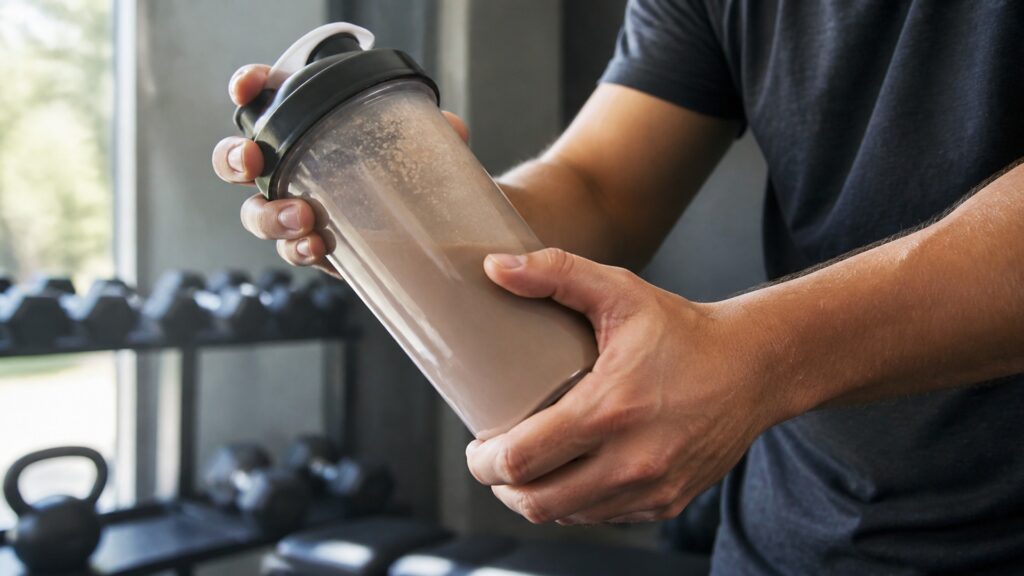
A practical look at shaking motion, grip, carry, cupholder fit, drinking angle, and cleanup.
Tip: Judge the gear by the problem it solves during the workout, not by the size of the feature list.
These concepts keep the decision tied to real training conditions, comfort, and setup.
A mixing insert helps break up powder as liquid moves through the bottle.
A leak seal keeps liquid inside the lid, cap, and threads during shaking or carry.
Bottle shape affects mixing movement, grip, cupholder fit, and cleaning.
Measurement marks help repeat liquid amounts for powders or electrolytes.
Cleaning access is how easily the bottle, lid, seal, and insert can be washed and dried.
Handling Fit is the part of shaker bottle use that matters most for this decision.
Tip: The right hydration setup is the one that stays comfortable, accessible, and clean enough to use repeatedly.
Powder mixes often need vigorous movement. The lid, cap, and threads should stay sealed while the bottle is shaken from several angles.
Shaking is the core movement pattern.
A bottle that slips during shaking or drinking is frustrating. Shape, texture, diameter, and weight all affect control.
Secure grip reduces spills.
Many shaker bottles travel in gym bags, backpacks, cars, or bike holders. A wide or awkward shape can be harder to carry even if it mixes well.
Carry fit matters after mixing.
A large opening can be easy to drink from but more prone to splashing. A smaller spout may be cleaner but harder for thicker drinks.
Drinking motion should feel natural.
Daily use depends on whether the hand, brush, or dishwasher can reach the areas that collect residue.
A bottle that cleans easily is easier to keep using.
Movement-aware selection keeps the bottle tied to real handling.
It reduces leaks, slips, awkward drinking, and poor carry fit.
It shows whether the bottle works in bags, cars, and gym settings.
It cannot make every powder smooth.
It still depends on cleaning and lid maintenance.
A bottle that looks fine on a shelf may not handle well in use.
Diameter, grip, and lid security change the experience.
More volume can be harder to grip and carry.
Poor fit can make the bottle annoying for daily carry.
Wide openings help filling but can splash while drinking.
Tip: A hydration pack is useful only when it makes drinking easier without creating new friction.
Short answers for practical training and gear decisions.
Because the bottle has to stay sealed and controllable while shaken, carried, opened, and cleaned.
Test grip, lid security, and cupholder or bag fit.
They can help grip, but they still need easy cleaning and a reliable lid.
Yes. Larger bottles can be useful but harder to hold and carry.
Choose a shaker bottle that matches how you shake, carry, drink from, and clean it.
Movement pattern matters because shaker bottles are handled actively, not just stored.
The best bottle stays sealed while shaking, grips well, carries easily, drinks cleanly, and remains simple to wash.
Use these Review Streets paths to compare related categories and practical next decisions.
Explore the shaker bottle category.
Review the bottle and mixing system.
See how design supports workout use.
Choose a retailer
Prices checked regularly. We may earn a commission at no cost to you.