Why Single Axle Utility Trailers Maintenance Role Matters

Maintenance keeps a single-axle utility trailer’s wheels, coupling, structure, and fitted safety equipment ready to support a loaded trip. The trailer may have no engine, but its tires, bearings, fasteners, deck, and connections still wear or deteriorate. A clean deck and a coupler that closes do not establish the condition of the whole trailer.

The right care depends on the exact trailer, axle, hubs, and installed equipment. Some trailers have brakes and a breakaway system; others have different provisions. Use the applicable manuals for procedures and intervals, and separate routine observations from repairs that require tools, measurements, or qualified service.

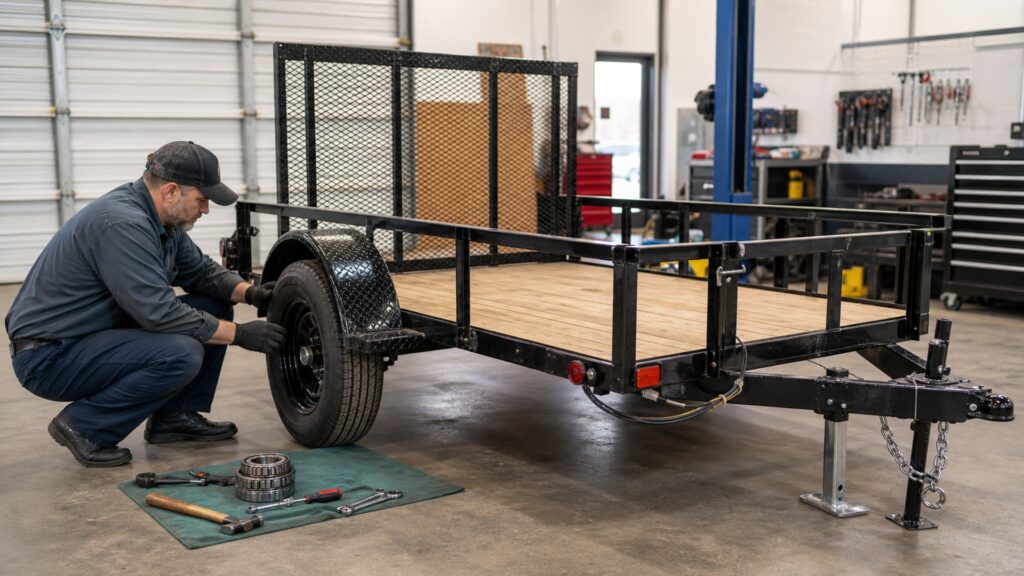
By: Review Streets Research Lab
Updated: October 7, 2026
Explainer · 8-12 min read
single axle utility trailers explainer hero image for Review Streets
What You'll Learn

Maintain the Systems That Carry and Connect the Load

Build care around the actual trailer and its components.

  • Why trailer and axle identification come first
  • How tires and wheel attachment affect readiness
  • Why bearing service depends on hub design
  • What coupling, deck, frame, and ramp defects can interrupt
  • How to check fitted safety equipment and close repairs

Tip: Keep the trailer and axle identification with service records so the correct instructions remain available.

Definitions

Six Maintenance Concepts for a Single-Axle Trailer

Each points to a different part of the carrying system.

Running gear

Running gear includes the axle, wheel-end components, and associated suspension where fitted.

  • Example: the assembly supporting the trailer as its wheels turn
  • Check: component identification and manufacturer instructions
  • Limit: one axle does not mean one universal maintenance method

Wheel retention

Wheel retention is the secure attachment of a wheel to its hub using the specified fasteners.

  • Example: wheel nuts checked after a wheel has been refitted
  • Check: the correct specification, procedure, and follow-up checks
  • Limit: visual presence does not prove correct tightening

Hub bearing

A hub bearing supports wheel rotation around the axle spindle or related wheel-end structure.

  • Example: bearings inside a trailer hub
  • Check: the exact bearing and lubrication design
  • Limit: not every hub uses the same grease procedure

Coupler condition

Coupler condition concerns the serviceability of the trailer’s towing connection and locking parts.

  • Example: a latch that no longer closes reliably
  • Check: wear, damage, compatibility, and the prescribed inspection
  • Limit: forcing the latch is not a repair

Structural condition

Structural condition concerns the frame, deck supports, joints, and load-handling attachments.

  • Example: a cracked ramp hinge or damaged deck support
  • Check: damage, corrosion, loose attachments, and required assessment
  • Limit: fresh paint does not demonstrate sound structure

Fitted safety equipment

Fitted safety equipment is the lighting, braking, breakaway, and other safety hardware installed on that trailer.

  • Example: a breakaway battery on a trailer equipped with that system
  • Check: the actual configuration and its operating checks
  • Limit: do not assume every single-axle trailer has identical equipment

Tip: Service instructions should match the component actually installed, including later replacements.

Identification

Use the Trailer Manual and the Component Instructions

Record the trailer identity and ratings, then identify the axle and important fitted systems. The trailer manual covers the assembled product, while axle, brake, coupler, or other component documents may supply additional procedures. Carry-On publishes separate trailer and axle manuals, illustrating why the body’s brand alone may not answer every service question.

  • Keep the relevant manuals together.
  • Record replacement components and changed specifications.
  • Use the applicable service intervals and operating conditions.

A used trailer with an unfamiliar replacement axle needs identification before bearing parts or service procedures are chosen. Guessing from its appearance can produce an incorrect repair.

Reference: Carry-On trailer and axle manuals.

Tires and wheels

Treat Tire Condition and Wheel Attachment as Separate Checks

Inspect tires for damage and wear, and use the specified cold inflation pressure for the actual trailer setup. Check the wheel and its attachment as required, especially after wheel work. A tire can hold air while being damaged, and an apparently seated wheel can still need the prescribed fastener check. Resolve abnormalities before the trailer returns to loaded use.

  • Use the appropriate tire and trailer specifications.
  • Look for damage, unusual wear, and wheel defects.
  • Follow the specified tightening and recheck procedure.

NHTSA tire guidance explains the value of pressure and condition checks. The axle instructions supply wheel-specific requirements; do not borrow a torque value from another trailer merely because its wheel looks similar.

Reference: NHTSA tire maintenance guidance, Dexter axle service manual.

Bearings

Match Lubrication and Inspection to the Hub Design

Bearings and seals need the care specified for their design. Some hubs have a grease-service provision, while other arrangements have different inspection or service requirements. Adding grease does not establish that a damaged bearing or seal is sound. New wheel-end noise, unusual heat, leakage, or looseness calls for assessment rather than an assumption that lubrication alone will cure it.

  • Identify the axle and hub before service.
  • Use the specified lubricant and procedure where applicable.
  • Have uncertain symptoms assessed by a qualified technician.

Dexter’s manual distinguishes wheel-end arrangements and their procedures. Follow the instructions for the installed system, including applicable care after water exposure, rather than applying one method to every single-axle trailer.

Reference: Dexter hub and bearing instructions.

Connection and structure

Inspect the Parts That Hold the Combination and Load Together

The coupling, safety connections, frame, deck, gate, and ramp each serve a different purpose. Check their condition and operation according to the trailer and component instructions. A worn connection or damaged ramp is not made acceptable by a light load. Structural damage needs an appropriate assessment; do not hide it with a cosmetic repair.

  • Check the coupling and locking parts for proper operation.
  • Look for damaged supports, joints, and attachments.
  • Confirm gates and ramps retain their intended function.

For example, a ramp hinge that begins to separate affects loading even if the trailer tows quietly. Report where the defect is and what action exposed it so the repair addresses the actual problem.

Reference: Carry-On utility-trailer inspection guidance.

Readiness

Check Installed Systems and Record the Outcome

Test the trailer’s lights and any fitted brakes or breakaway equipment using the applicable instructions. The towing vehicle’s connector, controller, or power supply may also be part of the operating check. Record defects, work completed, and any remaining restrictions. Returning from a workshop does not by itself confirm that the original reported symptom has been resolved.

  • Check the systems actually installed.
  • Link each reported defect to its assessment or repair.
  • Confirm readiness before the next assignment.

A lamp that works intermittently should remain an open defect until the connection or other cause is addressed. A brief successful test without resolving the recurring fault is weak evidence of dependable operation.

Quick Reality Check

Routine Observation and Qualified Service

Both have a role, but they establish different things.

Owner or operator observations

Visible damage, tire condition, and prescribed operating checks.

Clear reports of new noise, leakage, lighting faults, or latch problems.

Appropriate technical assessment

Bearing, brake, structural, or attachment work requiring specific procedures.

Measurements, replacement decisions, and confirmation that the defect is resolved.

Common Myths

Misconceptions About Trailer Care

Simple construction still depends on serviceable components.

No engine means little needs maintenance

The wheels, bearings, coupling, structure, and fitted systems still require care.

All single-axle hubs use the same grease method

Identify the installed hub and follow its own instructions.

Every single-axle trailer has the same brake equipment

Check the actual configuration and applicable requirements.

A fresh service record closes every defect

Confirm what was assessed and whether the original problem remains.

Tip: Keep a newly reported defect separate from the calendar for scheduled service.

FAQ

Questions About Single-Axle Trailer Maintenance

Practical answers without assuming one design or schedule.

How often should bearings be serviced?

Use the exact axle and hub instructions for the installed design and operating conditions. There is no single interval for every trailer.

Can I use one wheel-nut torque for all trailers?

No. Use the correct specification and tightening procedure for the actual wheel and fastener arrangement.

What if the trailer has no brakes?

Maintain the equipment it actually has, and verify that the loaded combination and intended use meet applicable requirements. Axle count alone does not settle that question.

Does low mileage remove the need for checks?

No. Condition, elapsed time, storage, and exposure can still matter under the applicable maintenance instructions.

What should a service record include?

Trailer and component identity, the reported concern, checks or repairs performed, relevant parts, and any unresolved restrictions.

Bottom Line

Single-axle trailer maintenance preserves the wheel ends, connection, load-supporting structure, and fitted systems needed for a dependable trip.

Use exact component instructions, address new defects, and verify the result before returning the trailer to work.

Next Steps

Go Deeper or Compare Your Options

Use these Review Streets paths to compare related categories and practical next decisions.