Why Speed Settings Matter in Cordless Drills

Speed settings on cordless drills are often treated as simple power adjustments, but they actually govern how rotational energy is delivered through the tool’s internal systems. These settings regulate the relationship between motor speed, torque transfer, and load response, shaping how the drill behaves under different mechanical demands. Misunderstanding this relationship can obscure how drills manage control, efficiency, and mechanical stress.

This explainer examines how speed settings function within a cordless drill’s design and why they exist as distinct operating ranges. It walks through how internal components interact at different speeds and how these interactions influence drilling and driving behavior. By the end, readers will understand the role speed settings play as a control mechanism rather than a performance shortcut.

By: Review Streets Research Lab
Updated: April 20, 2026
Explainer · 8–12 min read
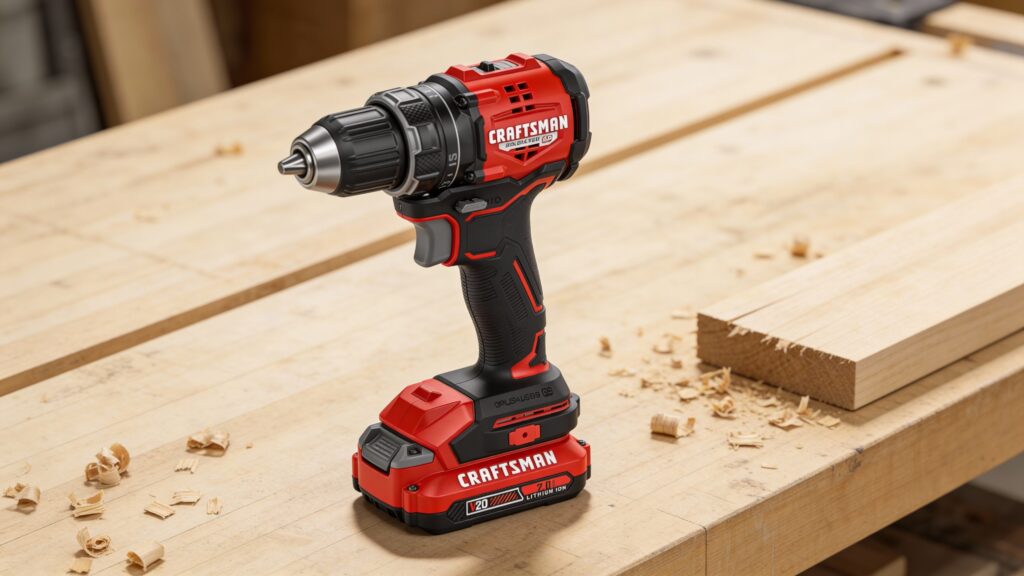
Cordless drill speed selector showing low and high speed settings for precision drilling and controlled driving
What You’ll Learn

How Speed Settings Shape Drill Behavior

A focused explanation of how speed ranges route power through the drivetrain, clarifying control, load response, and mechanical limits during drilling and driving.

  • What low and high gear change inside the gearbox
  • How motor speed and torque trade off across gear ranges
  • How trigger modulation interacts with selected speed settings
  • Why bit loading and friction shift the drill’s current draw
  • How speed affects stall behavior, heat buildup, and efficiency
  • How clutch action varies with torque delivery at different speeds
  • How material hardness changes the optimal speed and feed pressure

Tip: Treat speed as the system’s operating range and the trigger as the fine control within that range.

Definitions

Key Parts That Shape Speed Behavior in a Cordless Drill

Speed settings depend on how electrical control and mechanical gearing interact, and confusion usually comes from treating “speed” as a single knob.

Battery Pack

The energy reservoir that supplies current to the controller and motor. Under load, its internal limits shape how steadily a chosen speed can be maintained.

  • Voltage range: Sets the electrical headroom as the pack discharges
  • Current capability: Determines how much load the system can support
  • Internal resistance: Causes voltage sag that pulls speed down under load

Electronic Controller

The power-management stage that interprets trigger input and regulates motor drive. It meters current and switching to hold a target speed within limits.

  • Duty cycle: Sets effective motor voltage by rapid on-off switching
  • Current limiting: Caps torque demand to protect electronics and cells
  • Feedback control: Adjusts power as load changes to stabilize rotation

Motor

The rotating machine that converts electrical input into shaft power. Its torque-speed curve defines how rotation drops as resistance rises.

  • Back-EMF: Increases with speed and naturally reduces current draw
  • Torque production: Comes from current, not simply a speed setting
  • Thermal load: Heat rises when high current is sustained at low speed

Two-Speed Gearbox

A mechanical ratio selector that changes how motor speed is converted at the output. It trades rotational speed for torque multiplication and load tolerance.

  • Low range: Reduces output speed while increasing available torque at the bit
  • High range: Raises output speed while lowering torque multiplication through the drivetrain
  • Shift mechanism: Re-routes gear engagement to change ratio without changing motor design

Chuck

The clamping interface that couples the drivetrain to the bit. Its grip stability affects how speed and torque are transmitted without micro-slips.

  • Clamping force: Maintains friction so rotation transfers cleanly to the bit
  • Runout: Off-center rotation adds cyclic load that can distort speed behavior
  • Interface losses: Minor slip turns torque into heat instead of rotation

Speed Range

The operating band created by gearbox ratio plus electronic control, defining how the drill responds to resistance. It is a system constraint, not a single value.

  • Target RPM: The controller aims for a rotation rate until limits intervene
  • Load response: Resistance pulls RPM down as torque demand and current rise
  • Usable band: The stable zone before limiting, stalling, or thermal buildup dominates

Tip: Think of speed settings as choosing a torque-speed envelope produced by gearing and electronic limits.

Power Path

How Speed Settings Re-Route the Power Path

Speed settings do not create power; they change how power is converted and delivered through the drivetrain. The selected range sets the operating window for motor control and gear reduction under load.

  • The battery supplies current that rises sharply as resistance increases
  • The controller meters current and switching to pursue a target RPM
  • The motor’s torque-speed curve dictates how RPM falls as torque demand grows
  • The gear range changes output RPM and torque multiplication at the spindle
  • The chuck transmits rotation only if clamping friction holds under load

Changing the speed setting changes where limiting occurs along the same energy-conversion chain.

Motors

Motor Behavior Defines What a Speed Setting Can Sustain

A drill’s motor does not maintain one fixed speed; it settles where electrical input and mechanical load balance. Speed settings interact with this balance by shifting the demanded RPM and the current required to hold it.

  • Higher RPM increases back-EMF, which naturally reduces current draw at light loads
  • At lower RPM under heavy load, current rises to produce torque and heat
  • The controller adjusts drive to counter load changes until limits are reached
  • As resistance spikes, RPM drops along the motor’s torque-speed curve

Speed control is ultimately constrained by how the motor converts current into torque across its operating range.

Gearing

Two-Speed Gearboxes Create Distinct Torque-Speed Envelopes

The gear selector changes the mechanical ratio between the motor and the output, altering how quickly the bit turns for a given motor speed. This ratio also changes how much torque reaches the bit before the system hits current or thermal limits.

  • Low range reduces output RPM while multiplying torque at the spindle
  • High range increases output RPM while reducing torque multiplication
  • Ratio choice changes how sensitive the drill feels to sudden load changes
  • Shift engagement and gear mesh quality affect friction losses and heat generation

The speed selector is a mechanical re-scaling of the same motor into two different operating regimes.

Heat Management

Speed Settings Change Where Heat Is Generated and Limited

Heat builds wherever electrical power and mechanical friction fail to become useful rotation. Speed settings influence heat by changing current demand, motor efficiency point, and drivetrain losses for a given load.

  • Low-speed, high-load operation drives higher current, concentrating heat in windings and electronics
  • High-speed operation can raise friction and aerodynamic losses in the motor and gearbox
  • Battery temperature and internal resistance increase, amplifying voltage sag under load
  • Controllers reduce drive when thermal or current thresholds are approached

As temperatures rise, the system narrows the usable speed band to stay within protective limits.

User Control

Range Selection and Trigger Control Work as a Single System

The speed selector sets the maximum output band, while the trigger commands a portion of that band through electronic modulation. Together they determine how smoothly rotation ramps, how quickly load changes are corrected, and how stable the bit feels.

  • Trigger input is translated into controller duty cycle rather than direct motor power
  • In a given range, the controller applies more current as load rises to resist RPM drop
  • Lower ranges expand fine control by spreading usable torque across lower RPM
  • Higher ranges compress control near the top end, amplifying small trigger changes

Perceived control follows from how the chosen range and control loop manage torque and RPM together.

Quick Reality Check

Where Speed Settings Help — and Where They Don’t

A quick balance check: what speed ranges control effectively, and the situations where load, heat, and limits override the selected setting.

What Speed Settings Control

Speed ranges shape the drill’s operating envelope by setting a target RPM band and a matching gear ratio, which changes how torque is delivered as load varies.

In lighter loads, the controller can hold speed by adjusting drive, so the selected range behaves predictably as rotation ramps and settles.

Where Settings Get Overruled

Under heavy resistance, current demand rises and RPM drops along the motor’s torque-speed curve, so the drill cannot maintain the chosen speed indefinitely.

As temperature increases in the battery, controller, or motor, protective limiting reduces drive, narrowing the usable speed band regardless of the selected range.

Common Myths

Misconceptions About Drill Speed Settings

Speed ranges look simple, but they are often mistaken for power controls rather than a coordinated system of gearing, control electronics, and load response.

Higher speed automatically means more power

Speed is rotational rate, not torque. In higher ranges the gearbox provides less torque multiplication, so the drill can spin faster but reaches its current and load limits sooner when resistance rises.

Low speed is always safer for driving

Low range increases torque multiplication, which can make torque rise quickly as the fastener seats. The clutch and controller limit how torque is delivered, and their interaction with load matters more than the number on the speed selector.

The trigger alone sets the drill speed

The trigger requests speed through electronic modulation, but the selected range sets the mechanical ratio and maximum RPM band. Under load, the controller adjusts current to chase the target until protection limits intervene.

Speed settings work the same under any load

As resistance increases, RPM drops along the motor’s torque-speed curve and current rises to generate torque. That shift changes heat and limiting behavior, so the same setting can feel stable at light load and constrained at heavy load.

Stalling means the chosen speed is wrong

Stalling is a system balance problem where torque demand exceeds available torque within controller and battery limits. It can be driven by friction, bit geometry, material hardness, or thermal limiting, even when the selected range is appropriate.

Tip: Treat speed selection as choosing a torque-speed envelope, then read the drill’s RPM drop and limiting as feedback from the whole system.

FAQ

Frequently Asked Questions About Drill Speed Settings

Clear explanations addressing how speed ranges interact with torque, load, and electronic limits inside a cordless drill.

What do speed settings actually change inside the drill?

Speed settings change the gearbox ratio and the controller’s target RPM band, which alters how motor speed is translated into output torque. This re-scales the same power system into different operating envelopes rather than adding or removing power.

Why does the drill slow down even at the same speed setting?

As resistance increases, the motor needs more torque, which requires more current. When current, heat, or voltage limits are reached, RPM drops along the motor’s torque-speed curve even though the selected range remains unchanged.

Does low speed mean more torque at all times?

Low range increases torque multiplication through gearing, but actual torque still depends on available current and controller limits. Once those limits are reached, torque plateaus and additional resistance causes RPM loss or stalling.

Why does high speed feel weaker under heavy load?

High range reduces torque multiplication to allow faster rotation. Under heavy resistance, the motor reaches current limits sooner, so RPM falls quickly and heat rises, making the drill feel constrained compared to low range.

How does the trigger interact with speed selection?

The trigger controls electronic modulation within the selected range rather than directly powering the motor. Speed selection defines the maximum RPM band, while the trigger adjusts how much of that band is requested moment to moment.

Why does speed behavior change as the drill heats up?

Heat increases electrical resistance and triggers protective limits in the battery and controller. As a result, available current is reduced, narrowing the usable speed range and lowering sustained RPM regardless of the selected setting.

Is stalling caused by choosing the wrong speed setting?

Stalling occurs when torque demand exceeds what the system can supply within current and thermal limits. Speed selection influences where that limit appears, but material resistance, bit geometry, and heat often play equal roles.

Why does the same setting feel different across materials?

Different materials create different friction and cutting loads, which change torque demand at the bit. The controller responds by increasing current until limits intervene, so RPM stability varies even with identical speed selection.

Tip: Read RPM drop, heat buildup, and limiting as signals of where the torque-speed balance is being constrained.

Bottom Line

Speed settings define a torque-speed envelope shaped by gearing and control limits. Load and heat determine whether the drill can hold RPM, because current, voltage sag, and protection thresholds govern how the system responds.

With this model, speed changes read as mechanical ratio shifts and electronic limiting, making drill behavior easier to interpret across different materials and workloads.

Next Steps

Go Deeper or Compare Your Options

With the speed-setting mental model in place, these pages extend it into broader drill categories, tradeoffs, and spec interpretation.

Cordless Drill Lists

A structured overview of cordless drill categories, highlighting how gearing, control, and thermal limits shape real-world behavior across designs.

Cordless vs Corded Comparison

A focused comparison of how power delivery, heat management, and sustained load handling differ between battery-driven systems and continuous mains supply.

Cordless Drill Buying Guide

A reader-first guide to interpreting specs and design features through the power path, clarifying what changes behavior under load and over time.

Quick Summary

Why Speed Settings Matter

  • Speed settings select mechanical ratios that reshape torque and rotational speed balance
  • Electronic control targets RPM, adjusting current as load and resistance change
  • Low ranges multiply torque, while high ranges trade torque for rotation
  • Heat and current limits override selected speeds during sustained or heavy loads
  • Speed behavior reflects system balance, not a fixed power output