
Assisted Range
Assisted range is movement made easier by a strap, band, block, or support surface.
- Example: using a strap to reach a hamstring stretch
- Check: keep the stretch controlled
- Limit: assistance should not force pain
Training function matters for stretching tools because the tool should support a real mobility routine, not just make a position look deeper. A strap, block, band, or wheel is useful only when it improves control, comfort, and repeatability.
The right tool depends on the stretch, the body position, the amount of assistance needed, and whether the user can stay relaxed while working through range.
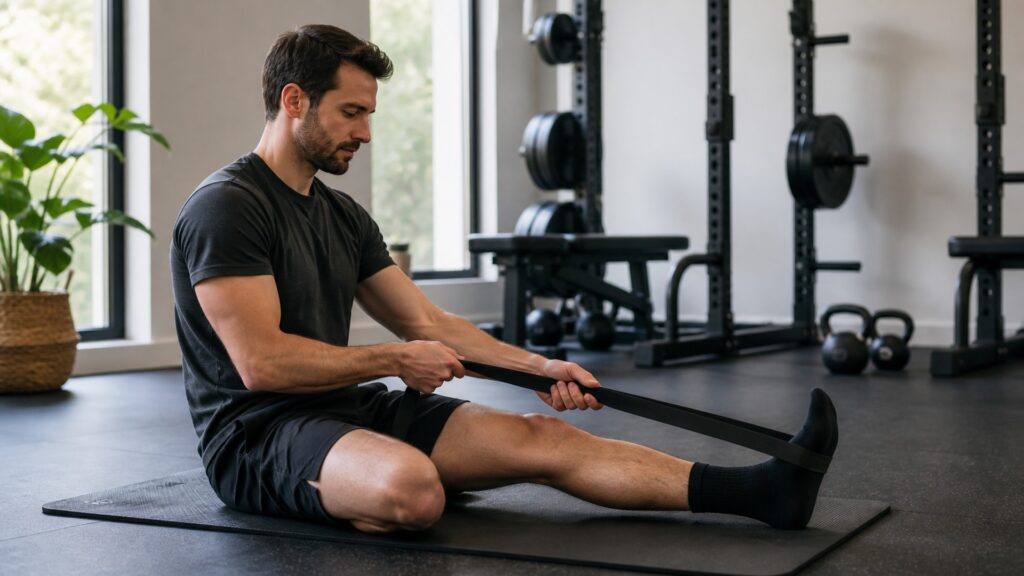
A practical guide to matching support, leverage, and control to a mobility routine.
Tip: Choose the tool that makes the stretch easier to control, not the one that forces the deepest position.
These concepts explain how stretching tools support position, leverage, range, and control.
Assisted range is movement made easier by a strap, band, block, or support surface.
Leverage is how a tool helps the user apply or reduce force.
Position support helps the body stay aligned during mobility work.
Tension control is the ability to increase or decrease stretch intensity.
Routine fit is how well a tool matches the stretch sequence the user repeats.
Safety boundary is the point where useful stretch becomes strain or pain.
Tip: A stretching tool should make a position easier to control, not force the body into range.
A stretching tool should make a movement easier to set up, hold, or modify. If it adds complexity without improving control, it is not doing much useful work.
Function starts with the movement problem.
A tool can help the user reach farther, but range is useful only when the position stays controlled and tolerable.
Good stretching feels controlled, not forced.
A tool that is quick to set up and easy to understand is more likely to become part of a routine. Complicated tools often get skipped.
Training function depends on repeat use.
The tool should let the user reduce or increase assistance without sudden jumps. Gradual changes make it easier to avoid forcing range.
Small adjustments are safer than big leaps.
The right stretching tool should make alignment, comfort, or access better. If it mostly causes pulling, bracing, or confusion, choose a simpler option.
A useful tool makes the position clearer.
Function clarifies what the tool can support without overstating it.
It matches support, leverage, and grip to the stretch.
It makes mobility routines easier to repeat.
It cannot force safe flexibility.
It does not replace care for persistent pain.
A tool is useful only when it improves control.
More range is not helpful if the position is forced.
More leverage can also make overpulling easier.
Material, length, grip, and stretch change the experience.
They support a routine but do not replace consistency.
Tip: Use the tool to improve control, not to chase depth.
Short answers about support, leverage, and routine fit.
The most important function is usually control: reaching the position without forcing it.
Bands add stretch and tension. Straps give steadier reach. The better choice depends on the movement.
No. They should make the position easier to control.
They can support consistent mobility work, but the routine still matters.
Choose the tool that makes your most repeated stretches safer and easier to control.
Stretching tool training function matters because the tool should improve control, support, and repeatability in a real mobility routine.
The best choice fits the movement, keeps tension gradual, and helps the user work through range without forcing depth.
Use these Review Streets paths to compare related fitness categories and practical buying decisions.
Explore straps, blocks, bands, wheels, and other mobility-support tools.
Compare related recovery and mobility categories.
Review a related explainer before choosing a tool.
Choose a retailer
Prices checked regularly. We may earn a commission at no cost to you.