
Drill Role
Drill role is the specific job a tool performs inside a practice set.
- Example: using a snorkel for alignment work
- Check: name the drill purpose before starting
- Limit: unclear roles make equipment random
Workout role matters for swim training gear because different pool sessions need different tools. A warmup drill, kick set, pull set, technique lesson, sprint set, and recovery swim should not all use equipment the same way.
Swim training gear works best when the tool matches the role of the set. Fins may help rhythm, a pull buoy may isolate the upper body, paddles may highlight catch pressure, and a snorkel may simplify breathing while the swimmer focuses on alignment.
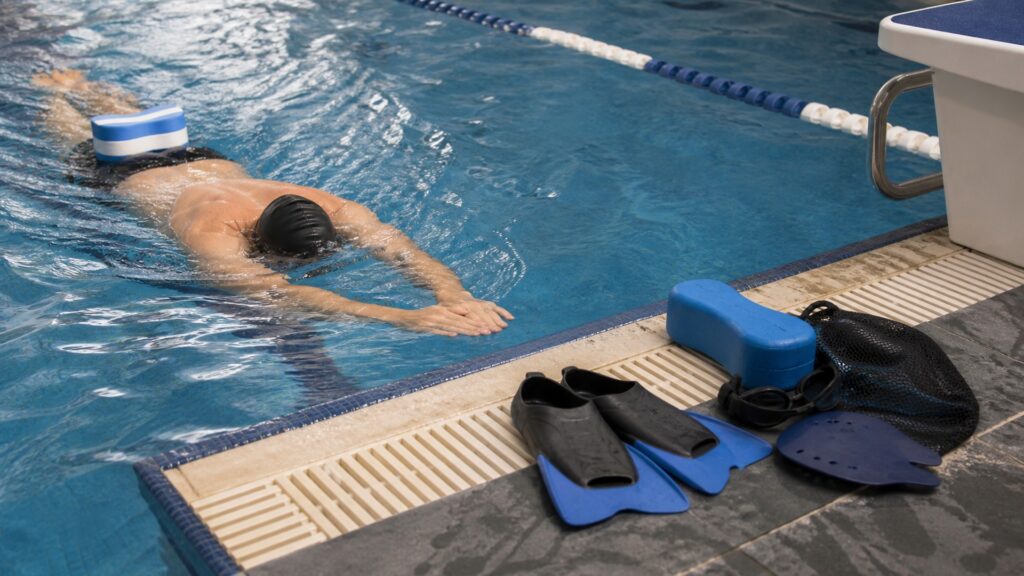
A practical way to match swim tools to the job of the session.
Tip: Start with the swimming situation, then choose the gear detail that solves that specific problem.
These concepts keep the decision tied to fit, water conditions, training purpose, and realistic limits.
Drill role is the specific job a tool performs inside a practice set.
Kick role is the use of gear to focus on leg rhythm, body position, or ankle feel.
Pull role is the use of gear to focus on arm stroke, catch pressure, or upper-body endurance.
Technique role is using equipment to make one movement easier to feel or correct.
Conditioning role is using gear to change effort, resistance, speed, or fatigue.
Recovery role is using or avoiding gear to keep movement easy and controlled.
Tip: The useful feature is the one that makes the swim clearer, safer, or easier to repeat.
A tool should be chosen because the set asks for it. The same fins or paddles can be useful in one session and distracting in another.
Workout role keeps equipment tied to training instead of habit.
Fins can help swimmers feel propulsion, tempo, and body position, especially during focused kick work. They should not become a way to avoid learning an effective unassisted kick.
The kick role is useful when it improves the regular kick.
Pull buoys and paddles can direct attention toward catch pressure and arm mechanics. They need conservative sizing and clear purpose so they do not overload the swimmer.
Pull tools should clarify pressure, not just add fatigue.
Some drills work because a tool removes one demand temporarily. A snorkel can reduce breathing interruptions, while a board or buoy can simplify a movement pattern.
Technique gear works when the lesson carries over.
A tool can be good and still wrong for the set. Heavy resistance during skill work, large paddles during fatigue, or fins during a recovery swim can change the purpose of the session.
The right role makes the tool useful.
Workout role keeps swim equipment connected to the session plan.
The swimmer alternates between technique, kick, pull, speed, and recovery sets.
The coach or swimmer wants one clear reason for each tool.
The swimmer lacks enough water skill to use the tool safely.
Pain, crowding, or poor fit makes the tool inappropriate.
A familiar tool is not automatically the right tool for every set.
Fins help some kick and rhythm work, but they can hide weak timing or change recovery effort.
Paddles can teach pressure and feel, not only add load.
Too many tools can blur the purpose of the set.
Recovery still requires effort control, comfort, and clear intention.
Tip: Strong claims still need to match the swimmer, pool, and session.
Short answers for practical swimming decisions.
It explains why a tool belongs in a specific set instead of being used by habit.
It depends on the skill. Snorkels, buoys, fins, boards, and paddles can all help when matched to one clear cue.
Yes. Fins can support rhythm, speed, or body position depending on the set.
Remove it when it causes pain, changes the wrong movement, breaks form, or no longer supports the set goal.
Choose swim training gear by the job of the set, then test whether the skill carries back into normal swimming.
Swim training gear workout role matters because each tool should support a specific set goal, not just add equipment to the lane.
The best choice matches the session's purpose, the swimmer's level, and the movement the swimmer needs to practice.
Use these Review Streets paths to compare related categories and practical next decisions.
Explore swim training tools and how they fit pool practice.
Review how fins, buoys, paddles, snorkels, and resistance tools change practice.
Check sizing, strain, lane space, and safe drill setup.
Choose a retailer
Prices checked regularly. We may earn a commission at no cost to you.