
Buoyancy Aid
A buoyancy aid changes how part of the body floats during a drill.
- Example: a pull buoy supporting the legs
- Check: ask which body position it changes
- Limit: support can hide weak balance
Swim training gear works by changing what the water asks the swimmer to practice. Kickboards, pull buoys, fins, paddles, snorkels, and resistance tools each shift attention toward a specific part of the stroke, body position, or effort level.
Good swim training gear does not magically fix technique. It makes one part of the swim easier to isolate, harder to ignore, or clearer to feel so the swimmer can practice with a purpose.
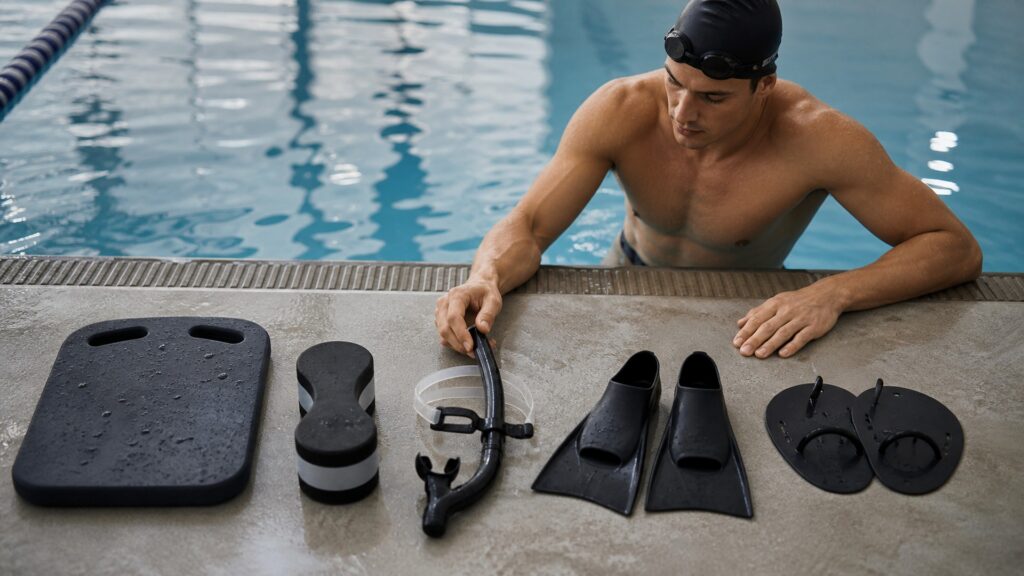
A practical look at buoyancy, propulsion, drag, stroke isolation, and drill purpose.
Tip: Start with the swimming situation, then choose the gear detail that solves that specific problem.
These concepts keep the decision tied to fit, water conditions, training purpose, and realistic limits.
A buoyancy aid changes how part of the body floats during a drill.
A propulsion aid increases how much movement a kick or pull can create.
A drag tool adds resistance so the swimmer has to work against more water.
Stroke isolation means focusing on one part of the swim while reducing other demands.
Feedback feel is the sensation that tells the swimmer whether the movement is changing.
Drill purpose is the reason a tool is included in the set.
Tip: The useful feature is the one that makes the swim clearer, safer, or easier to repeat.
Pull buoys and kickboards can change how the body sits in the water. That can help isolate arms, legs, or balance, but it can also hide problems that return when the gear comes off.
Buoyancy gear is useful when it teaches a feeling the swimmer can carry back into the stroke.
Fins can add speed to the kick, while paddles can make hand pressure more noticeable. Both tools are helpful only when size and effort stay appropriate.
More force is useful only when it supports better movement.
A swim snorkel can let the swimmer focus on head position, alignment, or arm timing without turning for every breath. That makes the drill clearer, but it should not replace normal breathing practice.
The snorkel simplifies one variable so another can be practiced.
Resistance gear can build strength and awareness when used in short, controlled doses. Too much resistance can slow the stroke so much that the movement no longer resembles useful swimming.
Resisted work should make the stroke stronger, not messier.
Training gear works best when the swimmer knows what the tool is supposed to reveal. Without a purpose, gear can become clutter at the end of the lane.
The gear earns its place when it makes practice more specific.
Training tools can make practice more focused, but they do not replace coached attention.
It isolates skills such as kick rhythm, pull feel, body position, or breathing.
It can add manageable resistance or feedback.
It can hide weaknesses if used too much.
It cannot fix technique without purposeful practice.
More equipment does not automatically mean better practice.
Fins can help rhythm and ankle feel, but they can also make the swimmer depend on extra propulsion.
Paddles can teach hand pressure, but size and shoulder tolerance matter.
It supports the legs temporarily; the swimmer still has to learn balance without it.
One purposeful tool usually teaches more than several random tools at once.
Tip: Strong claims still need to match the swimmer, pool, and session.
Short answers for practical swimming decisions.
Beginners often start with simple tools such as kickboards, pull buoys, or short fins under guidance.
They can help with rhythm and body position, but they should not replace unassisted swimming.
They can stress shoulders if too large or overused, so conservative sizing and short sets matter.
It lets the swimmer focus on body position or stroke mechanics without turning to breathe every stroke.
Use each tool for a specific drill goal and return to regular swimming to confirm the skill carries over.
Swim training gear works by changing buoyancy, propulsion, resistance, breathing demands, or feedback so one part of the stroke becomes easier to practice.
The tool is useful only when the swimmer knows what it is meant to teach.
Use these Review Streets paths to compare related categories and practical next decisions.
Explore the swim training gear category.
See how common tools change drills and body position.
Review how gear should support the training goal.
Choose a retailer
Prices checked regularly. We may earn a commission at no cost to you.