Why Torque Ratings Matter in Cordless Drills

Torque ratings are frequently cited yet poorly interpreted specifications in cordless drill discussions. They describe rotational force at the chuck, not speed, battery capacity, or overall capability. Because torque interacts with gearing, motor control, and load resistance, the value can seem abstract. Misunderstanding arises when torque is treated as a standalone measure rather than one element within a broader mechanical system.

This explainer outlines how torque is generated, regulated, and expressed within cordless drill systems. It clarifies the relationship between torque, gear ranges, and electronic control, and explains how these factors influence force delivery under load. By the end, readers will understand what torque ratings represent, what they omit, and how they function within the overall mechanics of drill operation.

By: Review Streets Research Lab
Updated: April 20, 2026
Explainer · 8–12 min read
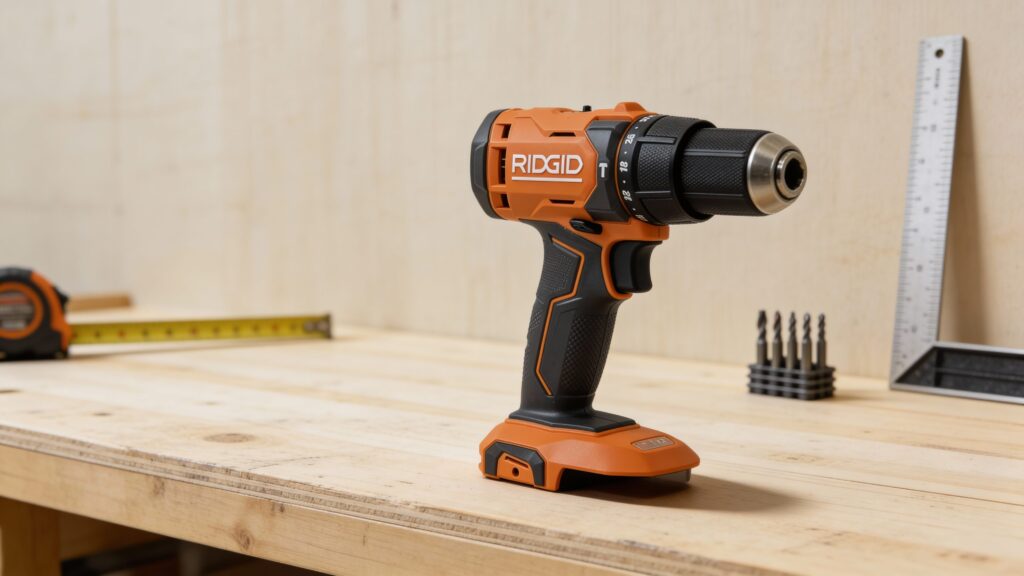
Cordless drill applying high torque to drive a large screw into hardwood, illustrating why torque ratings matter for drilling performance
What You’ll Learn

Understanding Torque Inside Cordless Drills

A focused explanation of how torque is generated, limited, and delivered inside cordless drills, clarifying why published ratings often mislead without system context.

  • How rotational force originates at the motor and changes through gear reduction
  • What torque ratings actually measure and which operating conditions they exclude
  • How electronic controls and clutches limit torque to protect components
  • Why low-speed ranges increase torque while reducing rotational output speed
  • How load resistance alters current draw, heat generation, and perceived strength
  • Why maximum torque differs from sustained torque during continuous operation
  • How torque interacts with trigger control to affect precision under load

Tip: Torque is best understood as a managed flow of force shaped by gearing, control, and resistance.

Definitions

Key Components That Shape Torque Delivery

Torque ratings make more sense once the major components are defined in functional terms, including how limits, losses, and gearing shape force at the chuck.

Battery Pack

The battery supplies electrical energy that the drill converts into rotational force. Its internal limits influence how much current can flow when resistance rises.

  • Voltage: Sets the potential for speed under a given load
  • Current delivery: Determines how force holds when resistance increases
  • Internal resistance: Causes voltage sag and heat during demanding operation

Electronic Controller

The controller meters power from the battery to the motor in response to the trigger. It also enforces current and temperature limits that cap torque output.

  • Power modulation: Uses switching control to regulate motor input smoothly
  • Current limiting: Reduces force when electrical thresholds are reached
  • Thermal management: Adjusts output as heat accumulates in the system

Motor

The motor converts electrical power into rotating shaft force. Its design determines how efficiently current becomes torque and how quickly heat builds under load.

  • Torque constant: Links motor current directly to generated rotational force
  • Efficiency losses: Convert some input power into heat instead of work
  • Speed–torque behavior: Produces less torque as speed rises under load

Gearbox and Clutch

The gearbox trades speed for torque through mechanical reduction, while the clutch provides a calibrated slip point that limits delivered force.

  • Gear reduction: Multiplies torque while lowering output rotational speed
  • Losses: Friction and impacts reduce how much torque reaches the chuck
  • Clutch threshold: Sets a repeatable limit for transmitted twisting force

Chuck

The chuck transmits torque from the drill to the bit through jaw clamping force. Its grip and alignment determine whether torque becomes controlled rotation or slip.

  • Clamping force: Converts tightening into friction that resists bit rotation
  • Runout: Off-center rotation increases side loading and reduces stability
  • Wear and contamination: Dust and rounding reduce grip consistency over time

Torque Output

Torque is the twisting force available at the chuck after electrical and mechanical conversion. Ratings vary because limits, gearing, and measurement conditions change the result.

  • Peak value: Represents short-duration force under controlled conditions
  • Continuous delivery: Depends on heat, current limits, and sustained load
  • System dependence: Emerges from the full path from battery to chuck

Tip: Treat torque as an end-of-chain output shaped by electrical limits, mechanical reduction, and heat.

Power Path

How Torque Emerges Along the Power Path

Torque at the chuck is the end result of multiple conversions, not a single rating. Each stage shapes how force is created, limited, and transmitted under resistance.

  • The battery’s cell chemistry and internal resistance set current availability under load
  • The controller meters current and enforces protection limits that cap torque output
  • The motor converts current into shaft force according to its torque constant
  • The gearbox multiplies shaft torque while trading away rotational speed
  • The chuck’s clamping friction determines whether torque reaches the bit or slips

When torque feels inconsistent, it typically reflects losses or limits at one stage in the chain.

Motors

How Motor Design Shapes Torque Delivery

The motor is where electrical input becomes rotational force, and its characteristics determine how predictably torque rises as load increases. Control method and heat behavior strongly influence usable force.

  • Brushed motors rely on contact friction and switching losses that add heat
  • Brushless motors use electronic commutation to manage current with finer control
  • Motor torque is proportional to current, while speed drops as load climbs
  • Efficiency losses accumulate as heat, reducing sustained force over time

Torque ratings can diverge from real behavior when motor control and thermal limits intervene.

Gearing

Why Gear Reduction Defines Practical Torque

Gear reduction is the mechanical multiplier that turns motor torque into higher force at lower speed. Because torque ratings depend on gear state, the same drill can produce different outputs in different ranges.

  • Lower gear ratios increase torque at the chuck by reducing output speed
  • Higher gear ratios prioritize speed, leaving less torque available at the bit
  • Gear train friction and impacts subtract from theoretical torque multiplication
  • Clutch mechanisms introduce a repeatable slip threshold that limits transmitted force

Observed stalling or strong driving force often reflects gear selection and transmission efficiency.

Heat Management

How Heat Becomes a Torque Limiter

Torque draws current, and current creates heat across cells, wiring, electronics, and windings. As temperature rises, protection logic reduces allowable current, lowering torque to keep components within safe limits.

  • Battery temperature and internal resistance increase voltage sag during high current demand
  • Controllers reduce output when current thresholds or thermal sensors are triggered
  • Motor windings heat up, increasing resistance and reducing electrical-to-mechanical conversion

Short-duration torque figures do not capture how thermal limits reshape force over time.

User Control

How Control Inputs Influence Delivered Torque

Torque is not only a capability but also a controlled output shaped by how power is commanded and applied. Trigger modulation, braking, and mechanical stability affect how force is introduced and maintained under load.

  • Smooth trigger mapping regulates current ramps, reducing abrupt torque spikes
  • Electronic braking changes how quickly rotation stops and load transfers through the drivetrain
  • Balance and grip stability reduce off-axis loading that wastes torque through wobble
  • Chuck alignment and bite determine whether torque becomes rotation or intermittent slip

Perceived control and steadiness often track how consistently torque is applied at the bit.

Quick Reality Check

Where Torque Ratings Help — and Mislead

A brief balance check on torque numbers: when they describe force delivery well, and when system limits and conditions distort the picture.

When torque ratings clarify

Torque ratings can indicate the upper force a drivetrain can transmit under defined conditions, helping frame how much rotational resistance the system can overcome.

In low gear with a stable power supply, the gear reduction and current-to-torque relationship often make the drill’s force capability feel consistent and predictable.

When torque ratings break down

Torque ratings can mislead when they reflect short-duration peaks that are constrained in practice by current limits, voltage sag, or thermal protection logic.

Under sustained load, rising temperatures and battery internal resistance can reduce available current, lowering delivered torque even though the published number remains unchanged.

Common Myths

Misconceptions About Torque Ratings in Cordless Drills

Torque numbers are often treated as simple truths, but the actual force at the chuck depends on gearing, limits, and operating conditions.

A single torque number defines drill strength

Published torque typically reflects a specific measurement setup and a short-duration condition. Delivered torque is shaped by gear reduction, controller current limits, battery voltage sag, and losses in the drivetrain as resistance changes.

Maximum torque is available at any speed

Torque and speed are linked by the power available from the battery and motor. As rotational speed rises, the system has less margin to sustain high torque, and control logic may limit current to keep temperatures within safe bounds.

High gear delivers the same torque

Gearboxes trade output speed for torque through mechanical reduction. High gear reduces the multiplication effect, so the chuck sees less torque for the same motor force, even though the motor may be spinning faster.

Torque ratings are purely mechanical facts

In cordless drills, electronics strongly shape torque delivery by controlling current and responding to heat. The controller can cap output to protect cells and components, which means the maximum mechanical potential is not always accessible.

Stalling means the torque rating was exaggerated

Stalling can occur when load demand exceeds the current the system can safely supply, not when torque is absent in theory. Battery internal resistance, temperature rise, and protective current limiting can reduce available torque until rotation stops.

Tip: Think of torque as a managed output that changes with gearing, electrical limits, and heat, not a fixed property.

FAQ

Frequently Asked Questions About Torque Ratings in Cordless Drills

Clear, mechanism-based answers to common questions about torque numbers, gear ranges, electronic limits, and why force delivery changes under load.

What actually determines how “powerful” a cordless drill feels?

Perceived strength comes from delivered torque at the chuck during real load, not a single specification. Battery current capability, controller limiting, motor conversion efficiency, gear reduction, and heat buildup together determine how much force is actually maintained while turning.

Does a higher voltage drill always drill faster?

Higher voltage can support higher motor speed, but output speed depends on gearing and how the controller regulates power under resistance. Under load, voltage sag and current limits often matter more than the nominal voltage printed on the pack.

What does amp-hour (Ah) mean—and does it make the drill stronger?

Amp-hours describe stored energy capacity, which mainly affects runtime at a given load. Strength is tied to how much current can be delivered without excessive voltage sag or heat, and higher-capacity packs sometimes sustain current better because they spread load across more cell material.

Why does my drill slow down or shut off during tough drilling?

As resistance rises, the system demands more current to maintain torque, which increases heat and triggers protective limits. The controller may reduce output or cut power when thresholds are reached, and battery voltage sag can also lower motor speed even before protections intervene.

When should I use low gear vs high gear?

Low gear increases torque at the chuck through greater reduction, while high gear prioritizes output speed with less torque multiplication. Because torque ratings often reflect a particular gear state, the same drill can deliver meaningfully different force depending on the selected range.

What’s the practical advantage of a brushless drill?

Brushless systems use electronic commutation to control current with fewer contact losses, which can reduce wasted heat. Lower heat and finer current control can help torque delivery remain steadier under load because the system reaches thermal and current limits more gradually.

Why do some chucks slip or wobble?

Slip happens when jaw clamping force and friction are insufficient to resist the applied torque, especially with smooth shanks or contamination. Wobble, or runout, comes from misalignment in the chuck or bit seating, which introduces side loads that can reduce effective torque transfer.

What matters more for performance: the drill or the battery?

The battery often sets the ceiling because current delivery and voltage stability limit how much torque the controller can command. The drill’s motor, gearing, and control logic determine how efficiently that electrical supply becomes force, but none can exceed the battery’s safe output envelope.

Tip: When force drops, trace the chain from load demand to current draw to heat and limiting, then back to gearing and torque multiplication.

Bottom Line

Torque ratings describe a moment in the system, not constant force. Delivered torque changes with gear reduction, current limits, voltage sag, and heat as resistance increases.

Understanding torque as a managed output clarifies why drills behave differently across loads, durations, and gear ranges, even when published numbers look similar.

Next Steps

Continue Learning or Narrow the Field

With torque and load behavior in context, these pages extend the framework into broader drill categories, format tradeoffs, and spec interpretation.

Cordless Drill Lists

A structured overview of cordless drill types and capability tiers, organized around workload, torque delivery, and control considerations.

Cordless Drill Spec Guide

A reference guide to interpreting key specs and design features, with emphasis on how torque ratings relate to real load conditions.

Quick Summary

Why Torque Ratings Matter

  • Torque ratings reflect conditions, not constant force at the chuck
  • Gearing multiplies torque by trading output speed for rotational force
  • Controller limits and voltage sag cap torque as resistance increases
  • Heat buildup triggers protection that reduces current and delivered torque
  • Chuck grip and runout affect how torque transfers into rotation