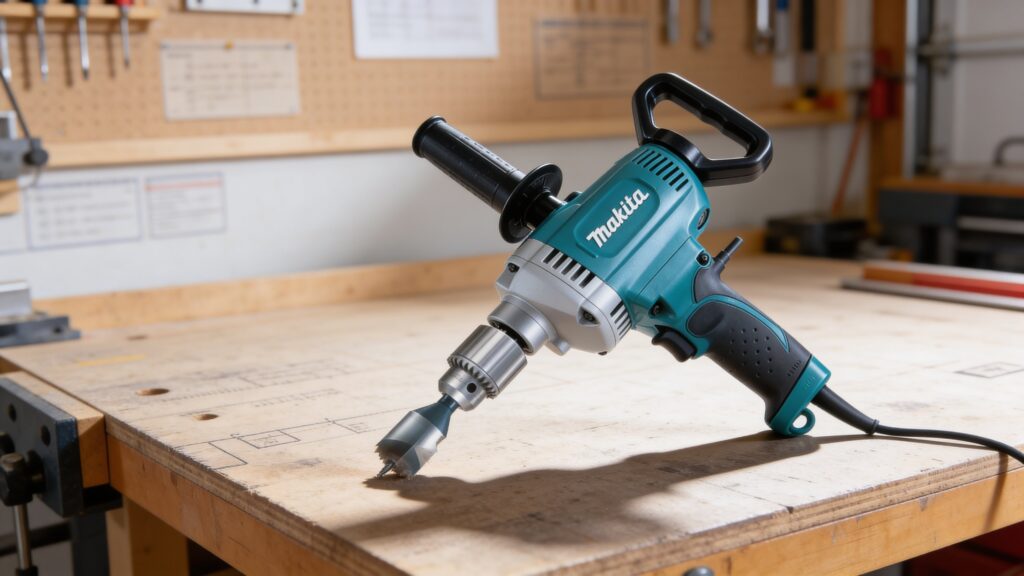
Variable-speed mixing drills are often discussed in terms of power, yet the defining feature is controlled rotational output. The mechanism regulates revolutions per minute under load, allowing torque delivery to remain stable as material density changes. This relationship between speed, torque, and resistance is frequently misunderstood, especially when mixing viscous compounds that behave differently from fasteners or standard drilling tasks.
This explainer outlines how variable-speed control systems function within mixing drills, including trigger modulation, gearing, and load response. It clarifies how rotational speed influences shear force, material flow, and mechanical strain. By the end, readers will understand the operational principles that distinguish variable-speed mixing drills from fixed-speed tools.