
Movement Pattern
Movement pattern is the path and timing the body follows during each stroke.
- Example: legs, body, arms, then a controlled return
- Check: watch whether the stroke stays smooth
- Limit: a poor pattern can make resistance feel worse
Movement pattern matters because a water resistance rower only feels right when the seat, footrests, handle path, and stroke rhythm work together. The water tank can create a responsive feel, but the user's body still has to move through a coordinated rowing stroke.
A good water rower should support leg drive, body swing, arm pull, and controlled recovery without forcing cramped posture or rough rail movement. If the movement pattern does not fit, the tank feel cannot save the workout.
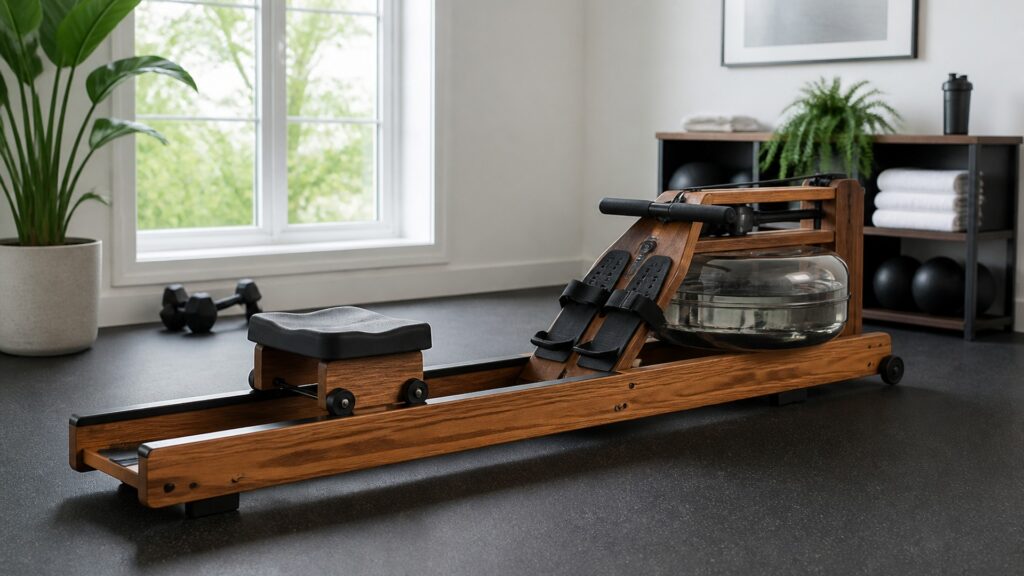
A practical look at stroke mechanics, rail travel, posture, handle path, and recovery.
Tip: A smooth tank sound is not enough. The whole stroke has to fit the user.
These concepts explain the moving parts of a comfortable rowing stroke.
Movement pattern is the path and timing the body follows during each stroke.
Leg drive is the push from the legs that starts the rowing stroke.
Seat travel is how far and how smoothly the seat moves along the rail.
Handle path is the route the handle follows toward and away from the body.
Recovery timing is the controlled return to the starting position after the drive.
Water response is how the tank reacts to changes in stroke force and rhythm.
Tip: Movement fit should be checked before monitor features, because every session depends on the stroke.
Water rowing is not just pulling a handle. A comfortable stroke starts with the legs, connects through the body, finishes with the arms, and returns in control.
Good sequence makes the water resistance feel more natural.
The seat and rail determine whether the user can move through the stroke without feeling cramped or unstable. Rail length, seat height, and smooth rolling all affect repeated use.
A rower that feels cramped will not become more comfortable just because the tank feels good.
Foot placement anchors the drive, while the handle path shapes upper-body comfort. If either feels wrong, the user may compensate with awkward posture.
The contact points decide whether the stroke feels connected.
The return phase is part of the workout, not a reset. Rushing forward can make the stroke choppy and reduce the smooth water feel that many users want.
The best water rower experience comes from rhythm, not just force.
A strong monitor, attractive tank, or premium frame cannot fix a movement pattern that does not suit the user. The first test should be whether the stroke feels repeatable.
Movement pattern matters because it defines every workout on the machine.
A water rower works best when the user's stroke fits the machine.
Seat, rail, footrests, and handle support a smooth stroke.
The user enjoys learning and repeating rowing rhythm.
The rail feels cramped, rough, or unstable.
The user wants standing cardio instead of seated stroke mechanics.
Responsive water resistance does not replace good stroke fit.
The legs, torso, arms, and recovery all shape the stroke.
The tank responds to effort, but it cannot correct timing or posture.
Movement problems often appear after several minutes.
Rail length, seat comfort, and handle path vary by model.
Tip: Test the stroke slowly, then at normal workout pace.
Short answers about stroke sequence, comfort, and fit.
Because the rower only feels smooth when the user's stroke works with the rail, handle, footrests, and tank.
Test seat travel, footrest security, handle path, and recovery timing.
The basics are learnable, but timing matters for comfort and consistency.
Some can, but rail length and seat travel should be checked carefully.
Choose a water rower only if the stroke feels smooth enough to repeat.
Movement pattern matters because every water-rower workout depends on a smooth, repeatable stroke.
Check rail travel, foot connection, handle path, posture, and recovery timing before judging the machine by tank feel alone.
Use these Review Streets paths to compare related categories and practical next decisions.
Review how the tank creates resistance.
Explore the broader rowing-machine category.
Compare more home cardio options.
Choose a retailer
Prices checked regularly. We may earn a commission at no cost to you.