
Plate Load
Plate load is the amount of removable weight added to a bar, machine, sled, or storage system.
- Example: adding two 10 lb plates to a barbell
- Check: confirm the total load includes both sides
- Limit: plates need compatible equipment
Movement pattern matters with weight plates because plates usually load another implement instead of becoming the movement by themselves. The way the barbell, sled, machine, or landmine moves determines whether the plates create useful resistance.
A plate-loaded setup can support squats, presses, pulls, carries, pushes, and rotational work, but only when the loading path matches the exercise. The plate is the resistance source; the movement pattern comes from the equipment and the user's setup.
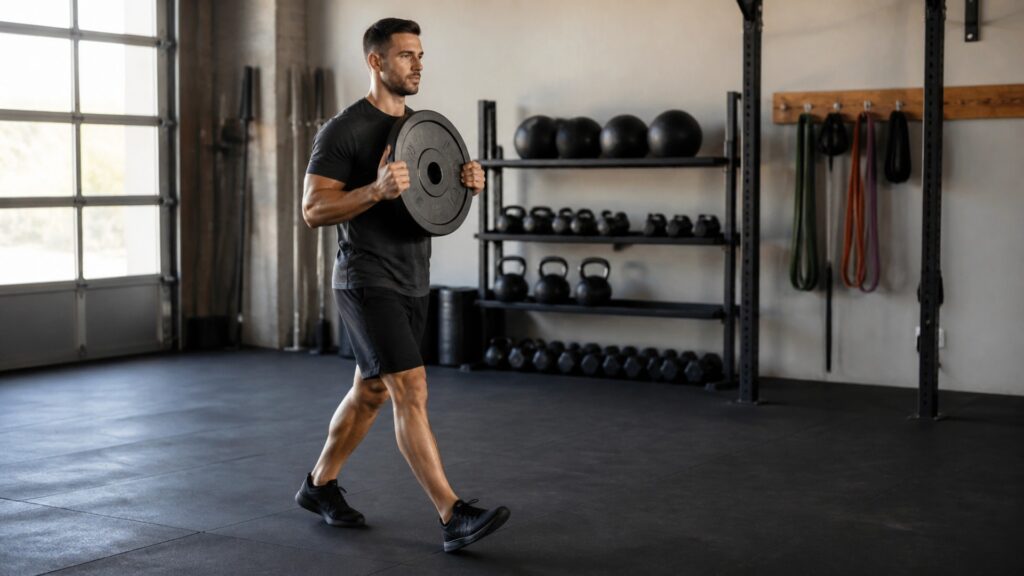
A practical look at barbell paths, machine paths, sled loading, landmine work, and plate-only drills.
Tip: Start with the movement, then decide whether plates are the right way to load it.
These concepts explain how plates affect movement only through the equipment or drill using them.
Plate load is the amount of removable weight added to a bar, machine, sled, or storage system.
Sleeve diameter is the size of the bar or machine post the plate fits on.
Increment is the smallest useful weight change available.
Grip cutout is an opening or handle shape that makes a plate easier to carry.
Calibration is how closely a plate matches its labeled weight.
Storage fit is how well plate size, thickness, and quantity work in the room.
Tip: The right equipment choice depends on how resistance is created, adjusted, and repeated.
A plate does not create a movement pattern on its own. It adds load to a bar, machine, sled, or other implement that defines the path.
The movement pattern comes from the loaded system.
On a barbell, plates usually add load to squats, deadlifts, presses, rows, and other fixed-hand exercises.
Barbell patterns are the most common plate-loaded movements.
Plate-loaded machines use levers, handles, and pivots to guide the pattern. The plates provide resistance, but the machine controls the line of motion.
Machine setup affects the pattern as much as the plates do.
Sleds, landmines, and specialty tools can turn plate load into pushes, pulls, arcs, and angled presses.
Specialty setups expand what plates can load.
A plate can be held for carries, raises, twists, or core work, but its shape is not as versatile as a dumbbell or kettlebell.
Plate-only movement is useful, but secondary.
Plates can support many patterns when the loaded implement fits the task.
They add scalable resistance to barbells, machines, sleds, and landmines.
They let the same plate set support several equipment types.
They do not define the movement by themselves.
Hand-held plate drills are less ergonomic than purpose-built tools.
A plate-loaded exercise is shaped by the whole setup.
The implement or machine creates the pattern; plates add load.
Kettlebells and dumbbells often handle better for hand-held movement.
Seat, handle, and lever setup still matter.
Too much load can change mechanics and reduce range.
Tip: Match the plate load to the movement path, not the other way around.
Short answers for practical equipment and training decisions.
Because plates add load to another movement system, and that system determines how the body moves.
No. They work best with compatible bars, machines, sleds, and specialty tools.
Yes, for some carries and core drills, but they are not as ergonomic as many hand-held tools.
Check the implement, loading path, sleeve fit, and whether the load can stay balanced.
Choose plates when they load the intended movement cleanly and safely.
Weight plate movement pattern matters because plates add resistance to a loaded system, not just to a label.
The best setup matches the movement path, equipment fit, and amount of load needed.
Use these Review Streets paths to compare related categories and practical next decisions.
Explore the weight plates category.
Review plate loading and setup basics.
Compare related strength-training equipment.
Choose a retailer
Prices checked regularly. We may earn a commission at no cost to you.