
Plate Load
Plate load is the amount of removable weight added to a bar, machine, sled, or storage system.
- Example: adding two 10 lb plates to a barbell
- Check: confirm the total load includes both sides
- Limit: plates need compatible equipment
Safety factors matter with weight plates because plates are heavy, removable objects that must fit, stay balanced, and be handled repeatedly. Most plate problems come from poor compatibility, uneven loading, unstable storage, or rushed handling.
Good plate safety is simple: use plates that fit the equipment, load them evenly, secure them when needed, and store them where they cannot roll, tip, or block movement. The safer setup is usually also the faster setup.
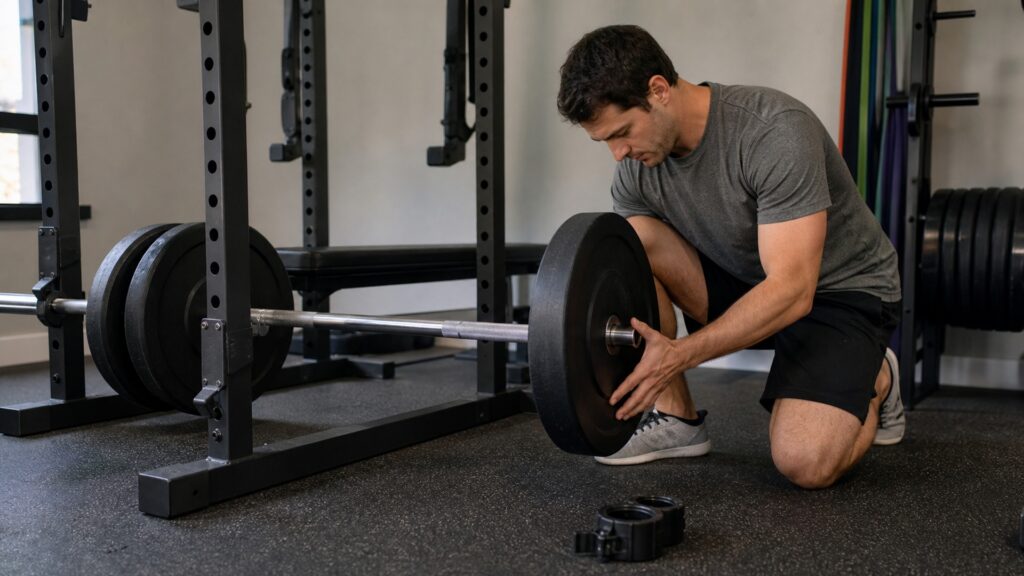
A practical safety checklist for fit, balance, collars, storage, floor space, and handling.
Tip: Most plate safety issues are preventable with fit, balance, control, and storage.
These concepts explain how to keep plate loading stable and predictable.
Plate load is the amount of removable weight added to a bar, machine, sled, or storage system.
Sleeve diameter is the size of the bar or machine post the plate fits on.
Increment is the smallest useful weight change available.
Grip cutout is an opening or handle shape that makes a plate easier to carry.
Calibration is how closely a plate matches its labeled weight.
Storage fit is how well plate size, thickness, and quantity work in the room.
Tip: The right equipment choice depends on how resistance is created, adjusted, and repeated.
A plate should match the bar, machine, sled, or storage post. Loose, stuck, or mismatched plates make loading less predictable.
Safe loading starts with fit.
Uneven loading can tip machines, shift bars, or make a lift feel different from side to side.
Balanced loading reduces surprises.
Collars and clips help keep plates from sliding during lifts, carries, landmine work, and angled movements.
Retention matters whenever plates can slide.
Floor clutter creates trip hazards and slows training. Storage trees, pegs, and racks keep plates organized and reachable.
Good storage is a safety feature.
Most plate handling happens between sets, when attention can drop. Grip, posture, and pace matter.
Controlled handling prevents small mistakes.
A safer plate setup is compatible, balanced, secured, and stored well.
It reduces sliding, tipping, pinching, rolling, and clutter hazards.
It makes repeated loading faster and more predictable.
It cannot compensate for overloaded lifts or poor equipment condition.
It still requires attention during every plate change.
Simple equipment still needs careful setup.
Durability does not solve poor fit or uneven loading.
Collars matter when plates can slide or the bar can tilt.
Storage affects trip risk, speed, and handling.
Loose or mismatched fits can still create problems.
Tip: Safe plate loading is fit, balance, retention, storage, and controlled handling.
Short answers for practical equipment and training decisions.
Because plates are heavy removable loads that can slide, roll, tip, or be loaded unevenly.
Use collars whenever plates can shift, especially on barbells and angled movements.
Store them on stable racks, trees, or pegs with walkways clear.
Rushed uneven loading and plates left on the floor are common avoidable problems.
Use compatible plates, load evenly, secure when needed, and store them safely.
Weight plate safety factors matter because plates must fit, balance, stay put, and be handled often.
A safer setup uses compatible plates, even loading, collars when needed, and stable storage.
Use these Review Streets paths to compare related categories and practical next decisions.
Explore the weight plates category.
Review plate loading and setup basics.
Compare related strength-training equipment.
Choose a retailer
Prices checked regularly. We may earn a commission at no cost to you.