
Plate Load
Plate load is the amount of removable weight added to a bar, machine, sled, or storage system.
- Example: adding two 10 lb plates to a barbell
- Check: confirm the total load includes both sides
- Limit: plates need compatible equipment
Training function matters with weight plates because plates do more than make equipment heavier. They determine how precisely load can be adjusted, how safely equipment can be loaded, and whether progression is practical over time.
A plate set that works for heavy barbell lifting may not be ideal for machines, sleds, small home gyms, or beginner progression. The function depends on plate size, increments, material, compatibility, and handling.
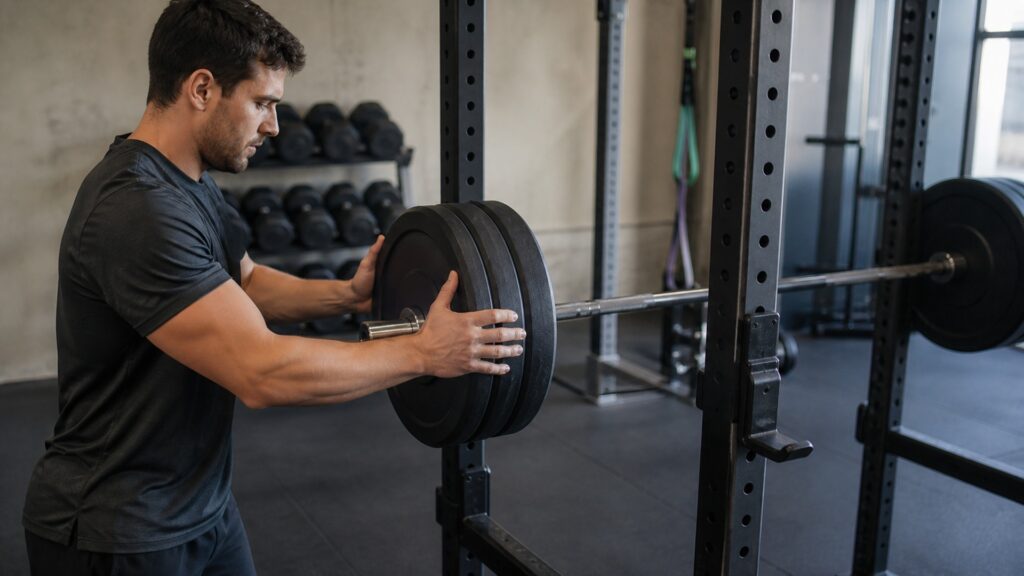
A practical look at load increments, equipment compatibility, plate type, and workout role.
Tip: The best plates are the ones that make loading repeatable for the training goal.
These concepts explain how plates support progression, loading, and equipment use.
Plate load is the amount of removable weight added to a bar, machine, sled, or storage system.
Sleeve diameter is the size of the bar or machine post the plate fits on.
Increment is the smallest useful weight change available.
Grip cutout is an opening or handle shape that makes a plate easier to carry.
Calibration is how closely a plate matches its labeled weight.
Storage fit is how well plate size, thickness, and quantity work in the room.
Tip: The right equipment choice depends on how resistance is created, adjusted, and repeated.
Training function depends on how easily the user can add the right amount of load. Small plates can matter as much as large ones.
Progression is smoother when load changes are manageable.
Bars, machines, sleds, and storage pegs may need different plate styles. A great bumper plate may be too thick for some uses.
Function starts with fit.
Rubber, urethane, bumper, and iron plates all affect noise, bounce, floor protection, and space.
Material changes how plates behave in real workouts.
A plate that is awkward to pick up or load can slow sessions and create avoidable strain.
Handling affects consistency.
Powerlifting, Olympic lifting, general strength, machines, and home gyms may all call for different plate priorities.
The training role should shape the plate set.
Plates support progression when they fit the equipment and goal.
They make resistance adjustable in repeatable steps.
They support barbell, machine, sled, and home-gym loading.
They require compatible equipment.
Poor increments or storage can limit usefulness.
A plate set is not just total pounds.
Small plates are often critical for progression.
Diameter, thickness, and hole size affect fit.
Most general training does not need tight calibration.
Poor storage slows loading and clutters the workout area.
Tip: Choose plates for how they will be used, not just how much they weigh.
Short answers for practical equipment and training decisions.
They determine how gradually a user can increase load.
The best plates fit the equipment, storage space, flooring, and training style.
Use bumpers if dropping loaded bars is part of the training.
Usually only when precision matters for competition-style lifting.
Weight plates matter because they control how load is added, measured, handled, and stored.
Weight plate training function matters because plates determine how load can be added and repeated.
A useful plate set fits the equipment, supports the right increments, and works smoothly in the training space.
Use these Review Streets paths to compare related categories and practical next decisions.
Explore the weight plates category.
Review plate loading and setup basics.
Compare related strength-training equipment.
Choose a retailer
Prices checked regularly. We may earn a commission at no cost to you.