
Plate Load
Plate load is the amount of removable weight added to a bar, machine, sled, or storage system.
- Example: adding two 10 lb plates to a barbell
- Check: confirm the total load includes both sides
- Limit: plates need compatible equipment
Workout role matters with weight plates because plates can serve different jobs in a training setup. They may be the main loading source for a barbell, the resistance for a machine or sled, a progression tool for small jumps, or a simple accessory for carries and core drills.
Choosing plates only by total weight misses how they will actually be used. A useful plate set matches the lifts, loading frequency, storage space, flooring, and progression needs of the workout.
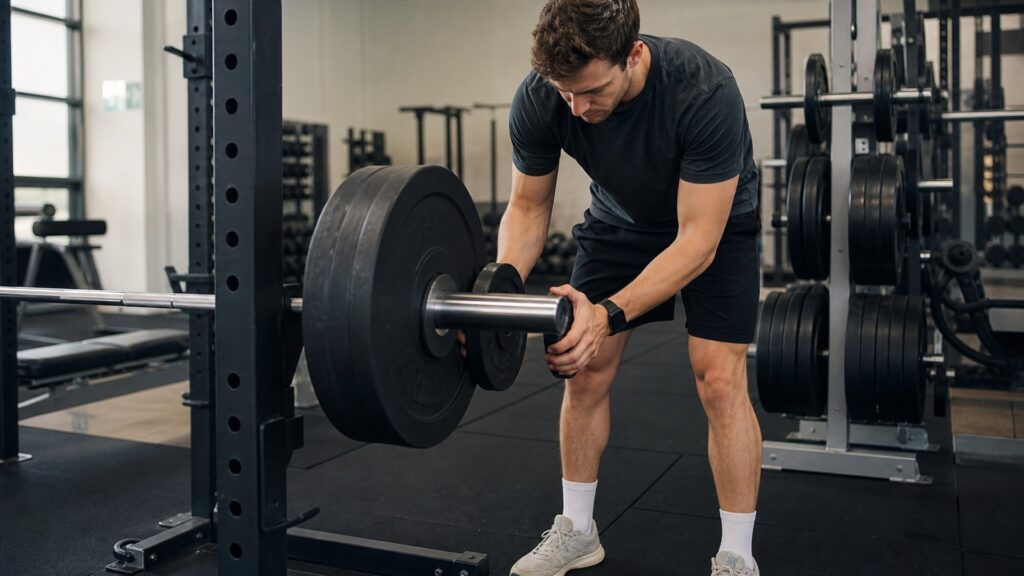
A practical guide to using plates for main lifts, machines, sleds, accessories, progression, and storage.
Tip: Define the plate's job before choosing its size, material, or set composition.
These concepts explain how plates fit different training jobs.
Plate load is the amount of removable weight added to a bar, machine, sled, or storage system.
Sleeve diameter is the size of the bar or machine post the plate fits on.
Increment is the smallest useful weight change available.
Grip cutout is an opening or handle shape that makes a plate easier to carry.
Calibration is how closely a plate matches its labeled weight.
Storage fit is how well plate size, thickness, and quantity work in the room.
Tip: The right equipment choice depends on how resistance is created, adjusted, and repeated.
For barbell strength work, plates are the adjustable load that makes squats, deadlifts, presses, and rows progress over time.
Main lifts need repeatable plate loading.
Plate-loaded machines and sleds use plates differently than barbells. Sleeve space, balance, and loading direction matter.
The same plate can serve several systems when it fits.
Large plates build working weight, but small plates make gradual progress possible when a big jump is too much.
Small increments are part of the workout role.
Plates can be held for carries, loaded stretches, core drills, or raises, but they are not always the best hand-held tool.
Accessory use is helpful but secondary.
A plate set that is hard to reach, organize, or move can slow the whole session. Storage supports training flow.
Workout role includes how plates are handled between sets.
A plate set works best when it fits the training job.
It provides scalable loading for strength work, machines, and sleds.
It supports progression with the right increments.
It depends on compatible equipment.
It is less ideal than purpose-built tools for many hand-held movements.
The same total weight can serve very different programs.
Increments, material, thickness, and storage all affect use.
Olympic lifting, home gyms, machines, and sleds may need different priorities.
Small plates often make progression realistic.
Their shape can be awkward compared with dumbbells or kettlebells.
Tip: Choose plates by the job they need to perform in the workout.
Short answers for practical equipment and training decisions.
Because plates can load barbells, machines, sleds, or accessories, and each job has different needs.
Compatible plates with useful small increments and practical storage are usually most helpful.
Sometimes. Check sleeve size, thickness, and machine capacity.
Yes, with compatible machines, sleds, landmines, and some accessory drills.
Choose plates for the workout role, not just the total weight.
Weight plate workout role matters because plates can be main load, machine load, sled load, progression tools, or occasional accessories.
A useful set matches the equipment, exercises, increments, storage, and training goals.
Use these Review Streets paths to compare related categories and practical next decisions.
Explore the weight plates category.
Review plate loading and setup basics.
Compare related strength-training equipment.
Choose a retailer
Prices checked regularly. We may earn a commission at no cost to you.