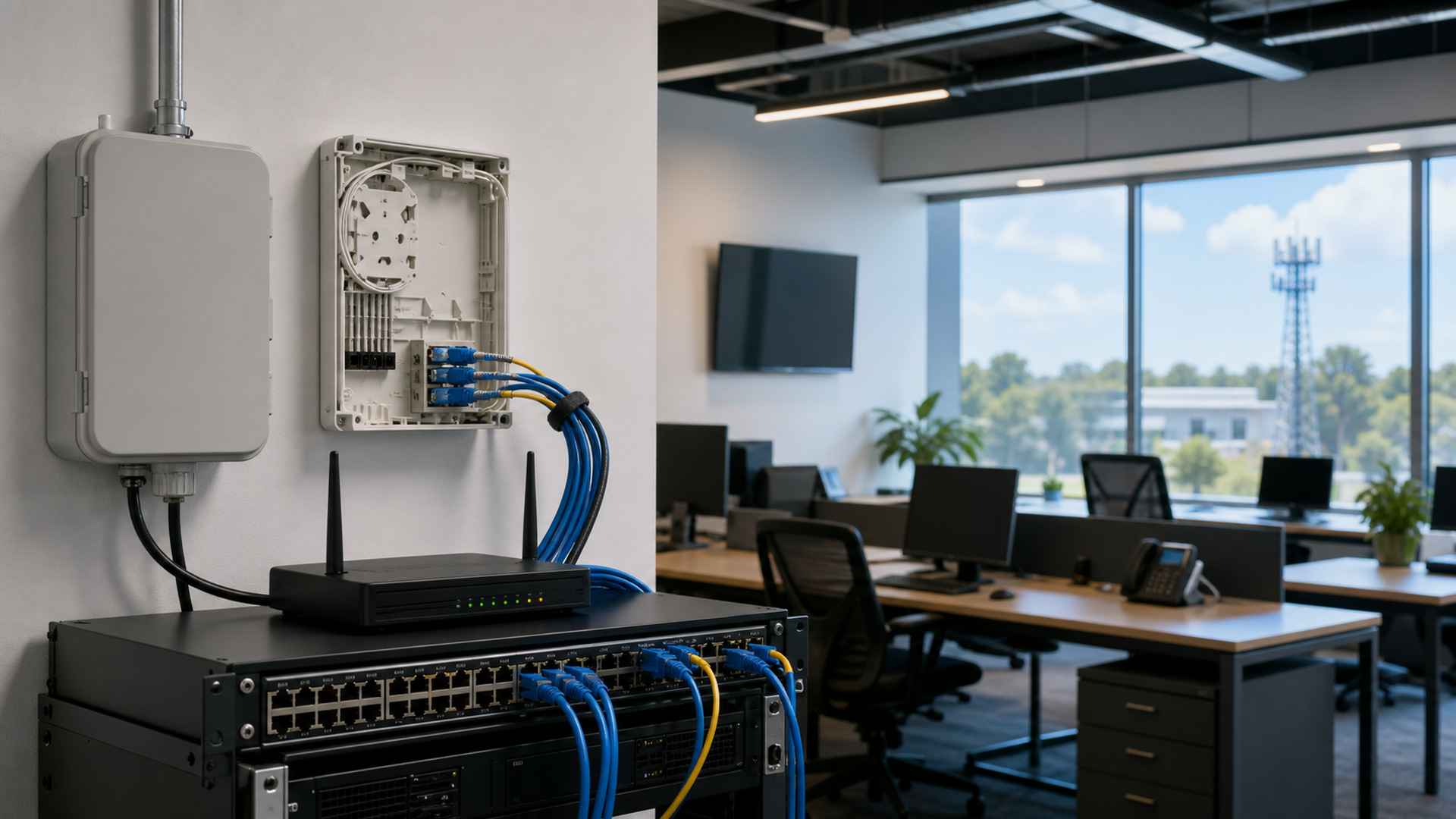
Why Business Internet Services Operating Model Matters
A detailed guide to business internet services operating model, including circuit inventory, IP allocation, router lifecycle, exceptions, verification, and renewal decision.

Reviews You Can Trust
A detailed guide to business internet services operating model, including circuit inventory, IP allocation, router lifecycle, exceptions, verification, and renewal decision.
A detailed guide to business internet services, including access circuit, customer router, DNS resolver, exceptions, verification, and failover path.
Network scalability matters because traffic, devices, sites, routes, sessions, policies, failures, and operational work grow differently; a scalable design keeps each resource measurable, bounded, and governable.
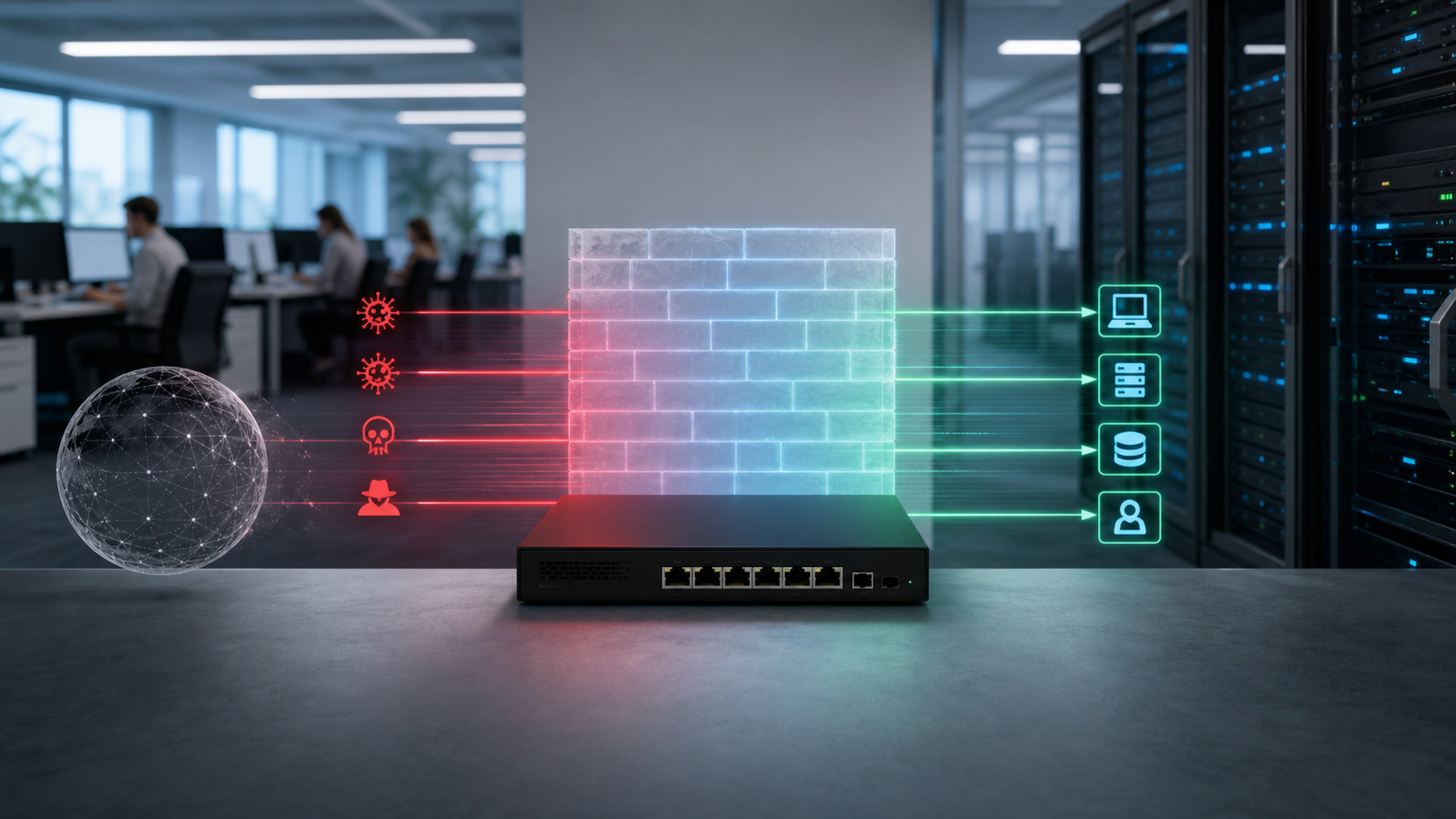
Business firewalls matter because they turn network boundaries into stateful policy and evidence, limiting which connections begin, where they travel, what is inspected, and how suspicious paths can be contained.
Network reliability matters because business applications depend on complete paths whose shared failures, failover behavior, degraded capacity, observability, and recovery determine whether transactions remain usable.
Mesh WiFi is most useful when Ethernet is impractical and moderate wireless demand can tolerate relay paths; wired access points usually provide more predictable capacity and fault isolation.
WiFi 7 extends WiFi 6 with mechanisms such as 320 MHz channels, multi-link operation, 4K-QAM, enhanced puncturing, and more flexible resource allocation, but gains depend on spectrum, clients, design, and backhaul.
Cloud-managed and on-premise networking differ chiefly in where management authority, telemetry, software, and operational responsibility reside—not necessarily where production packets flow.
Managed networking matters because continuous inventory, configuration control, telemetry, incident response, change governance, security remediation, capacity planning, carrier coordination, and lifecycle ownership keep the network architecture dependable after installation.
Business network security matters because identity, device trust, segmentation, firewall policy, encrypted paths, protected administration, telemetry, containment, and recovery determine which systems can be reached and how far compromise can spread.
Business internet and networking solutions move packets through provider circuits, edge routers, firewalls, switches, wireless access points, addressing, DNS, routing, segmentation, and encrypted tunnels while monitoring whether each path delivers the required service.
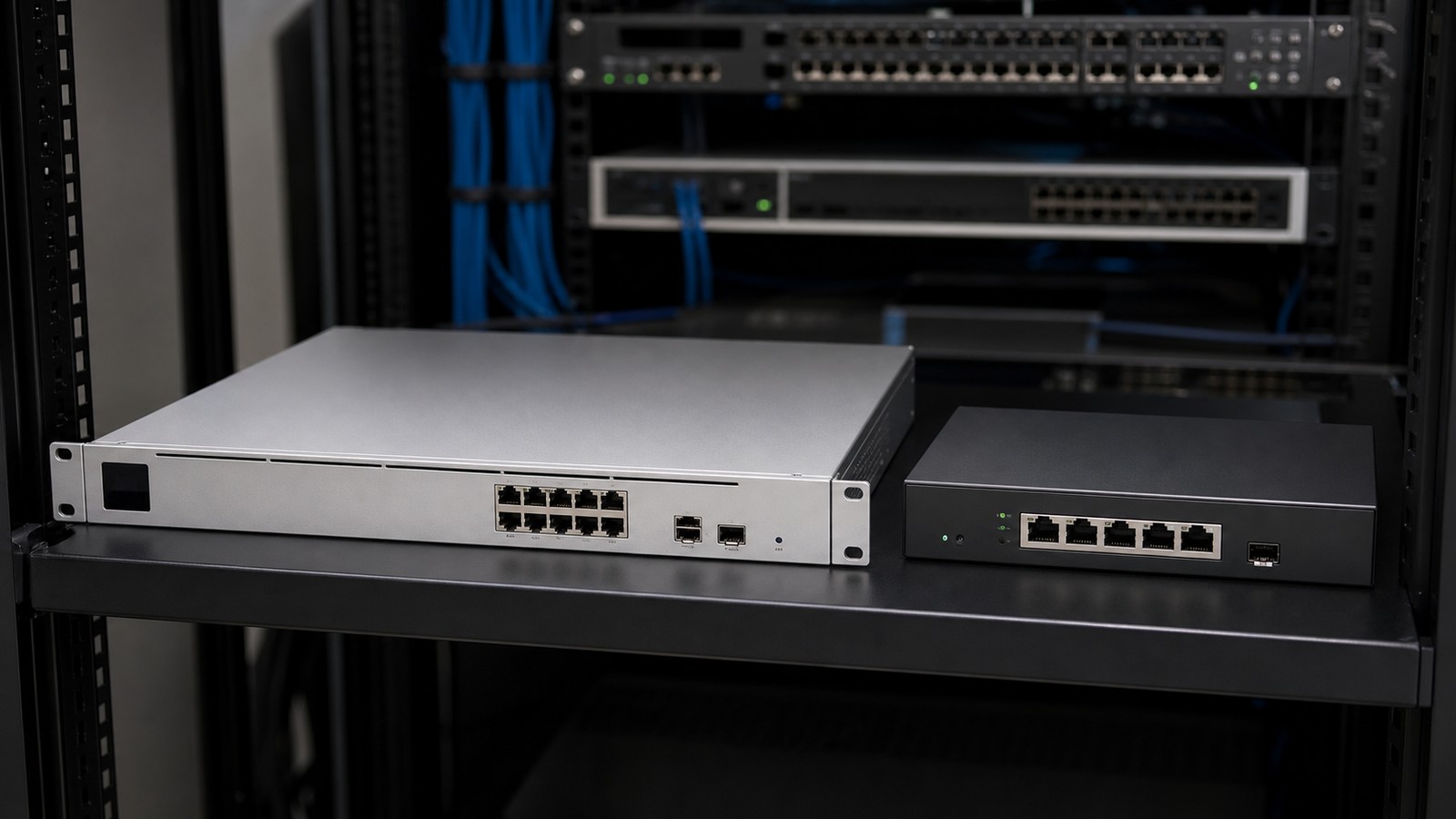
Ubiquiti Dream Machine Pro and TP-Link ER7206 are compared on management model, feature depth, deployment fit, cost, support ownership, user experience, upgrade timing, and business fit.