
Air Resistance
Air resistance uses a fan to create drag as the handle is pulled.
- Example: pulling harder makes the fan create more resistance
- Check: test easy and hard strokes
- Limit: fan noise may be higher than other rower types
Air resistance rowers work by using a fan flywheel to create drag as the user pulls the handle. The harder the user drives the stroke, the more air resistance the fan creates, so effort rises naturally with stroke power.
The design is useful for rowing intervals, steady cardio, and technique practice because it responds quickly to effort. The tradeoffs are fan noise, space needs, and the need to learn a coordinated rowing stroke.
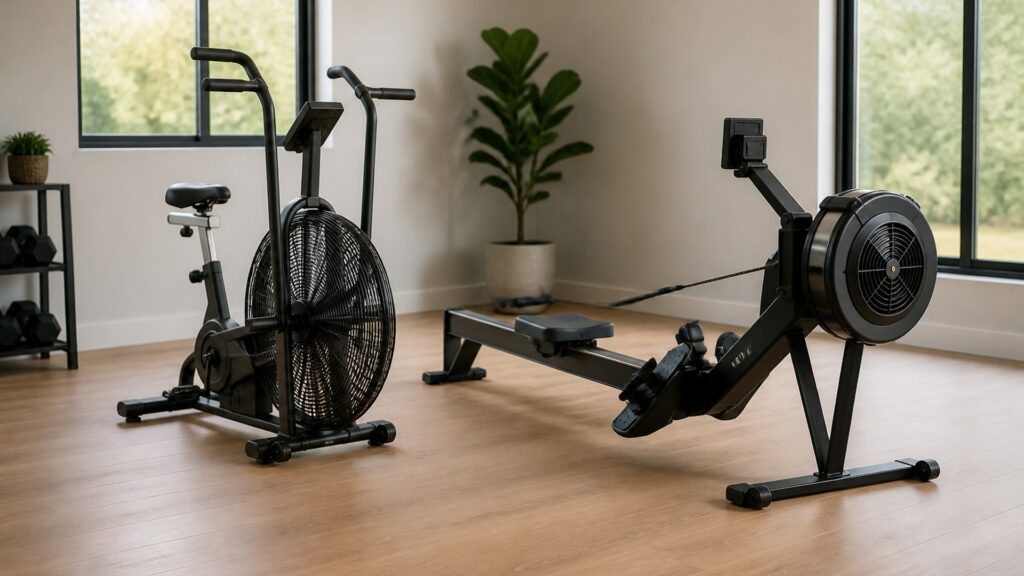
A practical look at the fan, damper, stroke sequence, monitor, and setup.
Tip: Set the machine to the user first, then judge the workout at the pace and effort the user will repeat.
These concepts connect equipment design to comfort, effort, setup, and workout use.
Air resistance uses a fan to create drag as the handle is pulled.
Damper setting changes how much air enters the flywheel housing.
Stroke sequence is the order of leg drive, body swing, arm pull, and recovery.
Monitor feedback shows rowing data such as time, distance, pace, stroke rate, and watts.
Slide rail is the track that lets the seat move forward and backward during each stroke.
Workout role is the job the rower fills in a routine.
Tip: The right machine is the one whose motion, controls, and setup fit the routine.
An air rower uses a fan flywheel. Pulling harder moves more air and makes the stroke feel harder.
The fan makes effort responsive.
The damper changes airflow into the fan housing. It affects stroke feel, but it is not simply a difficulty dial.
Damper choice should support technique.
A rowing stroke uses legs, body, and arms in sequence. Poor timing can make the rower feel awkward or tiring in the wrong places.
Good stroke order makes rowing useful.
Air rowers often provide pace, distance, time, stroke rate, and watt feedback. Those numbers help structure workouts when the user understands them.
Feedback should guide, not distract.
Air rowers can be long and louder than magnetic or water rowers. Room fit and sound matter for home use.
The home setup affects regular use.
Air rowers are responsive cardio tools, but they are not silent or tiny.
They respond naturally to harder or easier strokes.
They work well for intervals, steady rowing, and performance tracking.
They can be louder than other resistance types.
They require space and basic rowing technique.
Fan resistance is simple, but setup and technique still matter.
It changes feel and airflow, while effort still comes from the stroke.
Power helps only when technique stays controlled.
Fan noise can be noticeable.
The legs and body drive much of the stroke.
Tip: Test the actual fit, motion, and resistance before trusting category claims.
Short answers for practical equipment decisions.
A fan flywheel creates drag as the user pulls the handle.
Yes. More stroke power usually creates more resistance.
It changes airflow and stroke feel, but higher is not automatically better.
They can be louder than magnetic or some water rowers because of fan noise.
An air rower works best when fan feel, technique, monitor feedback, space, and noise fit the user.
Air resistance rowers work by using fan drag that increases as the user applies more stroke power.
The best ride comes from controlled technique, useful monitor feedback, and a setup that fits the room.
Use these Review Streets paths to compare related categories and practical next decisions.
Review the broader rowing-machine category.
Compare another rowing resistance style.
Explore more cardio equipment options.
Choose a retailer
Prices checked regularly. We may earn a commission at no cost to you.