
Foot Strike Contact
The moment the foot loads the shoe and sock together.
- It can shift fabric under the foot.
- Activity and shoe type matter.
- It is not gait diagnosis.
Athletic socks movement pattern matters because the sock moves inside the shoe while the foot strikes, bends, pushes off, lifts at the heel, turns, and cuts side to side.
Toe flex, arch stretch, cuff slide, sock twist, shoe flex grooves, forefoot creases, ankle bend, and fabric bunching are movement details that standing fit can miss.
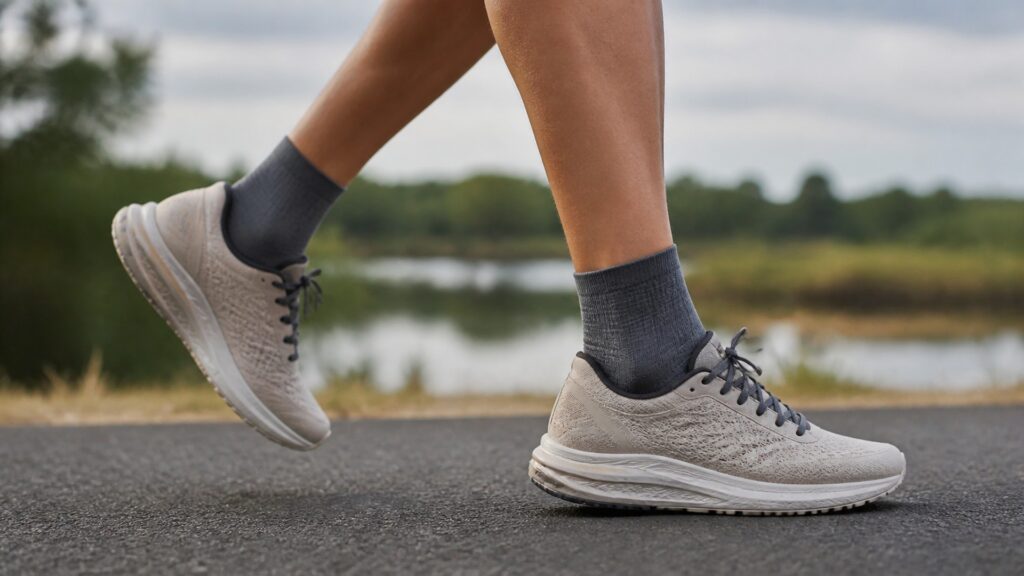
This explains sock movement as fabric placement inside footwear, not as gait or injury analysis.
Tip: Watch the sock during the movement that matters: landing, pushing off, cutting, climbing, or flexing.
These definitions connect the main idea to the variables, limits, and practical signals readers need to compare options.
The moment the foot loads the shoe and sock together.
The front-foot bend where shoe and sock flex during takeoff.
Rotation of the sock away from its intended alignment.
Movement of the sock top down the ankle or calf.
Side-to-side movement common in court or agility work.
Loose material gathering inside the shoe.
Tip: Use these terms to describe fabric movement inside footwear rather than body mechanics.
A sock is not fixed in place; it responds to pressure, flex, sweat, shoe shape, and repeated foot movement.
Movement pattern starts with the sock as a moving layer.
The forefoot bends repeatedly during running, jumping, climbing, and some gym work, so seams and cushion placement matter there.
Forefoot motion has its own home.
If the heel pocket or cuff does not match the foot and shoe, the sock can rotate, slide, or pull downward.
Placement problems belong together.
Court drills, agility work, and some training moves load the sock side-to-side more than straight walking does.
Side-to-side motion is a different sock test.
Sock movement can explain fit and placement, but it cannot diagnose gait, guarantee blister prevention, or promise injury reduction.
The explanation stays with the sock and shoe.
Movement-pattern analysis explains how socks shift, flex, stretch, and hold position inside shoes.
It separates forefoot flex, heel hold, cuff slide, lateral movement, and bunching.
It helps readers test socks during the activity itself.
It does not diagnose gait or injury risk.
It does not guarantee blister prevention or comfort.
Common shortcuts and misunderstandings can make the topic seem simpler than it is.
Movement can reveal sliding, twisting, creasing, or bunching.
Court, gym, cycling, and lifting shoes can all stress socks differently.
They may help placement, but heel shape, size, shoe fit, and moisture matter too.
That claim should not be made from sock behavior alone.
Tip: Treat strong claims as starting points for comparison, not final answers.
Concise answers to common questions readers may have after the main explanation.
It is how a sock shifts, flexes, stretches, and holds position inside footwear during activity.
The forefoot bends repeatedly and can expose seam, cushion, or fabric issues.
Yes, depending on size, cuff, heel pocket, shoe fit, moisture, and movement.
They can, because side-to-side movement stresses midfoot hold differently.
No. It explains sock behavior only.
Athletic socks movement pattern matters because fabric behavior changes during foot strike, push-off, heel lift, cuff movement, and direction changes.
The right test is the sock inside the shoe during the actual activity.
Use these Review Streets paths to connect the explainer to related categories, comparisons, and next decisions.
Use this for the construction behind sock movement.
Read this for fit and condition checks around sock use.
Browse socks after identifying movement and shoe-fit needs.
Choose a retailer
Prices checked regularly. We may earn a commission at no cost to you.