
Session Sock Fit
How a sock stays positioned during repeated training sessions.
- It depends on heel shape, arch tension, and shoe fit.
- Repeated use can reveal slipping.
- It is not a training plan.
Athletic socks training function matters because socks are used inside shoes across repeated sessions, sweat, movement, wash cycles, and activity-specific contact points.
The useful analysis stays with session sock fit, shoe volume, arch tension, toe seam bulk, heel slip, cushion placement, moisture handling, and durability over a training week.
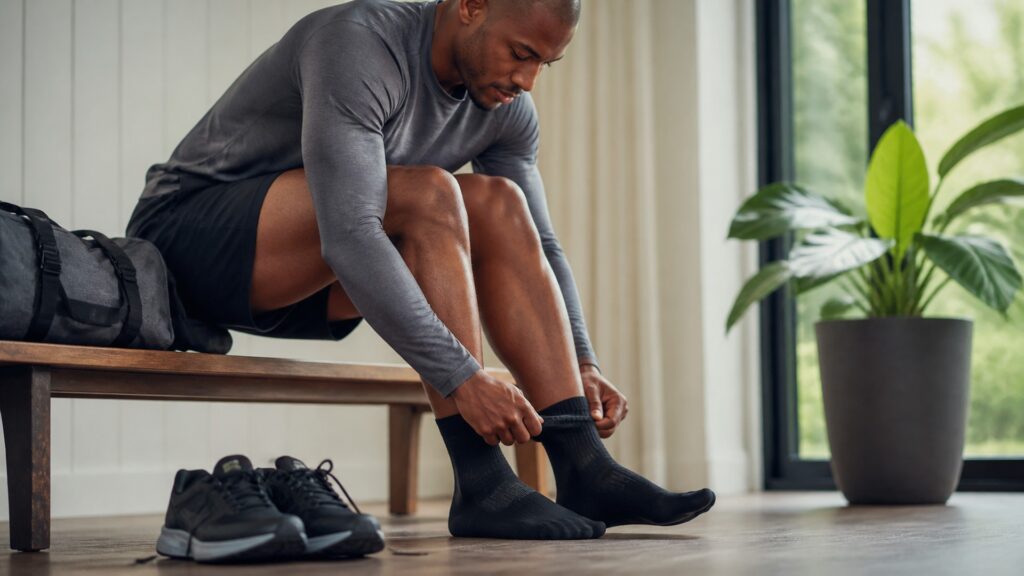
This explains how athletic socks support training sessions without promising results.
Tip: Judge training function by the sock, shoe, activity, and repeat use together.
These definitions connect the main idea to the variables, limits, and practical signals readers need to compare options.
How a sock stays positioned during repeated training sessions.
The space available inside the shoe after the sock is included.
The set of socks used across multiple workouts and wash cycles.
Placement of thicker knit zones for activity-specific shoe contact.
The contact among foot, sock, and shoe lining.
Midfoot knit pressure intended to help sock placement.
Tip: Use these terms to keep repeated-session sock function separate from training outcomes.
A sock that feels fine once can behave differently after repeated sessions, sweat, washing, and shoe-specific movement.
Training function is repeatable product behavior.
Cushion and yarn thickness change available shoe volume, toe room, heel hold, and lace feel.
The sock cannot be judged away from the shoe.
Training schedules expose how quickly socks dry, how they feel damp, and how elastic recovers after washing.
Material behavior matters across a week.
Running, lifting, court work, and cycling can ask for different shoe contact, so sock padding should match the actual footwear and activity.
Sport-specific function is about fit and contact.
Socks can support fit and contact conditions, but they cannot guarantee speed, recovery, blister prevention, or injury reduction.
The explanation stays with product function.
Training-function analysis explains how socks behave across repeated shoe-based sessions.
It separates shoe volume, cushion, moisture, wash wear, and sport-specific contact.
It helps readers avoid treating socks as a training plan.
It does not guarantee comfort, blister prevention, performance, recovery, or injury prevention.
It does not provide medical or coaching advice.
Common shortcuts and misunderstandings can make the topic seem simpler than it is.
They support the foot-shoe interface but do not create adaptation.
Extra cushion can crowd the shoe.
Different shoes and movements can change the best sock traits.
Sweat, shoe ventilation, heat, and duration still matter.
Tip: Treat strong claims as starting points for comparison, not final answers.
Concise answers to common questions readers may have after the main explanation.
It is how the sock supports repeated sessions through fit, cushion, moisture behavior, and shoe compatibility.
The sock takes up space inside the shoe and can change fit.
That should not be promised; many factors affect skin irritation.
A rotation can help with drying and wear, but it is a practical choice.
No. Ordinary athletic sock function is usually about shoe interface rather than clinical pressure.
Athletic socks training function matters when repeated sessions expose fit, cushion, moisture, shoe volume, and wash-wear details.
The sock supports the training environment inside the shoe, but it does not promise the training outcome.
Use these Review Streets paths to connect the explainer to related categories, comparisons, and next decisions.
Use this for the sock construction behind training function.
Read this to match socks to running, lifting, court, cycling, or gym roles.
Browse socks after identifying fit, cushion, and moisture needs.
Choose a retailer
Prices checked regularly. We may earn a commission at no cost to you.