
Frame
The main structure that holds bicycle systems together.
- It carries rider and component loads.
- Geometry shapes fit and handling.
- Accessories mount around it.
A bicycle works by combining rider power, balance, steering, braking, gearing, and tire contact into outdoor motion. Pedals turn the crankset, the chain drives the rear wheel, and the rider steers through the bars, fork, and front tire.
The explanation stays with observable parts, controls, movement patterns, and use conditions instead of making unsupported health or performance claims.
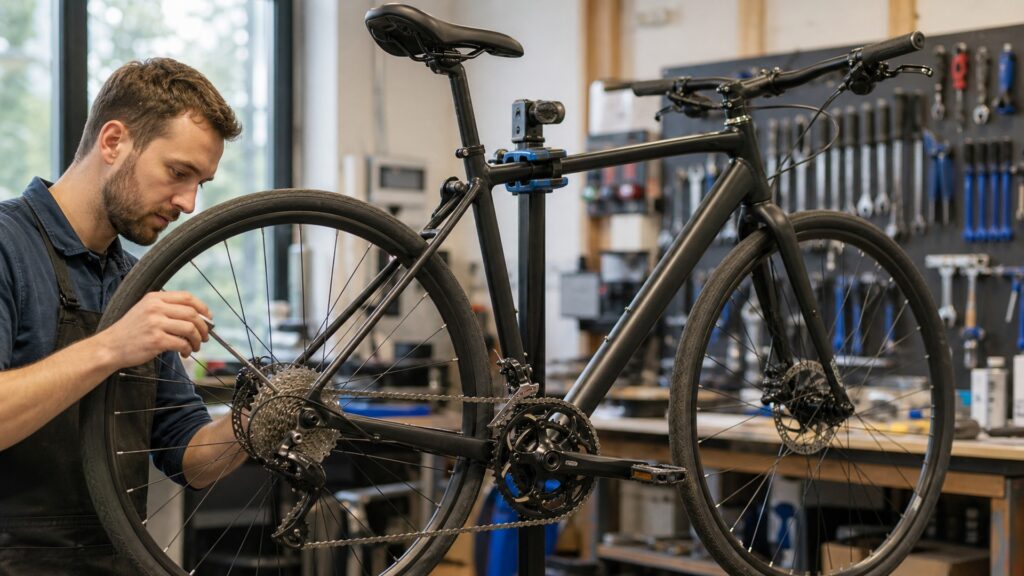
A focused Review Streets explanation of the exact fitness-equipment topic, with practical boundaries and no unsupported health claims.
Tip: Use the title as the filter: include only details that explain this exact equipment question.
These definitions connect the main idea to the variables, limits, and practical signals readers need to compare options.
The main structure that holds bicycle systems together.
The pedals, crank, chain, gears, and rear wheel connection.
The front and rear wheels as a working pair.
The parts used to slow wheel rotation.
Bars, stem, fork, headset, and front wheel control.
A place where accessories attach to the bike.
Tip: Keep each term attached to the section where it does real explanatory work.
A bicycle begins with force at the pedals. The crankset turns through the bottom bracket, the chain or belt carries motion, and the rear wheel turns through the hub.
The bicycle's motion starts with a connected drive path.
The rider steers through the handlebar, stem, headset, fork, and front wheel, but actual control depends on tire contact with the ground.
Steering is a ground-contact system, not just a handlebar turn.
Gearing lets the rider trade cadence and force against rear-wheel rotation. It does not remove effort; it changes how effort is applied.
Gears explain why bicycles can suit different terrain.
Rim and disc brakes act on different surfaces, but both manage wheel speed through friction and tire grip.
Braking is part of motion control, not an accessory.
The bicycle provides systems for motion, steering, shifting, and braking, but the rider still supplies balance and decisions in changing environments.
The machine works with the rider rather than replacing judgment.
This explainer is strongest when it stays with parts, movement, controls, and use context.
It names the machine-specific variables that matter.
It prevents generic fitness comparisons from replacing explanation.
It cannot prove personal outcomes or clinical suitability.
It should not override product manuals or qualified advice.
Common shortcuts and misunderstandings can make the topic seem simpler than it is.
The mechanism and use case matter more than the label.
Features matter only when they serve the exact ride or session.
Most outputs depend on device assumptions and context.
Individual health or safety questions need separate guidance.
Tip: Treat strong claims as starting points for comparison, not final answers.
Concise answers to common questions readers may have after the main explanation.
The article explains the specific equipment behavior named in the title.
No. They can support use, but they do not guarantee outcomes.
Price does not explain movement, control, fit, or setup differences.
No. Medical questions require qualified guidance.
They should compare the mechanism, role, and setup against the intended use.
The title matters because it points to a specific equipment behavior, not a broad fitness promise.
A useful explainer keeps the mechanism, setup, and comparison boundaries visible.
Use these Review Streets paths to connect the explainer to related categories, comparisons, and next decisions.
Use this for the bicycle mechanism behind the topic.
Read this to connect bicycle design with ride use cases.
Browse bicycle options after the concept is clear.
Choose a retailer
Prices checked regularly. We may earn a commission at no cost to you.