
Session Role
The specific job a garment is expected to perform during activity.
- It narrows the buying question.
- Roles differ by garment type.
- It is not a workout prescription.
Compression apparel training function matters because the same pressure-focused garment can be useful, distracting, or unnecessary depending on its exact job in the session.
A calf sleeve, compression tight, arm sleeve, short, or base layer should be judged by coverage, pressure feel, layering, and movement demands before any broad training or recovery claim is accepted.
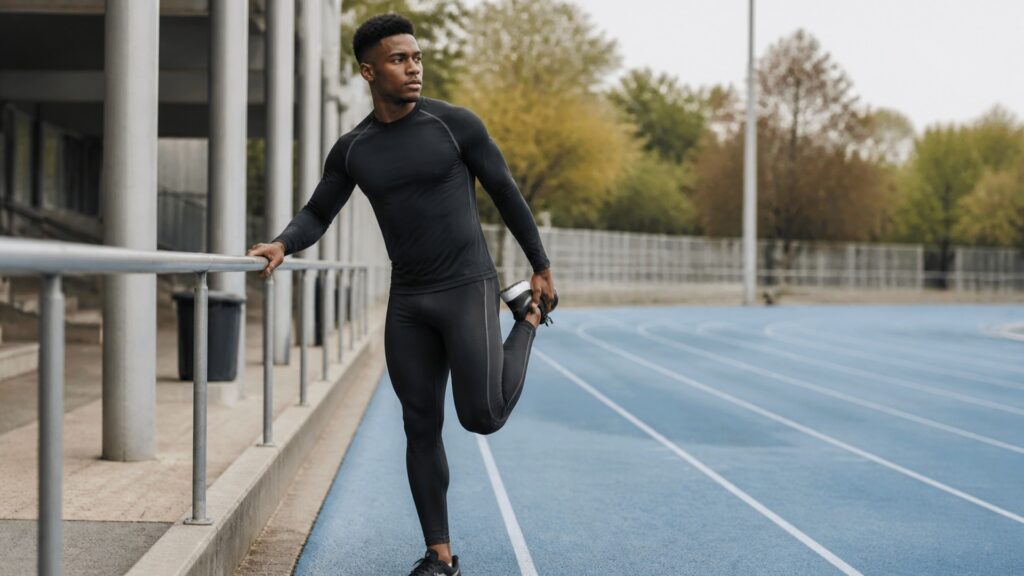
This article treats compression apparel as role-specific training clothing, not as a general promise of better outcomes.
Tip: Name the garment's session role first; then decide whether pressure is essential or merely extra.
These definitions connect the main idea to the variables, limits, and practical signals readers need to compare options.
The specific job a garment is expected to perform during activity.
A compression garment covering the lower leg without covering the foot.
Full-leg or near full-leg compression apparel.
A pressure garment worn on part of the arm.
A close garment worn under another layer.
A recovery claim presented without enough proof for the specific product and user.
Tip: Use these terms to keep training function separate from marketing claims.
A compression garment should be tied to a role such as calf coverage, thigh coverage, arm coverage, under-layer fit, or close-fitting shorts.
Function prevents category drift.
The covered area decides whether the reader is evaluating calves, quads, hamstrings, hips, torso, arms, or a layered clothing system.
Area determines relevance.
Compression apparel can sit alone or under other clothing, so its training function may involve warmth, sweat feel, friction under layers, or streamlined coverage.
The role changes in a clothing stack.
A garment's role matters only if the fit stays usable during bends, strides, lifts, reaches, or repeated flexion.
Movement tests the claimed function.
Compression apparel can have a clear session role without guaranteeing speed, strength, calorie burn, injury prevention, or recovery.
Function should not become a promise.
Training function explains what compression apparel is supposed to do inside a workout or practice session.
It links garment type, body area, pressure feel, and layering.
It helps readers compare compression pieces against ordinary apparel.
It does not prove better athletic results.
It does not make unsupported recovery or health statements acceptable.
Common shortcuts and misunderstandings can make the topic seem simpler than it is.
Sleeves, tights, shorts, and tops answer different coverage and fit questions.
Training function can simply mean pressure-focused coverage during use.
Pressure has to match the intended movement and garment area.
Loose or non-compression clothing can be better when pressure is not needed.
Tip: Treat strong claims as starting points for comparison, not final answers.
Concise answers to common questions readers may have after the main explanation.
It tells the reader what problem the garment is supposed to solve during activity.
No. The body area and garment anchors are different.
Some products can, but layering changes heat, sweat, and fit behavior.
No. It describes product role, not guaranteed results.
When the reader only needs ordinary coverage, pockets, ventilation, or loose movement.
Compression apparel training function matters because pressure-focused clothing should have a clear job before it is compared, worn, or believed.
The correct question is not whether compression sounds advanced; it is whether the garment's pressure, coverage, and movement behavior fit the session role.
Use these Review Streets paths to connect the explainer to related categories, comparisons, and next decisions.
Use this for the textile and construction mechanics behind pressure feel.
Read this when the question becomes where compression belongs in a workout kit.
Compare pressure-focused garments with running clothing when session needs overlap.
Choose a retailer
Prices checked regularly. We may earn a commission at no cost to you.