
Chamois Pad
A sewn-in pad used in many cycling shorts or bibs.
- It changes the clothing interface at the saddle.
- Shape and density vary.
- It cannot fix bike fit by itself.
Cycling apparel works by shaping fabric, seams, pads, pockets, straps, and layers around the riding position.
Shorts, bibs, jerseys, gloves, jackets, base layers, socks, and shoe covers do not move the bicycle. They manage worn fit, contact points, storage access, exposure, and visibility details around the rider.
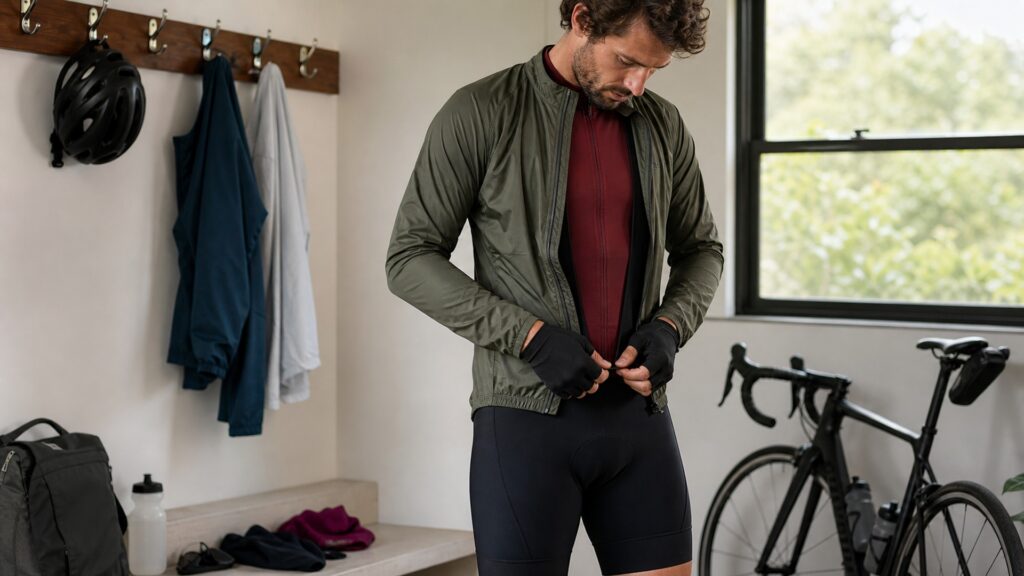
This explains cycling apparel as worn support rather than a bicycle component.
Tip: Read cycling apparel from the body outward: position, contact, fabric, storage, weather, visibility.
These definitions connect the main idea to the variables, limits, and practical signals readers need to compare options.
A sewn-in pad used in many cycling shorts or bibs.
A shoulder strap system that holds bib shorts in position.
A rear pocket built into many cycling jerseys.
A textile chosen to manage sweat movement and drying behavior.
A garment layer used for wind or rain coverage.
Material intended to return light toward its source.
Tip: Keep clothing fit, fabric, pockets, and visibility details separate from bicycle systems.
Cycling apparel is worn support. It changes fabric placement, body contact, storage access, and exposure without changing gears, brakes, wheels, or frame geometry.
The mechanism is clothing placement.
Cycling garments are often patterned for a bent-hip, forward-reaching riding posture rather than standing still.
Apparel fit is posture-specific.
Chamois pads, seam placement, glove palms, and cuffs can change how clothing meets saddle, bars, shoes, and skin.
Contact details should not become medical claims.
Base layers, jerseys, shells, vents, and fabrics change how covered, wet, warm, or cooled the rider feels.
Weather function belongs with fabric and layering.
Cycling apparel can support a ride, but it cannot guarantee comfort, speed, safety, recovery, or injury prevention.
The explanation stays with worn function.
Apparel mechanics explain fit, fabric, contact, storage, weather, and visibility details.
Apparel mechanics explain fit, fabric, contact, storage, weather, and visibility details.
They separate clothing support from bicycle mechanics.
They do not prove comfort, safety, speed, or recovery.
They do not replace bike fit or qualified advice.
Common shortcuts and misunderstandings can make the topic seem simpler than it is.
It mainly changes worn fit, exposure, storage, and contact conditions.
Pad shape can help clothing interface, but saddle, fit, and rider differences still matter.
Reflective material and active lighting work differently.
Many garments are cut for riding posture.
Tip: Treat strong claims as starting points for comparison, not final answers.
Concise answers to common questions readers may have after the main explanation.
It uses cut, fabric, pads, pockets, seams, straps, and layers to support the rider during cycling.
No. It is worn gear around the rider.
It changes the clothing interface at the saddle, but it does not guarantee comfort.
They keep small items reachable while riding.
No. Some details support visibility or protection, but no garment guarantees safety.
Cycling apparel works as worn support for posture, contact, storage, weather, and visibility.
The useful explanation stays with clothing function and avoids pretending apparel changes the bicycle itself.
Use these Review Streets paths to connect the explainer to related categories, comparisons, and next decisions.
Use this to decide when worn gear should come before mounted add-ons.
Read this to compare clothing support with add-on accessory mechanics.
Browse apparel after understanding clothing-side functions.
Choose a retailer
Prices checked regularly. We may earn a commission at no cost to you.