
Body-Moving Gear
Clothing that stays with the rider's motion.
- It includes shorts, jerseys, gloves, layers, and covers.
- Fit changes during riding posture.
- It is not a frame-mounted accessory.
Use cycling apparel instead of cycling accessories when the problem is worn fit, body contact, weather coverage, temperature range, or clothing-based storage.
A saddle bag, computer, bottle cage, or light may be useful, but it does not replace bib shorts, a rain shell, gloves, base layer, thermal tights, or a jersey that fits the riding position.
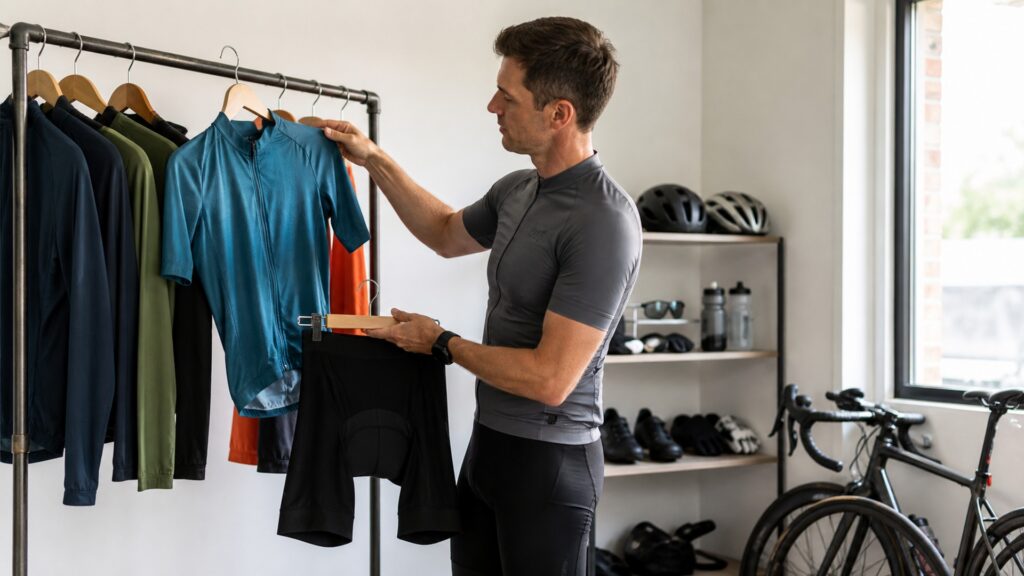
This decision boundary identifies when worn gear should lead before mounted add-ons.
Tip: Choose apparel when the solution has to move with the body rather than attach to the bike.
These definitions connect the main idea to the variables, limits, and practical signals readers need to compare options.
Clothing that stays with the rider's motion.
Garments used around saddle, hand, foot, or skin contact.
Clothing used for wind, rain, cold, heat, or sun exposure.
Storage built into a jersey, vest, jacket, or shorts.
An accessory attached to the bike, helmet, or another mount.
Reflective or bright apparel element intended to support being noticed.
Tip: Use them to decide whether the solution must be worn or mounted.
Clothing is the better category when the unresolved issue is contact, coverage, posture, or fabric movement.
A body-side problem needs a body-side solution.
Rain, wind, cold, sun, and heat are experienced on the rider's body, so layers and fabrics often lead the decision.
Weather makes apparel more central.
Jersey pockets can carry small items without bike mounts, while heavier or bulkier loads may still need bags or racks.
Storage overlap needs a boundary.
Lights, computers, phone mounts, bottle cages, racks, pumps, and tools often solve problems apparel cannot solve cleanly.
The apparel-first answer has limits.
Apparel can support contact and exposure, but it cannot guarantee comfort, speed, safety, injury prevention, or training progress.
The decision stays practical and limited.
The decision explains when worn cycling gear should lead over mounted accessories.
It separates body contact and weather coverage from device or storage jobs.
It handles overlap around pockets and visibility.
It does not guarantee comfort or safety.
It does not replace local equipment requirements.
Common shortcuts and misunderstandings can make the topic seem simpler than it is.
Mounted gear cannot replace clothing fit, weather coverage, or body contact.
Pockets help with small items, but capacity and load can be limiting.
Reflective details and powered lights serve different roles.
Fit, riding position, weather, and individual context still matter.
Tip: Treat strong claims as starting points for comparison, not final answers.
Concise answers to common questions readers may have after the main explanation.
When the issue is body contact, weather coverage, worn fit, or clothing-based storage.
When the job is lighting, device mounting, repair support, bottle access, or larger carrying capacity.
They are apparel storage, not bike-mounted accessories.
No. Reflective details are not the same as powered front or rear lights.
No. It can support fit and contact, but comfort depends on more context.
Use cycling apparel instead of accessories when the solution has to be worn: contact, coverage, posture, pockets, or body-side exposure.
Use accessories when the job needs a mount, power source, tool, cage, rack, or larger carrying system.
Use these Review Streets paths to connect the explainer to related categories, comparisons, and next decisions.
Use this for the worn-gear mechanics behind apparel-first choices.
Read this to identify accessory-side exceptions.
Browse apparel after confirming the problem is worn fit or coverage.
Choose a retailer
Prices checked regularly. We may earn a commission at no cost to you.