
Fragrance Concentrate
The aromatic mixture incorporated into a finished perfume product.
- Use: Create the intended scent
- Variable: materials and their proportions
- Tradeoff: More concentrate does not ensure better balance
Fragrance works by placing a designed mixture of aromatic materials onto skin, hair, or fabric so volatile molecules enter the surrounding air and reach the nose. Alcohol, water, oils, solvents, and fixative strategies influence delivery, but the smell comes from many materials evaporating and being perceived together.
The experience changes after application because materials do not leave the surface at the same rate. A bright opening may recede while less volatile facets become easier to notice; skin, dose, spray pattern, weather, clothing, and nose adaptation alter the timeline. Notes are a communication map, not a literal schedule or ingredient list. The useful way to judge a fragrance is through controlled wear, not one paper strip or the first minute.
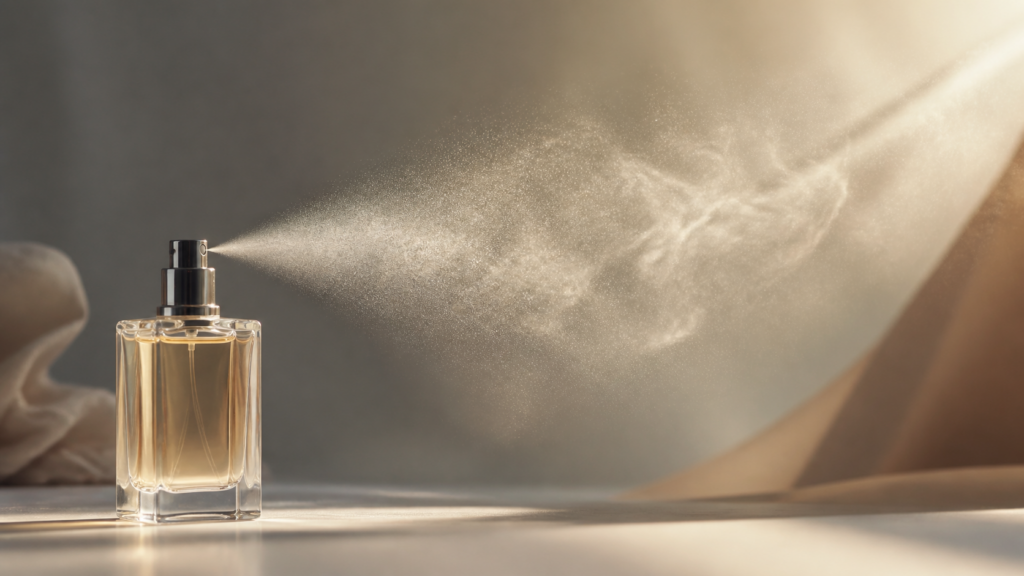
The scent is a moving system: formulation controls delivery, application creates a deposit, evaporation changes the balance, and the wearer interprets what reaches the nose.
Tip: Smell at intervals and from normal conversational distance, not continuously at the wrist.
These concepts connect formula, spray, evaporation, surrounding air, and the wearer's changing awareness.
The aromatic mixture incorporated into a finished perfume product.
The alcohol, water, oil, or other vehicle that delivers the composition.
The tendency of a material to enter the vapor phase.
The amount and pattern left by each spray or application.
The scented air above and around the applied surface.
Reduced awareness after continued exposure to an odor.
Tip: Test the journey in stages; the opening is only the first measurement.
Fine fragrance combines an aromatic concentrate with a carrier at proportions chosen for solubility, spray behavior, feel, development, and commercial positioning. The named concentration is useful context, but it does not disclose the complete formula or predict its smell.
A formula is more than fragrance oil diluted to a marketing tier.
Nozzle output, plume width, distance, and spray count determine how much liquid lands and where. A concentrated jet on one wrist behaves differently from a fine cloud across fabric, even before formulation differences appear.
Comparison requires a repeatable dose, not identical bottle presses.
Materials coexist from the first spray, yet their relative presence shifts as the most volatile portions disperse and slower facets remain. Top, heart, and base language describes that perceived progression rather than three sealed compartments opening in sequence.
Development is a changing blend, not a relay race between note groups.
Warm skin and moving air can increase early diffusion; fabric may hold some materials differently and can stain or retain scent. Moisture, lotion, climate, and clothing change performance, so test the surface you actually plan to use.
The same bottle can create different timelines without changing formula.
Continuous close sniffing encourages adaptation and can make an active fragrance seem gone. Step away, seek occasional feedback, and distinguish personal detection, a close skin scent, and a trail noticeable at greater distance.
What the wearer notices is not the entire headspace.
Evaporation and perception explain changing wear, but a note list or concentration label cannot reveal the exact timeline on a particular person.
Timed wear shows the opening, middle, drydown, projection, comfort, and any residue on clothing.
A consistent spray count lets shoppers compare products more fairly than memory alone.
Skin, weather, surface, nozzle, dose, and adaptation can all change the perceived result.
A single blotter cannot establish skin comfort, full longevity, or how a fragrance behaves in a room.
The most common shortcuts confuse note pyramids, absorption, adaptation, fabric, and ingredient origin.
Fragrance materials are present together, though their relative volatility and perceptual strength vary. The familiar pyramid describes an evolving impression; it does not prove three isolated batches release at exact, universal times.
Rubbing can spread the deposit, add heat, and transfer material between surfaces, complicating comparison. Spray consistently, let the carrier evaporate, and allow development without friction when evaluating the original composition.
Olfactory adaptation can reduce personal awareness during continuous exposure. Before reapplying, move to fresh air or ask another person at an appropriate distance whether scent remains, especially in shared spaces.
Textiles can retain some materials, yet results depend on fiber, dye, laundering, formula, and dose. Fragrance may stain delicate cloth or persist undesirably afterward, so spot-test and follow garment-care guidance.
Natural and synthetic materials can both irritate or sensitize susceptible users. Safety depends on the finished formula, exposure, individual sensitivity, labeled directions, and relevant restrictions—not a simple natural-versus-synthetic label.
Tip: Preserve the original deposit before deciding whether it performs.
Use controlled wear to separate formula behavior from dose, surface, setting, and perception.
Paper removes skin oils, warmth, movement, and much of the wearer's close headspace. Use a blotter to screen broadly, then test finalists on skin if appropriate before judging comfort, development, and purchase value.
Follow it from opening through the expected drydown and into the setting where it will be worn. A full-day sample is often more informative than repeated counter sprays crowded with other scents.
An unscented compatible moisturizer may change how a fragrance sits on dry skin, but effects vary. Let skincare settle, keep the dose constant, and test rather than treating hydration as a guaranteed performance hack.
Temperature changes and disturbed liquid can affect immediate perception or spraying, while packaging damage may cause leakage. Let the sealed bottle reach room conditions, inspect it, then assess across several normal wears.
Alcohol-based fragrance may feel drying, and a general body perfume is not automatically intended for hair. Use products as labeled, avoid eyes and irritated scalp, and consider a hair-specific format when needed.
Stop after rash, significant burning, swelling, breathing difficulty, eye irritation, or other concerning symptoms. Move to fresh air when inhalation is uncomfortable and seek appropriate medical help for severe or persistent reactions.
Fragrance works through delivery, deposition, evaporation, movement through air, and human perception. The balance changes continuously, while surface, weather, dose, and adaptation shape what is noticed.
Test with a consistent spray count over several hours, separate longevity from projection, and judge the finished formula on the surface and in the setting where it will actually be worn.
These guides turn development, concentration, and wear behavior into better fragrance comparisons.
Compare scent families, concentrations, testing methods, sizes, and first-purchase tradeoffs.
Evaluate composition, format, wear, bottle size, setting, and value before buying perfume.
Test wear duration, projection, fabric use, climate, and reapplication without relying on concentration alone.
Choose a retailer
Prices checked regularly. We may earn a commission at no cost to you.