
Trainer Interface
The place where the bicycle connects to the trainer.
- It may involve an axle, tire, cassette, or frame contact.
- Compatibility controls whether the setup works.
- It is not a normal outdoor road.
An indoor bike trainer works by holding a compatible bicycle in place while the rider pedals against a resistance system.
The setup may use a wheel-on roller, direct-drive cassette, trainer axle, flywheel, smart control, power cable, front wheel block, and trainer mat, depending on the design.
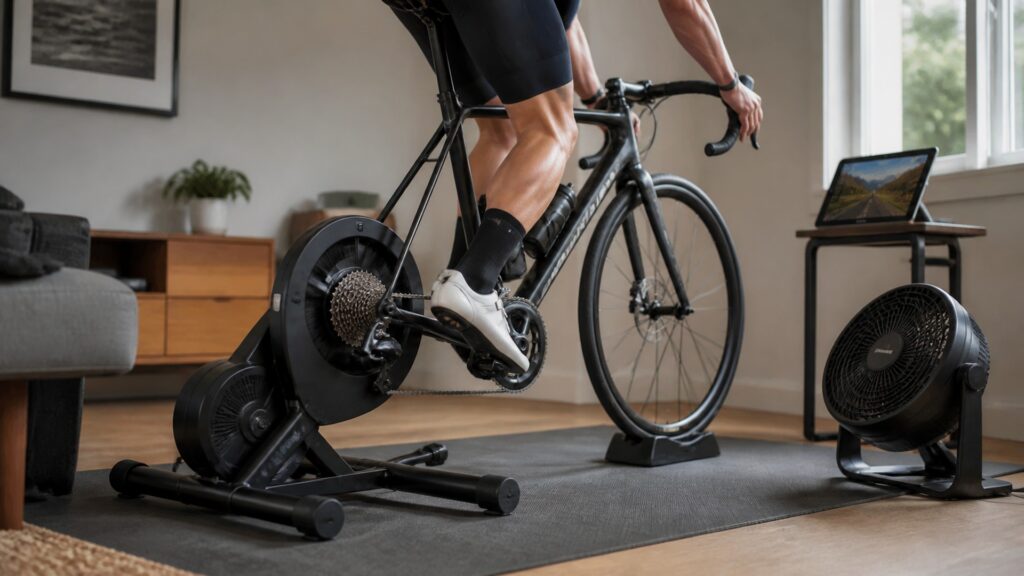
This explains trainer mechanics without treating indoor load as outdoor terrain.
Tip: Trace the force path from pedals to bike drivetrain to trainer resistance.
These definitions connect the main idea to the variables, limits, and practical signals readers need to compare options.
The place where the bicycle connects to the trainer.
The trainer mechanism that creates pedaling load.
A cassette mounted on a trainer after the rear wheel is removed.
A roller pressed against the rear tire.
Electronic adjustment of trainer resistance by a device or app.
The floor area used by bike, trainer, mat, fan, and rider access.
Tip: Use these terms to trace bike attachment, resistance path, smart control, and indoor station setup.
Before resistance matters, the trainer must connect to the bicycle through the rear axle, tire, cassette, frame, or drivetrain interface.
Connection is the first mechanism.
Wheel-on trainers load the tire against a roller, while direct-drive trainers load the drivetrain through a trainer-mounted cassette or freehub body.
The load path explains trainer categories.
Many trainers use a flywheel or virtual inertia model so pedaling has momentum rather than feeling like a dead stop each stroke.
Pedal feel is mechanical, not motivational.
Smart trainers can change resistance through apps, ERG mode, simulated gradients, workouts, or sensor data.
Smart control changes load, not personal readiness.
The trainer may need a mat, fan, power outlet, device holder, clearance, and stable floor space.
The trainer works as part of an indoor station.
Trainer mechanics explain bike connection, resistance path, flywheel feel, smart control, and floor setup.
They separate indoor load from outdoor road behavior.
They help readers check compatibility before buying.
They do not prescribe training or guarantee fitness results.
They do not recreate every outdoor riding condition.
Common shortcuts and misunderstandings can make the topic seem simpler than it is.
Wheel-on and direct-drive systems use different bike interfaces.
Smart control changes load; coaching and interpretation are separate.
They can simulate some load but not every outdoor variable.
Axle, cassette, tire, frame, and drivetrain compatibility can matter.
Tip: Treat strong claims as starting points for comparison, not final answers.
Concise answers to common questions readers may have after the main explanation.
It holds a compatible bicycle indoors and creates resistance while the rider pedals.
The rear wheel is removed and the bike connects to the trainer's drivetrain interface.
The rear tire presses against a roller that creates load.
Some trainers use calibration to improve resistance or power readings.
It replaces some pedaling sessions, not every outdoor control task.
Indoor bike trainers work by anchoring a bicycle and creating resistance through a wheel-on, direct-drive, or smart-controlled load path.
Compatibility and setup matter as much as the resistance label.
Use these Review Streets paths to connect the explainer to related categories, comparisons, and next decisions.
Use this for how trainer mechanics support structured indoor sessions.
Read this to distinguish trainers from smaller support gear.
Browse trainer options after understanding connection and resistance paths.
Choose a retailer
Prices checked regularly. We may earn a commission at no cost to you.