
ERG Mode
A smart-trainer mode that adjusts resistance toward a target load.
- It supports structured sessions.
- It depends on device setup.
- It is not coaching by itself.
Indoor bike trainer training function matters because the trainer can make pedaling load, timing, and feedback repeatable indoors.
ERG mode, target watts, resistance curves, interval blocks, smart trainer apps, cadence sensors, spin-down calibration, gradient simulation, warmup ramps, fan placement, and session repeatability all affect the indoor training task.
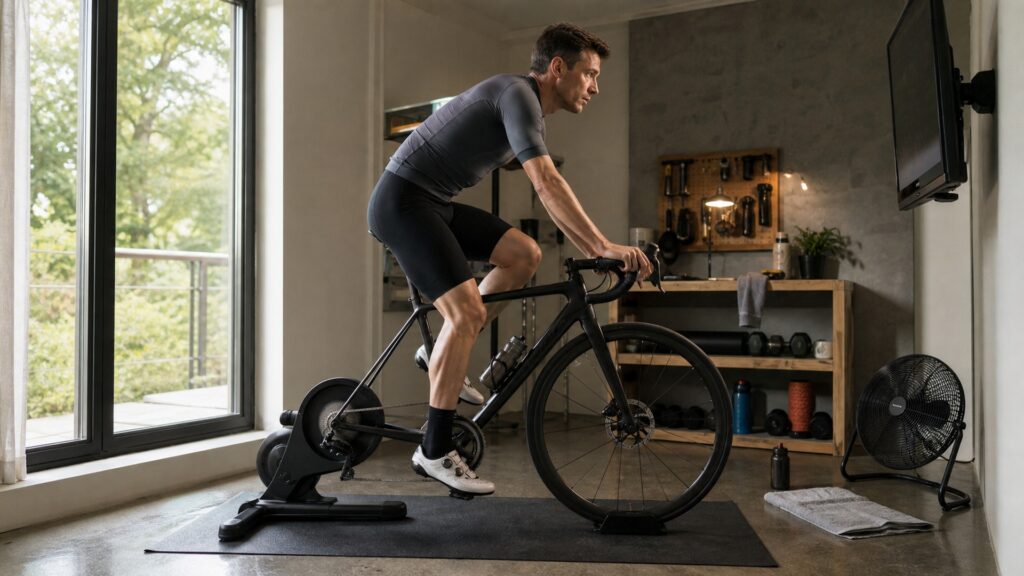
This explains trainer training function as equipment control, not a promise of adaptation.
Tip: Separate what the trainer controls from what a training plan or body response would need to decide.
These definitions connect the main idea to the variables, limits, and practical signals readers need to compare options.
A smart-trainer mode that adjusts resistance toward a target load.
A resistance or wattage value used by a trainer or app.
The way load changes as speed or trainer setting changes.
A calibration-style procedure used by some trainers.
The ability to set up similar indoor sessions again.
Fan and room arrangement used during indoor riding.
Tip: Use these terms to keep ERG load, intervals, readings, calibration, and cooling setup in distinct places.
A trainer can make indoor pedaling more structured by controlling or displaying load in a fixed setup.
The trainer's function is controlled load.
Trainer function matters when work and rest blocks depend on quick, readable, or automated resistance changes.
Intervals stress the trainer differently than free riding.
Power, cadence, speed, and gradient displays can support structure, but readings depend on trainer type, sensor pairing, firmware, and calibration practices.
Training function needs measurement context.
Indoor sessions remove outdoor airflow and route variation, so fans, mats, power outlets, device placement, and sweat protection become part of the training setup.
Repeatability includes the room, not just the trainer.
A trainer can structure load and feedback, but it cannot guarantee endurance gains, weight change, recovery, safety, or personal suitability.
The function is equipment control, not an outcome guarantee.
Training-function analysis explains how trainers structure indoor load and feedback.
It separates ERG mode, intervals, metrics, calibration, and room setup.
It helps readers compare training control without assuming results.
It does not provide coaching or medical advice.
It does not guarantee fitness, calorie, safety, or recovery outcomes.
Common shortcuts and misunderstandings can make the topic seem simpler than it is.
ERG mode controls load; coaching decides what load should be used.
Readings depend on trainer type, setup, calibration, and sensors.
Repeatable sessions support comparison, but progress needs broader interpretation.
Indoor cooling conditions can affect how repeatable a trainer session feels.
Tip: Treat strong claims as starting points for comparison, not final answers.
Concise answers to common questions readers may have after the main explanation.
It is the way a trainer controls or reports indoor pedaling load, timing, and feedback.
It can adjust resistance toward a target load during structured sessions.
Some do; follow the product instructions.
No. Apps can guide settings, but interpretation and planning are separate.
No. It supports structure, not outcomes.
Indoor bike trainer training function matters because controlled load, intervals, metrics, calibration, and room setup shape repeatable indoor sessions.
Those functions support structure but do not promise a fitness result.
Use these Review Streets paths to connect the explainer to related categories, comparisons, and next decisions.
Use this for trainer connection and resistance mechanics.
Read this to match trainer functions to indoor ride roles.
Browse trainers after identifying the needed control functions.
Choose a retailer
Prices checked regularly. We may earn a commission at no cost to you.