
Modular Accessory
A removable add-on that supports one ride job.
- It may mount to bars, frame, saddle, helmet, or clothing.
- It usually does not support the whole bike.
- Its value depends on the specific task.
Cycling accessories differ from indoor bike trainers because accessories add modular ride support, while trainers create a stationary indoor pedaling setup for a compatible bicycle.
A bottle cage, saddle bag, computer, light, or phone mount does not hold the bike upright or provide resistance. A trainer does those things, but it is not a general-purpose accessory bag or visibility tool.
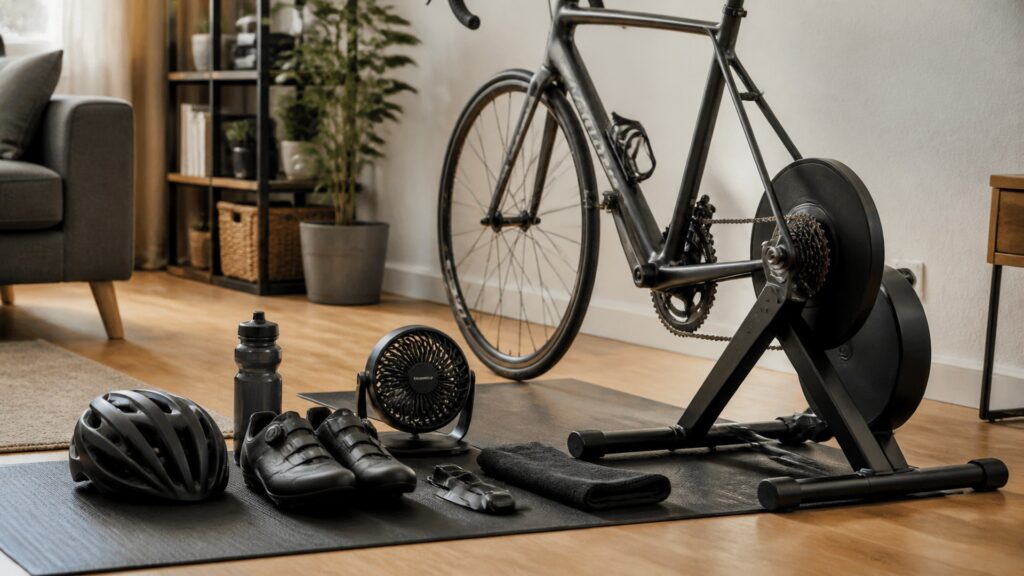
This comparison keeps small support gear separate from the device that turns a bicycle into an indoor setup.
Tip: Ask whether the product supports a ride around the bike or turns the bike into an indoor pedaling station.
These definitions connect the main idea to the variables, limits, and practical signals readers need to compare options.
A removable add-on that supports one ride job.
The axle, wheel, cassette, or frame contact used by an indoor trainer.
The trainer mechanism that creates pedaling load indoors.
A trainer setup that presses against the rear tire.
A trainer setup where the rear wheel is removed and the bike connects to the trainer.
A support item such as a light, computer, cage, bag, bell, or pump.
Tip: Use the vocabulary to ask whether the item supports a ride or anchors the bike indoors.
Cycling accessories usually attach to the bike or rider to solve a narrow task such as carrying, lighting, measuring, or repair.
Accessories remain modular support items.
A trainer is a larger device that turns a compatible bicycle into a stationary pedaling setup.
The trainer's job is structurally different.
Handlebar, saddle, bottle, rack, or strap mounts do not do the same work as trainer axles, rollers, cassettes, or resistance units.
The connection point reveals the category.
Bike computers and sensors can display or record data, while smart trainers may create controlled load as part of the indoor session.
Shared data language should not blur the products.
Use accessories when the ride needs carrying, lighting, mounting, or repair support; use a trainer when the goal is stationary indoor pedaling.
The right category follows the job.
The comparison separates modular ride accessories from indoor trainer systems.
The comparison separates modular ride accessories from indoor trainer systems.
It clarifies attachment, compatibility, resistance, and data differences.
It does not rank workout intensity.
It does not promise training, safety, or health outcomes.
Common shortcuts and misunderstandings can make the topic seem simpler than it is.
It can be an add-on purchase, but its function is to hold or load a bicycle indoors.
A computer displays data; a trainer can create controlled pedaling resistance.
They handle different forces, locations, and compatibility needs.
Indoor pedaling may still use a fan, mat, computer, bottle, or towel, but those remain support items.
Tip: Treat strong claims as starting points for comparison, not final answers.
Concise answers to common questions readers may have after the main explanation.
Accessories support specific ride jobs; indoor trainers hold or load a bicycle for stationary pedaling.
Yes, but its function is larger and more structural than most accessories.
The bike may need a matching axle, cassette, tire, frame clearance, or drivetrain setup.
Ordinary accessories usually do not; resistance is a trainer function.
Choose accessories for carrying, lighting, mounting, data display, hydration, or repair support around rides.
Cycling accessories are modular support items; indoor bike trainers are stationary systems that hold or load a bicycle.
The difference becomes clear when you compare mounts, interfaces, resistance, and the job each product performs.
Use these Review Streets paths to connect the explainer to related categories, comparisons, and next decisions.
Use this for accessory attachment and support roles.
Read this for trainer resistance and bike-interface mechanics.
Browse accessory types after separating them from trainer systems.
Choose a retailer
Prices checked regularly. We may earn a commission at no cost to you.