How Luxury Sedans Work

Luxury sedans use the same basic jobs as other passenger cars: producing driving force, supporting the body, steering, braking, and carrying people. Their distinction is the attention paid to how those jobs feel together. Quietness, controlled body movement, supportive seats, and smooth responses can turn an ordinary journey into a more comfortable one.

There is no single luxury-sedan mechanism. Some use gasoline engines, some combine engines and electric motors, and others are fully electric. Suspension and cabin equipment also vary. Understanding the separate systems makes it easier to see which features provide a real benefit and which are simply optional conveniences.

By: Review Streets Research Lab
Updated: October 5, 2026
Explainer · 8-12 min read
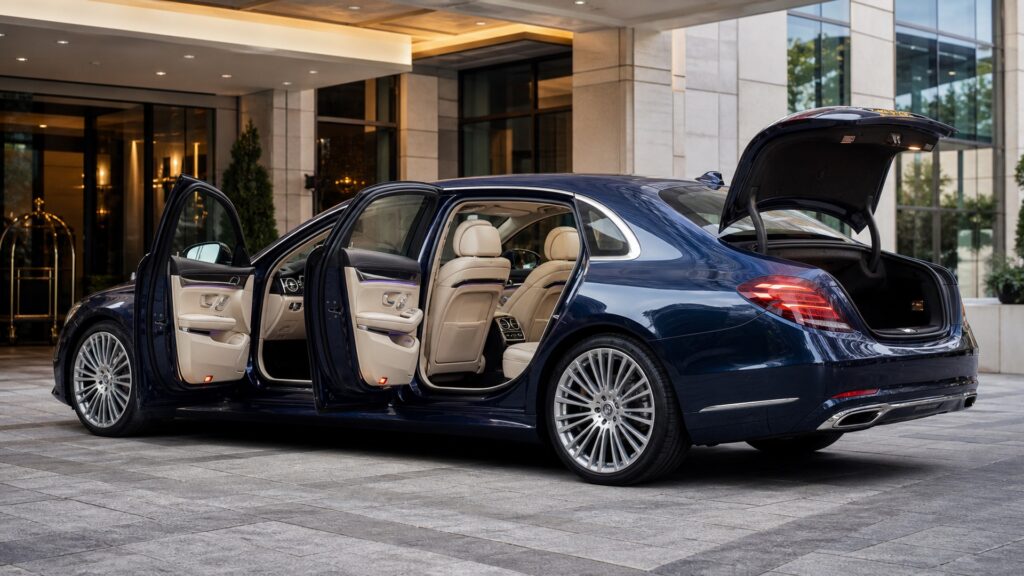
luxury sedans explainer hero image for Review Streets
What You'll Learn

How the Main Systems Create a Refined Ride

Follow the connections between propulsion, chassis movement, cabin isolation, and passenger comfort.

  • Trace driving force from the powertrain to the road.
  • Separate what springs do from what dampers do.
  • Understand how noise and vibration reach the cabin.
  • Recognize the contribution of seats and climate control.
  • Distinguish standard mechanical functions from optional electronic features.

Tip: Ask which systems are fitted to the exact car. A model name alone does not establish its equipment.

Definitions

The Building Blocks of a Luxury Sedan

These systems have different jobs, even when they share electronic controls.

Powertrain

The powertrain supplies and transmits the force that drives the vehicle.

  • Example: an engine and automatic transmission or an electric motor and reduction gear
  • Check: smooth response during ordinary acceleration
  • Limit: high output alone does not establish refinement

Suspension spring

A suspension spring supports the vehicle and permits controlled movement between wheel and body.

  • Example: a steel coil spring compressing over a bump
  • Check: the fitted spring system and its condition
  • Limit: soft springs alone cannot prevent repeated bouncing

Damper

A damper resists suspension motion to control how the wheel and body settle.

  • Example: reducing continued movement after a road dip
  • Check: how the car recovers from a normal disturbance
  • Limit: adaptive damping is an option on some cars, not a universal feature

Noise and vibration isolation

Isolation limits the transmission of unwanted sound and vibration to occupants.

  • Example: body seals reducing wind noise around a door
  • Check: noise on different pavement at ordinary speeds
  • Limit: tires, wear, and road texture still influence cabin sound

Climate zones

Climate zones allow separate temperature preferences in different cabin areas.

  • Example: front occupants selecting different temperatures
  • Check: which seats have vents and usable controls
  • Limit: a shared cabin prevents perfectly isolated air temperatures

Driver assistance

Driver assistance uses sensors and controls to support specific driving tasks.

  • Example: adaptive cruise control adjusting following speed within its operating limits
  • Check: the exact functions and limitations in the manual
  • Limit: assistance is not permission to stop supervising the drive

Tip: Look for the hardware behind a feature name and the conditions in which it operates.

Propulsion

Driving Force Has Several Possible Sources

A combustion engine turns fuel energy into mechanical rotation, with a transmission providing suitable ratios before force reaches the driven wheels. An electric powertrain draws stored electrical energy to run a motor. A hybrid coordinates both sources. Each arrangement needs careful control if acceleration and slowing are to feel natural.

  • Engine mounts help manage transmitted vibration.
  • Transmission behavior influences smoothness in engine-powered cars.
  • Electric response and regenerative braking are also calibrated.

Luxury comes partly from how smoothly the driver's request becomes vehicle motion, not only from the maximum output.

Chassis

Springs and Dampers Divide the Work

When a wheel encounters a bump, the suspension allows it to move relative to the body. Springs support the load and store energy as they compress; dampers resist motion and dissipate energy to limit continued movement. Some sedans add electronically adjustable dampers or air springs, but many achieve a comfortable ride with conventional hardware.

  • Tires contribute to the first response to an impact.
  • Damping controls how the body settles afterward.
  • Available settings depend on the fitted suspension.

As a concrete example, Mercedes-Benz described the 2021 S-Class AIRMATIC system as combining air springs with adjustable dampers. That is one implementation, not a requirement for every luxury sedan. Mercedes-Benz: 2021 S-Class suspension.

Isolation

The Cabin Is Protected Along Several Paths

Road and powertrain disturbances can reach passengers as airborne sound or vibration through the structure. Seals, glazing, insulation, mounts, and body design address different paths. A quiet engine does not eliminate tire noise, and thick carpet cannot compensate for every vibration problem.

  • Door seals influence wind-noise paths.
  • Mounts and bushings help separate vibrating components.
  • Tire choice and surface texture influence road noise.

A quiet cabin is the combined result of many details rather than one soundproof layer.

Passengers

Seats and Airflow Complete the Comfort System

Suspension cannot solve an uncomfortable seating position. Cushion shape, back support, adjustment range, and room for the occupants matter throughout a trip. Heating, ventilation, and climate controls add options, but their usefulness depends on how effectively they serve the seats you use.

  • Set the seat and steering position before judging comfort.
  • Check rear-seat space behind the intended driver.
  • Try climate controls and airflow while parked.

More adjustments are valuable when they help you find and keep a comfortable position.

Coordination

Electronics Adjust Behavior Within Mechanical Limits

Control units can coordinate propulsion, transmission, damping, steering assistance, and cabin systems. Drive modes may change some of those responses together. The available changes depend on installed hardware: selecting a mode cannot add an air spring or an adjustable damper that is absent.

  • Read which settings each mode actually changes.
  • Learn assistance-system limitations before using them.
  • Keep required maintenance and repairs current.

Software can coordinate the car's capabilities, but it does not remove road conditions, tire limits, or the need for driver attention.

Quick Reality Check

What Luxury Engineering Can and Cannot Do

Evaluate a vehicle as a complete system with real tradeoffs.

What It Can Improve

Reduce unwanted noise and make body movement more controlled.

Give occupants better seating adjustment, climate options, and more polished everyday responses.

What It Cannot Guarantee

A perfectly smooth ride on every road or comfortable seats for every person.

Lower maintenance costs, unlimited grip, or freedom from driver responsibility.

Common Myths

Misconceptions About How Luxury Sedans Work

Premium equipment does not mean every car uses the same technology.

Every luxury sedan has air suspension

Many use steel springs. Air suspension and adaptive dampers are separate features that vary by model and specification.

A luxury sedan must have a large gasoline engine

Luxury sedans can use several engine sizes, hybrid systems, or fully electric propulsion.

A sport mode changes every mechanical system

It changes only the supported settings. Some cars adjust propulsion response without changing suspension damping.

Tip: Check the equipment specification before attributing a driving sensation to a named feature.

FAQ

Questions About Luxury-Sedan Systems

Answers about comfort hardware, propulsion, and electronic features.

What makes a sedan feel luxurious?

A combination of quietness, smooth responses, controlled ride, comfortable seating, and usable cabin features. Materials alone are only part of it.

Are air springs and adaptive dampers the same thing?

No. Springs support the vehicle; dampers control suspension motion. They can be used together, but perform different jobs.

Can an electric sedan use the same comfort principles?

Yes. Its propulsion differs, but suspension, isolation, seating, airflow, and control layout still shape the experience.

Why can two trims ride differently?

They may use different tires, wheels, suspension equipment, seats, or calibrations. Compare the exact specification.

Bottom Line

Luxury sedans create refinement by coordinating ordinary vehicle functions with careful attention to comfort.

Understand the fitted powertrain, suspension, isolation, and cabin systems, then test whether their combined behavior works for your roads and passengers.

Next Steps

Go Deeper or Compare Your Options

Use these Review Streets paths to compare related categories and practical next decisions.