How Midsize Pickup Trucks Work

Midsize pickup trucks combine a passenger cab and an open cargo bed with a drivetrain built to move both people and useful loads. The engine supplies power, the transmission and axles turn it into wheel torque, and the chassis supports the weight while the tires, suspension, and brakes keep the truck controllable. Their appeal is fitting those jobs into a smaller vehicle than a typical full-size pickup.

That smaller footprint does not make every midsize truck interchangeable. Cab space, bed length, construction, driven wheels, and towing equipment differ. A truck that is easy to park can still run out of payload once passengers, a bed rack, camping gear, and trailer tongue weight are aboard.

By: Review Streets Research Lab
Updated: October 5, 2026
Explainer · 8-12 min read
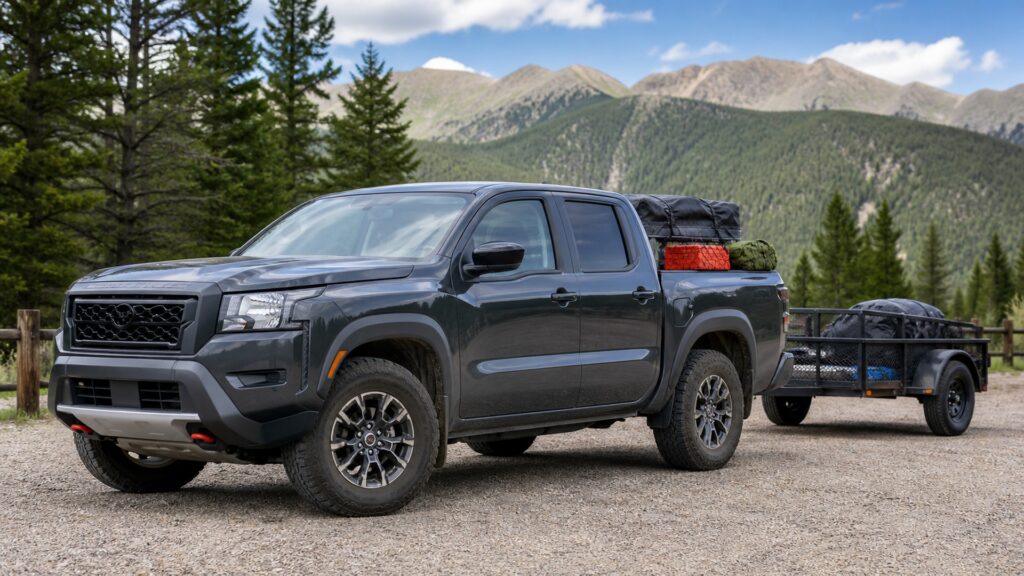
midsize pickup trucks explainer hero image for Review Streets
What You'll Learn

How a Midsize Pickup Carries, Pulls, and Drives

Follow the mechanical connections from the engine to the road, then separate cargo space from actual carrying capacity.

  • What the frame, cab, and bed each contribute
  • How gears and axles deliver power to the tires
  • What four-wheel drive can and cannot improve
  • Why passengers and accessories reduce available payload
  • How to check a truck against a real weekend load

Tip: Photograph the truck's loading label before comparing accessories or trailers.

Definitions

Six Parts of the Midsize Truck Equation

These terms explain different jobs within the truck; none is a substitute for the others.

Body-on-frame construction

A separate structural frame supports the body and major mechanical assemblies in many midsize pickups.

  • Example: a cab and cargo bed mounted to frame rails
  • Check: confirm the construction of the particular model
  • Limit: a separate frame does not establish a towing or payload rating

Gear reduction

Gearing trades rotational speed for torque at the driven wheels.

  • Example: a lower transmission gear helping the truck climb with a trailer
  • Check: observe whether the transmission holds an appropriate gear on a grade
  • Limit: more wheel torque does not increase permitted weight

Differential

A differential lets wheels on an axle rotate at different speeds when the truck turns.

  • Example: the outside rear wheel traveling farther through a corner
  • Check: check whether a locking differential is fitted and when it may be used
  • Limit: a locker improves some traction situations but cannot create tire grip

Payload

Payload is the allowable combined weight of occupants and cargo carried by the truck, including added equipment and trailer hitch load.

  • Example: people, a toolbox, and trailer tongue weight sharing one allowance
  • Check: use the specific truck's loading label
  • Limit: an empty-looking bed can coexist with very little remaining payload

Low-range four-wheel drive

A low-range transfer-case setting adds gear reduction for slow, demanding movement on suitable surfaces.

  • Example: controlled crawling over a rough access track
  • Check: read the engagement procedure and surface restrictions
  • Limit: not every midsize truck has low range

Tongue weight

Tongue weight is the downward load a conventional trailer applies at the hitch.

  • Example: a loaded utility trailer pressing down on the rear of the truck
  • Check: measure loaded tongue weight and compare hitch and vehicle limits
  • Limit: the trailer's full weight is not the same as its tongue weight

Tip: Use separate figures for weight carried by the truck and weight pulled behind it.

Structure

The Cab and Bed Share One Load-Bearing Vehicle

The cab holds passengers while the bed keeps bulky or dirty cargo outside the cabin. In a body-on-frame design, frame rails connect the mounting points for these structures with the suspension and drivetrain. The bed's volume is only a space measurement: dense material can reach the truck's weight limit long before it fills the bed.

  • Measure usable bed length with the tailgate closed.
  • Count racks, covers, and toolboxes as added weight.
  • Secure cargo to suitable tie-downs rather than relying on bed walls.

A few heavy landscaping bags may demand more capacity than a bed full of lightweight camping equipment.

Power Delivery

The Transmission Makes Engine Power Usable

Power flows from the engine through the transmission to the driveshaft and axle. Lower gears provide more wheel torque for starting and climbing; higher gears reduce engine speed when conditions allow. The axle ratio adds another fixed reduction. Towing calibrations can change shift behavior, but they do not change the truck's certified limits.

  • Compare the engine, axle ratio, and towing package together.
  • Expect different shift behavior when climbing under load.
  • Use the owner's manual for tow/haul operation.

A stronger engine may make acceleration easier while leaving payload as the limiting factor.

Traction

Four-Wheel Drive Adds Driven Wheels, Not Unlimited Grip

Four-wheel drive routes power to both axles. Where fitted, low range helps the truck move slowly with greater gear reduction, while a differential lock can help when one driven wheel loses traction. These features serve different purposes. Their operating restrictions matter, especially on part-time systems that should not be locked into four-wheel drive on dry, high-traction pavement.

  • Check whether the system is part-time, automatic, or another design.
  • Follow the manual before selecting low range or a locker.
  • Choose tires appropriate to the surface and weather.

Being able to pull away on a slippery slope does not mean the truck can stop or turn as though the road were dry.

Carrying Capacity

A Trailer Can Use Up Payload Before Tow Capacity

Consider an illustrative truck with a 1,400-pound occupant-and-cargo allowance. If people weigh 500 pounds and added equipment plus bed cargo weigh 300 pounds, 600 pounds remain before trailer tongue load is added. A 550-pound tongue load would leave only 50 pounds in that simple budget. Axle, hitch, combined-weight, and trailer ratings still need their own checks.

  • Use loaded weights, including supplies carried for the trip.
  • Do not add maximum bed payload to maximum towing as independent allowances.
  • Verify axle loads and overall weight on an appropriate vehicle scale.

These numbers illustrate the calculation; they are not a rating for any model.

Everyday Fit

Check the Whole Trip, Including the Parking Space

A midsize truck may fit a driveway or trail more easily than a larger pickup, but mirrors, wheelbase, turning clearance, and cargo overhang still matter. Sit in the rear seat with the front seats positioned for actual occupants. Test access to the bed and check whether the intended trailer and hitch interfere with the tailgate.

  • Measure the garage opening, depth, and overhead clearance.
  • Check passenger space with the seats and equipment you will use.
  • Compare the actual configuration's capacity with a fully loaded trip.

The right midsize truck combines a manageable footprint with enough capacity for the job you repeatedly ask it to do.

Quick Reality Check

Where a Midsize Pickup Fits Best

A smaller truck offers useful compromises when its dimensions and ratings fit the work.

A Good Match

Recreation equipment, home-project supplies, and moderate trailer duties that fit the specific truck's limits.

Owners who value a usable open bed while keeping everyday parking manageable.

A Reason to Look Larger

Loads that exhaust payload after the people and equipment are counted.

Passenger, bed-space, or trailer requirements that remain awkward even with the right towing package.

Common Myths

Misconceptions About Midsize Pickup Capability

Size and appearance cannot replace a configuration-specific check.

If it fits in the bed, the truck can carry it.

Cargo volume and cargo weight are different limits. Dense loads can exceed the allowance with space left over.

Every midsize pickup has low-range four-wheel drive.

Drivetrains vary. Some trucks are two-wheel drive, and four-wheel-drive equipment also differs.

Tow/haul mode increases the tow rating.

It changes operation, such as transmission behavior. The published limits still apply.

An off-road package always improves towing.

Off-road equipment can add weight and alter the configuration. Check its own ratings instead of assuming an increase.

Tip: Match accessories to a measured need rather than assuming more equipment creates more capacity.

FAQ

Questions About How Midsize Pickups Work

Answers to practical questions about the truck's mechanical limits.

Are all midsize pickups body-on-frame?

No construction rule should be assumed from the market label alone. Many familiar midsize models use a separate frame; verify the particular model.

Does a bed cover affect payload?

Yes. Added equipment uses part of the carrying allowance, even if it makes the truck more useful.

Can a midsize pickup pull a travel trailer?

Some combinations work within all ratings. Compare the loaded trailer, tongue load, people, cargo, and hitch requirements with the exact truck.

Why can an unloaded truck feel firmer over bumps?

Suspension designed to support cargo can feel firm when little weight is carried. Ride behavior depends on the design, tires, and configuration.

What should I check before buying?

Start with the loading label and towing guide, then measure the cab, bed, and parking space against your normal use.

Bottom Line

Midsize pickups work by combining a cargo-carrying chassis with a geared drivetrain and a manageable passenger-and-bed layout.

Choose one by the load it must support and the places it must fit, with every passenger and accessory included.

Next Steps

Go Deeper or Compare Your Options

Use these Review Streets paths to compare related categories and practical next decisions.

Manufacturer references: Ford Ranger technical specifications; Ford towing and loading guide. Use the manual and ratings for your own model year and configuration.