When to Use Heavy Duty Pickup Trucks Instead of Compact Pickup Trucks

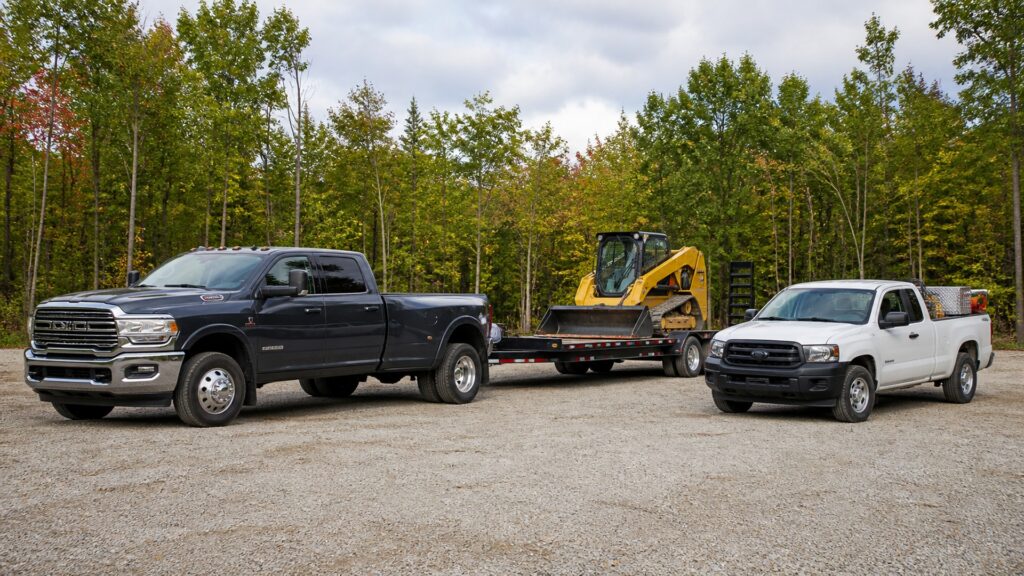
Use a heavy-duty pickup instead of a compact pickup when the loaded job exceeds the compact truck's approved towing, carrying, or hitch capabilities. Large equipment trailers, substantial hitch loads, and heavy work gear can justify an HD truck. A large-looking load alone does not: lightweight cargo may fit a compact pickup perfectly well.

These trucks usually answer different needs. Compact pickups prioritize everyday usability and a convenient open bed. Heavy-duty pickups devote more of their design to carrying and pulling substantial loads, with a larger vehicle and greater ownership demands in return. The decision starts with measured work, not the biggest number in an advertisement.

By: Review Streets Research Lab
Updated: October 5, 2026
Explainer · 8-12 min read
heavy duty pickup trucks explainer hero image for Review Streets
What You'll Learn

When the Job Calls for a Heavy-Duty Pickup

Separate a real capacity requirement from a preference for a larger truck.

  • Identify the loaded trailer and hitch requirements
  • Count permanent equipment and people before adding cargo
  • Recognize duties a compact truck cannot be equipped to perform
  • Include parking, access, and service costs in the choice
  • Consider delivery or rental for infrequent heavy jobs

Tip: Write down the heaviest realistic loaded trip, not just the weight of an empty trailer.

Definitions

The Measurements That Decide Between Compact and HD

A bigger class is useful only if the selected truck solves the actual constraint.

Loaded trailer weight

Loaded trailer weight includes the trailer itself and everything carried on it.

  • Example: an equipment trailer with its machine, attachments, and tools
  • Check: use a loaded scale weight or a careful complete estimate
  • Limit: an advertised empty trailer weight omits the working load

Hitch load

Hitch load is the part of the trailer's load supported by the tow vehicle.

  • Example: a fifth-wheel trailer placing pin weight in the truck bed
  • Check: check vehicle payload, rear axle, and hitch ratings together
  • Limit: a trailer can fit a tow rating but overload the truck

Permanent equipment

Permanent equipment is gear that remains on the truck and uses carrying capacity on every trip.

  • Example: a service toolbox and a bed-mounted equipment rack
  • Check: weigh the installed equipment before budgeting for cargo
  • Limit: removable does not mean weightless while installed

Hitch compatibility

Hitch compatibility means the truck and approved mounting system can support the trailer's coupling arrangement.

  • Example: a manufacturer-approved fifth-wheel installation
  • Check: check the towing guide for the truck and hitch
  • Limit: a small bed or an available receiver does not establish fifth-wheel suitability

Duty cycle

Duty cycle is the pattern of load, driving time, terrain, and rest the truck experiences.

  • Example: daily equipment hauling compared with a few supply runs each month
  • Check: describe frequency and route as well as maximum load
  • Limit: an infrequent trip still must meet every rating

Daily footprint

Daily footprint is the physical space the truck needs for driving, parking, and access.

  • Example: mirror clearance at a narrow jobsite entrance
  • Check: measure the configuration including mirrors and accessories
  • Limit: extra capacity may come with a truck that does not fit the site

Tip: Select the truck and trailer as a compatible pair, not as two independent purchases.

Capacity

Move to HD When the Compact's Limits End

The strongest reason to choose an HD pickup is a job the compact cannot perform within its limits. That may be trailer weight, but it may also be hitch load, rear-axle load, or cargo carried alongside passengers. Increasing engine power or adding helper springs does not make an overloaded compact an approved substitute.

  • Obtain ratings for the exact compact truck being considered.
  • Include the full load rather than comparing empty vehicles.
  • Identify which limit is reached first.

Once a genuine limit is exceeded, choose a different vehicle or divide the job rather than treating the rating as negotiable.

Work Equipment

Account for the Gear That Never Leaves the Bed

A contractor may carry tools, spare parts, a rack, and passengers before collecting any materials. Those standing loads reduce the allowance for the day's delivery. An HD configuration with sufficient remaining payload can make sense even without a large trailer, while a compact pickup can serve a lighter trade or inspection role.

  • List installed equipment separately from temporary cargo.
  • Include the crew that normally travels with it.
  • Check load placement and axle weights, not only the total.

A truck that is suitable empty may be unsuitable after it is equipped for work.

Trailer Type

Some Trailer Connections Require a Different Truck

Large fifth-wheel and gooseneck trailers place substantial load into the bed area and require a compatible mounting system. Do not infer approval from whether a hitch can physically be installed. The truck manufacturer, hitch maker, bed layout, clearances, and weight ratings must all support the arrangement.

  • Confirm the intended hitch type before choosing the truck.
  • Allow turning and cab-to-trailer clearance.
  • Check hitch hardware weight as part of the load.

For a small conventional trailer, a correctly equipped compact may be sufficient; for an incompatible hitch arrangement, it is not an alternative.

Ownership

The Heavy-Duty Choice Has Costs on Empty Days

An HD pickup stays large after the trailer is disconnected. Parking, entry height, ride comfort, tire replacement, and fuel use deserve attention because most owners also drive without their maximum load. Diesel versions introduce their own service requirements; a diesel engine is not mandatory simply because the truck is heavy-duty.

  • Test the truck on the routes and parking spaces you regularly use.
  • Price insurance, tires, and scheduled service for the actual model.
  • Compare gasoline and diesel around your use pattern.

Capacity earns its cost when it serves work you really do, rather than a hypothetical job that never arrives.

Decision

Separate Frequent Work from the One Unusual Project

For weekly equipment hauling, buying sufficient truck capacity may be more practical than arranging transport repeatedly. For a single landscaping project, delivery or a properly rated rental could avoid years of unnecessary size and expense. A midsize or light-duty full-size pickup may also fit between the two extremes.

  • Use the normal workload to judge everyday fit.
  • Make a specific transport plan for occasional exceptional loads.
  • Check rental towing permissions and equipment compatibility before relying on that option.

For example, bags of mulch and a small utility trailer may suit a compact; a loaded machinery trailer that exceeds its limits calls for another solution.

Quick Reality Check

Which Truck Fits the Work?

Compare usable capability with the burden of owning it.

Choose HD When

The recurring loaded job requires capacity or an approved hitch arrangement the compact cannot provide.

The selected HD configuration passes the load checks and fits the places it must operate.

Keep the Compact When

Normal cargo and trailer duties fit its documented limits with the actual people and equipment aboard.

A smaller vehicle is more practical and unusual heavy loads have a separate transport plan.

Common Myths

Misconceptions About Moving Up to HD

More truck can solve a capacity problem, but it is not automatically the better daily vehicle.

Any trailer means I need heavy-duty.

Many light trailers fit suitably equipped smaller trucks. Loaded weight and compatibility decide.

A towing package makes a compact equivalent to HD.

It may improve the compact's approved capability, but only within that configuration's documented limits.

I can exceed a limit because the trip is short.

Distance does not remove the load or the need to turn and stop.

The only alternatives are compact and heavy-duty.

Midsize and light-duty full-size trucks, delivery, or suitable rental transport may better match the job.

Tip: Compare specific configurations rather than treating each market class as one fixed capacity.

FAQ

Questions About Choosing HD Instead of Compact

Useful checks before committing to a much larger pickup.

What is the clearest reason to move up?

A documented loaded requirement that the compact cannot meet, such as hitch load, payload, trailer weight, or approved hitch type.

Does towing more often require HD?

Frequency affects suitability and maintenance, but the weights and operating conditions still decide. Frequent light towing is different from frequent heavy towing.

Should I buy the biggest HD available?

Only if the work requires it. Cab, axle, drivetrain, and rear-wheel configuration affect both capability and everyday compromises.

Can a compact still be a work truck?

Yes. Light tools, service visits, and modest supply runs can be legitimate work without requiring heavy-duty capacity.

What should I bring to a dealer?

A list of occupants and equipment, loaded trailer and hitch weights, parking measurements, and the hitch type you intend to use.

Bottom Line

Choose heavy-duty when the real loaded job exceeds a compact pickup's capabilities and the larger truck is a practical fit.

If the work stays within the compact's limits, its smaller footprint can remain the more useful everyday choice.

Next Steps

Go Deeper or Compare Your Options

Use these Review Streets paths to compare related categories and practical next decisions.

Manufacturer references: Chevrolet towing guides by model; Ford towing and loading guide. Use the manual and ratings for your own model year and configuration.