How Recovery & Muscle Therapy Products Works

Recovery and muscle therapy products work by applying a physical input to the body: pressure, vibration, compression, heat, cold, positioning, or relaxation time. The product category sounds broad because the mechanisms are not the same.

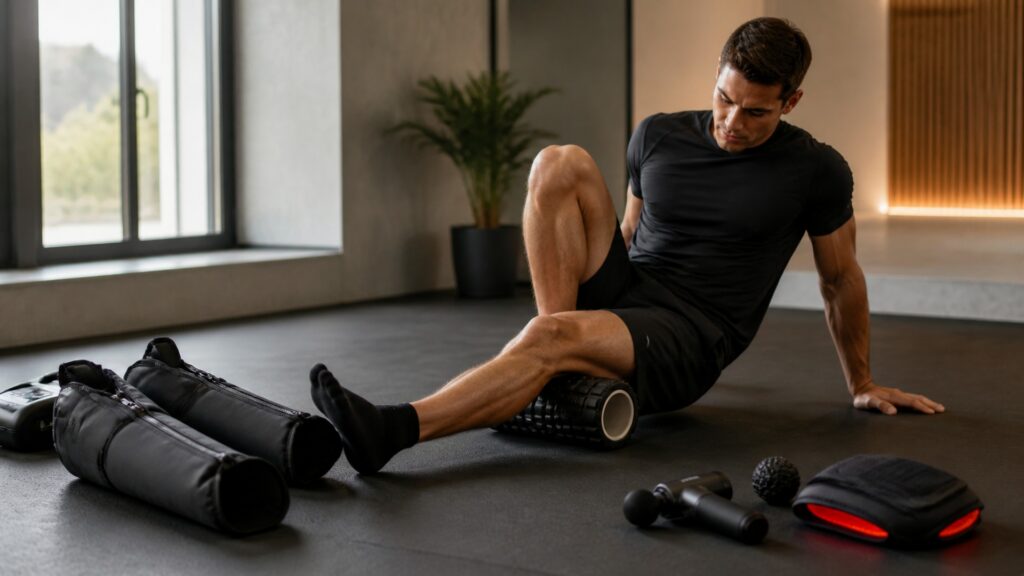
A foam roller changes pressure through bodyweight. A massage gun adds rapid percussion. Compression boots use cyclic squeezing. Heat and cold alter sensation and local temperature. The decision should follow the mechanism and the user's context, not a promise that a tool can repair training stress on command.

By: Review Streets Research Lab
Updated: August 31, 2026
Explainer · 8-12 min read
recovery & muscle therapy products explainer hero image for Review Streets
What You'll Learn

How Recovery Tools Create Different Physical Inputs

Recovery and muscle therapy products work through pressure, percussion, compression, temperature, positioning, and comfort rather than one universal recovery effect.

  • How pressure tools differ from powered percussion
  • Why compression boots are not the same as massage devices
  • How heat and cold change sensation and use context
  • Why soreness relief does not prove faster tissue repair
  • Where comfort, access, and consistency influence usefulness
  • Why symptoms, injury, and medical conditions need qualified guidance

Tip: Use the first comparison point to decide what the workout or recovery window actually needs before reading product claims.

Definitions

Key Concepts That Define Recovery and Muscle Therapy Products

Mechanical pressure is force applied through a roller, ball, hand, or device contact point. The other concepts define the variables that change the decision in real fitness use.

Mechanical pressure

Mechanical pressure is force applied through a roller, ball, hand, or device contact point.

  • It can change sensation and short-term movement comfort.
  • The amount depends on surface area and body position.
  • More pressure is not automatically more useful.

Percussion

Percussion is rapid repeated movement from a powered device such as a massage gun.

  • It feels different from slow rolling because the input pulses quickly.
  • Attachment shape and speed change intensity.
  • It should be used cautiously around sensitive areas.

Compression

Compression uses external pressure around a limb or muscle area.

  • Boots often inflate and deflate in zones.
  • The sensation is not the same as direct massage.
  • Claims should stay cautious without medical evidence.

Temperature therapy

Temperature therapy uses heat or cold to change sensation and local thermal conditions.

  • Heat often feels relaxing before gentle movement.
  • Cold can reduce sensation after hard or irritated sessions.
  • Neither should be framed as automatic healing.

Range of motion

Range of motion is the available movement at a joint or movement pattern.

  • Some tools may temporarily make movement feel easier.
  • Durable mobility still depends on training and control.
  • Painful restriction needs careful assessment.

Contraindication

A contraindication is a reason a product may be inappropriate for a person or condition.

  • Examples can include certain medical, circulatory, skin, nerve, or acute injury concerns.
  • Product manuals and clinicians matter here.
  • General fitness content cannot clear individual risk.

Tip: Percussion is rapid repeated movement from a powered device such as a massage gun.

Pressure

Bodyweight Tools Use Leverage and Surface Area

Rollers, balls, and manual tools create pressure by concentrating bodyweight or hand force into a contact area. Smaller or firmer surfaces usually feel more intense.

  • A broad roller spreads force.
  • A lacrosse ball concentrates pressure.
  • Body position adjusts intensity.
  • Slow movement changes the input.
  • Sensitive areas require restraint.

Pressure tools work through contact mechanics.

Percussion

Massage Guns Add Speed to the Contact Point

Percussion devices do not simply press; they tap or oscillate rapidly. That changes sensation, makes intensity easy to raise, and can make misuse easier too.

  • Amplitude affects how deep the motion feels.
  • Speed settings change the rhythm.
  • Attachment shape changes surface pressure.
  • Bony or irritated areas are poor targets.
  • Short use windows often make more sense than chasing numbness.

Powered recovery tools need mechanism-aware restraint.

Compression

Boots Wrap the Limb Instead of Targeting a Spot

Compression boots use cuffs that inflate around a larger area. The experience is distributed and passive, which is different from a roller or massage gun.

  • Zone sequencing changes the feel.
  • Fit affects pressure comfort.
  • Sessions require time and sitting still.
  • Portability is limited.
  • Circulatory or medical concerns need professional guidance.

Compression is a system-level squeeze, not spot massage.

Temperature

Heat and Cold Change the Sensory Setting

Temperature products can make an area feel looser, calmer, cooler, or less sensitive. That can be useful around movement, but it does not prove a repair process.

  • Heat may pair with warmups or relaxation.
  • Cold may suit short-term post-session comfort.
  • Skin protection and exposure time matter.
  • Numbness is not the goal.
  • Extreme temperatures add risk.

Temperature tools change conditions around recovery decisions.

Evidence Boundary

Comfort Is Real but It Is Not Proof of Recovery

Many recovery products are purchased because they feel good. That feedback matters, but comfort should not be translated into guaranteed adaptation, injury prevention, or faster healing.

  • Soreness can change without tissue repair being proven.
  • Placebo and relaxation can influence perception.
  • Sleep, load management, and nutrition still matter.
  • Tools should not hide training errors.
  • Persistent pain deserves qualified evaluation.

Recovery products work best when their claims stay honest.

Quick Reality Check

Where Recovery and Muscle Therapy Products Helps and Where It Needs Context

The practical value is strongest when the mechanism is matched to the workout, and weakest when broad claims outrun the evidence.

What This Clarifies

It shows which real training or recovery condition recovery and muscle therapy products changes.

It helps readers separate usable decision criteria from product language that sounds more certain than it is.

What It Cannot Prove

It cannot diagnose pain, prescribe rehabilitation, guarantee safety, or promise recovery outcomes.

It cannot replace qualified guidance for medical conditions, acute symptoms, or individualized training decisions.

Common Myths

Misconceptions About Recovery and Muscle Therapy Products

Common shortcuts and misunderstandings can make the topic seem simpler than it is.

Recovery and Muscle Therapy Products works the same for every athlete

The useful answer depends on the activity, training load, environment, tolerance, history, and what the user is trying to change.

Stronger sensation means a better result

Pressure, cold, vibration, or tightness can feel dramatic without proving deeper recovery or safer training.

One tool can fix a poor training plan

Recovery products and routines cannot erase excessive load, poor sleep, unsuitable progression, or unresolved pain.

Short-term relief proves long-term adaptation

Feeling better for a while is real feedback, but it should not be treated as proof of tissue repair or guaranteed performance.

General fitness advice can become medical advice

Symptoms, injuries, circulation concerns, heat illness, and health conditions need a qualified professional rather than a product shortcut.

Tip: For recovery and muscle therapy products, follow the actual input, timing, and user context before trusting a broad recovery or performance claim.

FAQ

Frequently Asked Questions About Recovery and Muscle Therapy Products

Concise answers to common questions readers may have after the main explanation.

What is the main thing to understand about recovery and muscle therapy products?

Start with the mechanism or training condition involved, then ask whether that mechanism fits the user's actual workout, recovery window, and limitations.

Does this guarantee better recovery or fewer injuries?

No. It can support decisions and routines, but general explainers cannot guarantee recovery, safety, injury prevention, or performance.

What should readers compare first?

Compare the physical input, setup, timing, dose, fit, tolerance, and evidence boundary before comparing brand claims.

How should someone test it?

Use ordinary training sessions to test one variable at a time and stop when symptoms, pain, or unusual reactions appear.

When is professional guidance needed?

Professional guidance is appropriate for acute injury, persistent pain, neurological symptoms, medical conditions, heat illness concerns, or individualized programming questions.

Bottom Line

Recovery and Muscle Therapy Products matters when it changes a concrete training, recovery, or product-use condition.

The strongest decision comes from matching mechanism, setup, timing, tolerance, and evidence limits rather than chasing the most confident claim.

Next Steps

Go Deeper or Compare Your Options

Use these related explainers to place recovery and muscle therapy products inside the broader Review Streets fitness decision path.

Quick Summary

Recovery and Muscle Therapy Products Explained

  • How pressure tools differ from powered percussion
  • Why compression boots are not the same as massage devices
  • How heat and cold change sensation and use context
  • Why soreness relief does not prove faster tissue repair
  • Evidence boundaries keep the explanation useful without turning it into medical or individualized training advice.