What Makes Foam Rollers Different from Massage Guns

Foam rollers and massage guns are both recovery tools, but they apply input in very different ways. A foam roller uses bodyweight against a broad cylinder or shaped surface. A massage gun uses a powered head that pulses into a smaller area with adjustable speed and amplitude.

That difference changes pressure control, setup, sensation, portability, noise, battery needs, and how precisely the user can target an area. Neither tool should be treated as a treatment guarantee. The useful comparison is how each delivers pressure and how that delivery fits the user's routine.

By: Review Streets Research Lab
Updated: August 31, 2026
Explainer · 8-12 min read
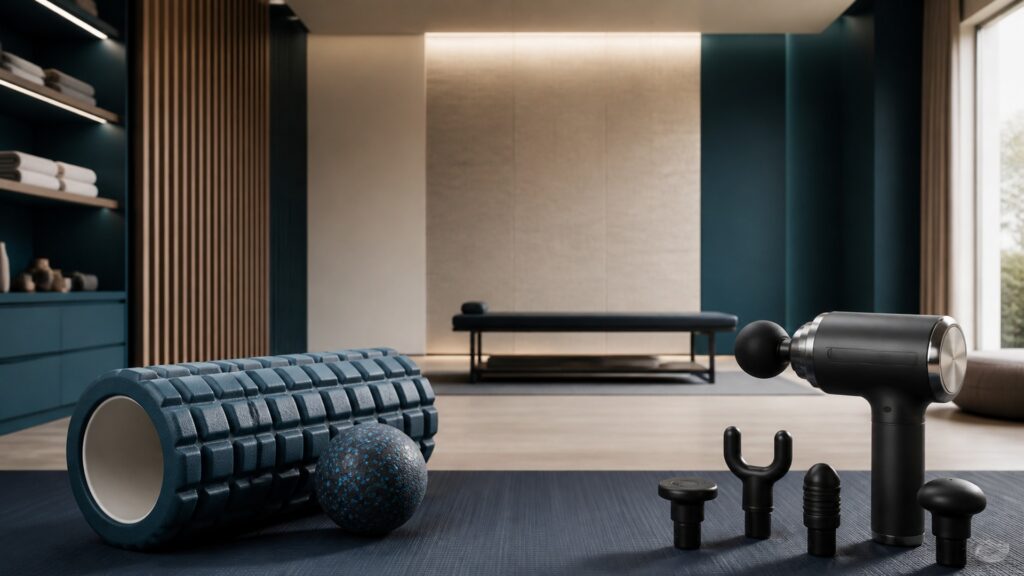
People-free editorial still life illustrating foam rollers different from massage guns
What You'll Learn

How Pressure Method Separates Foam Rollers from Massage Guns

Compare these recovery tools by the physical input they deliver, the control they require, and the limits of what they can responsibly claim.

  • Why foam rollers use broad bodyweight pressure
  • Why massage guns use motorized percussion over a smaller contact area
  • How contact area changes intensity and targeting
  • Why setup, balance, and reach differ between the tools
  • Where noise, battery, size, and cost affect real use
  • Why comfort or temporary relief should not be overstated as medical treatment

Tip: For foam rollers vs massage guns, the useful first question is what condition the tool or metric changes.

Definitions

Key Concepts That Define Foam Rollers vs Massage Guns

These terms explain the comparison through pressure delivery, contact area, powered percussion, and routine friction.

Foam roller

A foam roller is a cylinder or shaped roller that uses bodyweight to apply broad pressure.

  • The user changes intensity by shifting body position.
  • It often covers larger areas more gradually.
  • It needs floor space and enough control to move comfortably.

Massage gun

A massage gun is a powered handheld device that pulses a small attachment into the body.

  • Speed, amplitude, attachment shape, and hand pressure change the sensation.
  • It can reach areas without lying on the floor.
  • It adds battery, noise, and motor quality to the decision.

Bodyweight pressure

Bodyweight pressure comes from leaning part of the body onto the tool.

  • It can be adjusted by unloading with hands or another limb.
  • It may be awkward for areas that are hard to position.
  • It gives the user broad control without electronics.

Percussive vibration

Percussive vibration is the repeated mechanical pulsing used by massage guns.

  • It concentrates input through a smaller contact point.
  • It can feel more targeted than rolling.
  • It should not be described as guaranteed tissue repair.

Contact area

Contact area is the size of the surface pressing into the body.

  • Large surfaces spread pressure and can feel less sharp.
  • Small attachments concentrate sensation quickly.
  • Contact area helps explain why two tools can feel different at the same body part.

Pressure control

Pressure control is how easily the user can dose intensity, duration, and placement.

  • A roller uses body position for control.
  • A gun uses settings plus hand pressure.
  • Control matters more than chasing the strongest sensation.

Tip: A roller and a massage gun can both feel intense, but they create that intensity through different mechanics.

Pressure Method

Foam Rollers Spread Pressure; Massage Guns Pulse It

A foam roller places the user's bodyweight over a broad surface, so pressure changes with position, leverage, and how much weight the user unloads. A massage gun concentrates repeated pulses through a powered attachment.

  • Rollers use gravity and body position as the pressure source.
  • Massage guns use a motor, amplitude, speed setting, and head shape.
  • A roller usually covers larger tissue areas more gradually.
  • A massage gun can focus on a smaller spot with less body repositioning.
  • The sensation differs because sustained pressure and percussion are not the same input.

The tools differ first by how they deliver force.

Control

The User Controls Intensity in Different Ways

With a roller, intensity comes from body position. With a massage gun, intensity comes from pressure against the skin plus device settings. Both can be overdone if the user treats discomfort as proof of effectiveness.

  • A roller can be softened by shifting weight to the hands or other leg.
  • A massage gun can change speed or attachment but still feels concentrated.
  • Hard-to-reach areas may be easier with a handheld device.
  • Balance and floor space matter more with a roller.
  • Sensitive areas require conservative pressure with either tool.

Control is not only a setting; it is how easily the user can dose the input.

Routine Fit

Rollers Favor Broad Routines; Guns Favor Targeted Convenience

A roller often fits warmups or cooldowns where the user works through larger regions. A massage gun often fits short targeted sessions because it is handheld and quick to reposition.

  • Rollers can double as mobility or positioning tools.
  • Massage guns can be used without lying on the floor.
  • A roller has no charging requirement and little to break.
  • A massage gun adds battery, noise, attachments, and motor quality.
  • Portability depends on size, weight, and where the routine happens.

The best tool is the one whose setup matches the routine the user will actually repeat.

Limits

Neither Tool Solves Recovery by Itself

Both tools can affect comfort, warmup feel, or a sense of readiness, but neither replaces sleep, sensible workload, technique, nutrition, or qualified care for persistent pain.

  • Short-term sensation should not be confused with tissue repair claims.
  • Aggressive use can irritate sensitive areas.
  • Pain, numbness, swelling, or unusual symptoms are outside a product comparison.
  • Marketing may imply outcomes the tool cannot guarantee.
  • Some users simply dislike one sensation more than the other.

Foam rollers and massage guns belong in a recovery routine, not above the fundamentals.

Decision Boundary

Choose by Contact Area, Control, and Routine Friction

The practical decision starts with what the user wants the tool to do. Broad pressure, simple durability, and floor-based routines point toward a roller. Targeted handheld work, adjustable speed, and reach convenience point toward a massage gun.

  • Pick a roller for broad, simple pressure with no battery dependency.
  • Pick a massage gun when handheld targeting and adjustable percussion matter.
  • Avoid either tool if the sensation encourages pushing through pain.
  • Consider storage, noise, and travel before assuming convenience.
  • Use health professionals for injury or medical concerns.

The difference is not which tool is more advanced; it is which pressure method fits the job.

Quick Reality Check

Where Foam Rollers vs Massage Guns Helps and Where the Explanation Needs Limits

A balanced view of what foam rollers vs massage guns clarifies, plus what the concept should not be stretched to prove.

What Foam Rollers vs Massage Guns Clarifies

Foam Rollers vs Massage Guns helps readers connect the category name to actual mechanisms, setup choices, and use conditions.

It also makes comparison more honest by separating the main job from marketing claims or vague performance language.

Where the Shortcut Breaks Down

The explanation cannot prove that one product, score, or accessory is best for every body, routine, or training goal.

It also cannot replace qualified guidance for pain, symptoms, health concerns, or individualized programming.

Common Myths

Misconceptions About Foam Rollers vs Massage Guns

Common shortcuts and misunderstandings can make the topic seem simpler than it is.

Foam Rollers vs Massage Guns is only about preference

Preference matters, but the category also has real mechanics. Sensor placement, bracing, elastic tension, pressure method, or setup can change how the tool behaves.

More advanced always means more useful

A feature-rich device or accessory can still be a poor match if it does not solve the actual tracking, support, resistance, or recovery problem.

One metric or feature tells the whole story

A single score, material, attachment, or device format needs context from fit, setup, exercise type, routine, and the user's reason for using it.

If it feels helpful once, it is always the right choice

A useful first session does not prove the tool fits every workout. Conditions, fatigue, exercise selection, and setup quality can change the result.

Fitness gear can replace professional guidance

Consumer fitness tools can support training decisions, but health concerns, persistent pain, unusual symptoms, or complex programming questions need qualified human judgment.

Tip: Pressure method explains more than product hype: broad bodyweight pressure is not the same thing as powered percussion.

FAQ

Frequently Asked Questions About Foam Rollers vs Massage Guns

Concise answers to common questions readers may have after the main explanation.

What is the simplest way to understand foam rollers vs massage guns?

Start by identifying the main job: what signal, load, support, pressure, or decision the tool changes. Then judge the category by that job.

Is foam rollers vs massage guns always important?

No. Its importance depends on the activity, training goal, user tolerance, setup quality, and whether the issue it addresses is actually limiting the session.

Can the same tool work for beginners and advanced users?

Often yes, but the reason may differ. A beginner may need structure or simplicity, while an advanced user may need precision around a specific bottleneck.

What is the biggest mistake when comparing options?

The biggest mistake is treating the category label as the explanation. The better comparison follows mechanism, fit, adjustment, limits, and use context.

Can this prevent injury or guarantee better results?

No. Fitness products and metrics can support decisions, but they should not be presented as guarantees of safety, recovery, performance, or health outcomes.

Bottom Line

Foam rollers and massage guns differ because broad bodyweight pressure and powered percussion create different sensations, setup demands, and routines.

The better choice is not the one that sounds more advanced. It is the pressure method the user can control, repeat, and keep within realistic recovery limits.

Next Steps

Go Deeper or Compare Your Options

Use these related explainers to compare recovery tools, bracing accessories, and portable training gear without mixing their jobs.

Why Lifting Belts Matter

Use this next when the support question turns from general gym accessories to bracing under loaded lifts.

Quick Summary

Foam Rollers vs Massage Guns Explained

  • Foam rollers spread pressure through bodyweight and position.
  • Massage guns pulse a smaller powered attachment into the body.
  • Contact area changes targeting and intensity.
  • Rollers need floor setup; guns add battery, noise, and attachments.
  • Neither tool replaces sleep, load management, or medical care.