
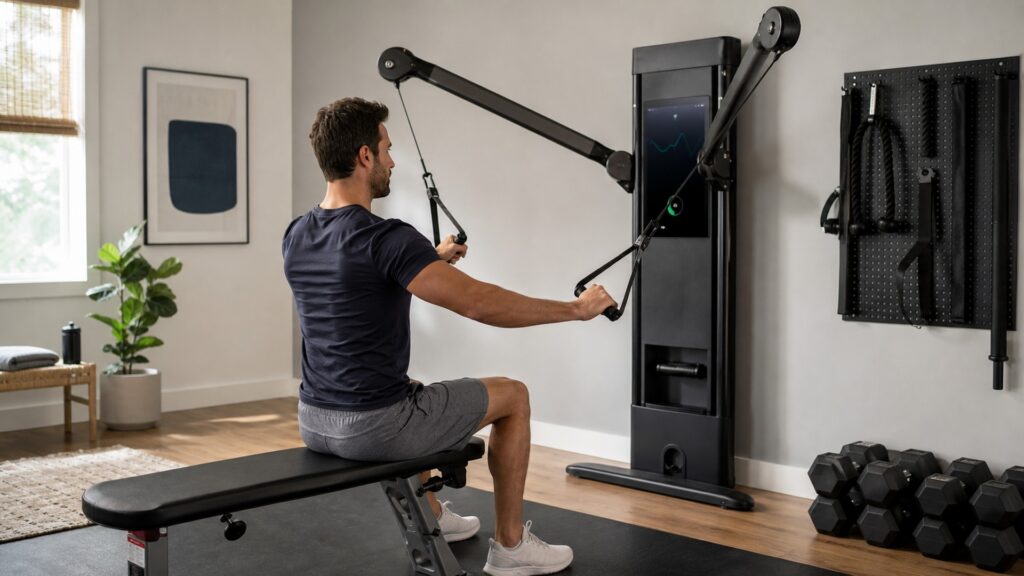
How Smart Home Gyms Work

Smart home gyms work by combining training hardware, guided software, tracking, and a dedicated workout space into one home-based system. Instead of asking the user to assemble equipment, videos, logs, and programs separately, the system tries to bring those jobs into one place.

The best versions make workouts easier to start, follow, measure, and repeat. The tradeoff is that a smart home gym usually costs more, takes up space, and ties more of the training experience to one platform.

By: Review Streets Research Lab
Updated: September 21, 2026
Explainer · 8-12 min read
smart home gyms explainer hero image for Review Streets
What You'll Learn

How Smart Home Gyms Turn Hardware Into Guided Training

A practical look at how smart home gyms combine equipment, screens, resistance, sensors, and software.

  • How hardware, display, and software work together
  • Why digital resistance or guided classes can change workout flow
  • Where tracking helps users repeat and compare sessions
  • How subscriptions and platform limits affect long-term value
  • When a smart home gym is more than ordinary equipment with a screen

Tip: Judge the system by what it makes easier during real workouts, not by how advanced it sounds.

Definitions

Key Concepts Behind Smart Home Gyms Work

These concepts clarify the practical signals readers should check before choosing a smart home gym.

Integrated Training Station

An integrated training station brings equipment, display, controls, and workout guidance into one home setup.

  • Example: a wall-mounted strength system with guided sessions
  • Check: see whether the parts work together smoothly
  • Limit: one station is less flexible than separate equipment

Digital Resistance

Digital resistance uses motors, magnets, or controlled mechanisms instead of traditional weight stacks or plates.

  • Example: changing load on a cable-style strength system from a screen
  • Check: test how quickly resistance changes during a workout
  • Limit: the feel may differ from free weights

Guided Workout Flow

Guided workout flow is the sequence that moves the user from selecting a session to completing sets, rests, and changes.

  • Example: a screen showing the next movement and rest timer
  • Check: count how many decisions are removed
  • Limit: guidance still has to fit the user

Performance Tracking

Performance tracking records workout history so progress can be reviewed over time.

  • Example: saving reps, resistance, duration, and completion
  • Check: confirm which metrics are captured automatically
  • Limit: data is useful only when it informs future training

Subscription Layer

A subscription layer supplies classes, programs, coaching features, or tracking tools after purchase.

  • Example: paying monthly for guided strength programs
  • Check: review what works if the subscription ends
  • Limit: ongoing cost can change the value

Space Fit

Space fit is how well the system works in the actual room where it will be used.

  • Example: having enough clearance for cable movements
  • Check: measure workout area, not just hardware footprint
  • Limit: compact hardware still needs safe movement space

Tip: The best smart home gym features are the ones that reduce friction without hiding important limits.

Setup

The System Starts With A Dedicated Training Space

A smart home gym works best when it has a reliable place to live. The hardware may be compact, but the user still needs room to move, see the screen, and use accessories safely.

  • Check clearance before buying.
  • Think about floor surface and storage.
  • Place the system where workouts can start without rearranging the room.

Convenience depends on the space being ready when the workout starts.

Hardware

The Equipment Creates The Training Surface

The hardware is what separates a smart home gym from a workout app. It may provide resistance, a display, sensors, cables, a bench, or attachments that shape what exercises are possible.

  • Look at the movements the hardware supports.
  • Check resistance range and adjustment speed.
  • Confirm accessories are included or affordable.

The hardware should match the workouts the user expects to repeat.

Software

The Software Guides The Session

The software turns the hardware into a training experience. It may present classes, programs, timers, rest periods, demonstrations, and performance history.

  • Programs should be easy to follow across weeks.
  • Demos should match the hardware setup.
  • The screen should reduce phone juggling during the session.

Good software makes the equipment easier to use consistently.

Tracking

Automatic Metrics Can Reduce Manual Logging

Smart home gyms can capture workout data with less typing than an app or notebook. That helps only when the metrics are clear and tied to future training decisions.

  • Check what is tracked automatically.
  • Look for progress views that are easy to understand.
  • Ignore numbers that do not affect training choices.

The goal is better follow-through, not more decorative data.

Value

The Whole System Has To Earn Its Cost

A smart home gym is usually a larger commitment than an app or a few pieces of equipment. The purchase makes sense when integration improves consistency enough to justify the price, space, and subscription.

  • Compare hardware and subscription together.
  • Check what happens if the service is cancelled.
  • Buy for repeated use, not novelty.

The system works when it makes training easier to start and easier to sustain.

Quick Reality Check

Where Smart Home Gyms Help And Where They Have Limits

Smart home gyms can make training more convenient, but they do not remove every decision.

Where They Help

They combine equipment, instruction, and tracking in one home setup.

They can reduce setup friction for people who train better with a dedicated station.

Where They Fall Short

They cost more and travel less easily than app-based coaching.

They cannot fully replace judgment, recovery, or qualified help when needed.

Common Myths

Misconceptions About How Smart Home Gyms Work

A connected home system is useful only when integration improves real training.

A smart home gym is just a screen

The valuable part is how hardware, software, resistance, and tracking work together.

Automatic tracking guarantees progress

Tracking helps only when the user trains consistently and uses the information.

Compact hardware means no space planning

The machine may be compact, but the workout still needs room.

The subscription is optional in practice

Some systems lose much of their value without the service layer.

Tip: Treat strong claims as reasons to inspect the system more closely, not as final proof.

FAQ

Frequently Asked Questions About Smart Home Gyms

Short answers for practical buying and training decisions.

Do smart home gyms replace a full gym?

They can replace many home strength or class needs, but they may not cover every lift, machine, or training style.

What should I check first?

Check supported exercises, resistance range, space requirements, and what works without the subscription.

Are smart home gyms good for beginners?

They can be, if the first programs are realistic and instructions are clear.

Do they require subscriptions?

Many do for full guided programs and tracking features, so the monthly cost should be part of the decision.

What is the practical takeaway?

A smart home gym works best when integrated hardware makes training easier to repeat at home.

Bottom Line

Smart home gyms work by turning hardware, software, tracking, and a dedicated space into a guided training system.

They are most useful when the integration makes workouts easier to start, follow, and repeat.

Next Steps

Go Deeper or Compare Your Options

Use these Review Streets paths to compare related categories and practical next decisions.

Quick Summary

Smart Home Gyms Explained

  • They combine hardware, software, tracking, and a home training space.
  • Digital resistance and guided sessions can reduce setup friction.
  • Subscriptions often define long-term value.
  • Space, cost, and supported movements matter before purchase.