
Air Resistance
Air resistance uses a fan to create drag as the handle is pulled.
- Example: pulling harder makes the fan create more resistance
- Check: test easy and hard strokes
- Limit: fan noise may be higher than other rower types
Air resistance rowers differ from compact ellipticals because they use a seated rowing stroke with fan resistance, while compact ellipticals use standing guided stride motion. Both can support cardio, but the body position and effort pattern are very different.
An air rower is usually better when the user wants rowing technique, full-body drive, responsive resistance, and clear performance feedback. A compact elliptical is better when standing low-impact stride work and smaller placement needs matter more.
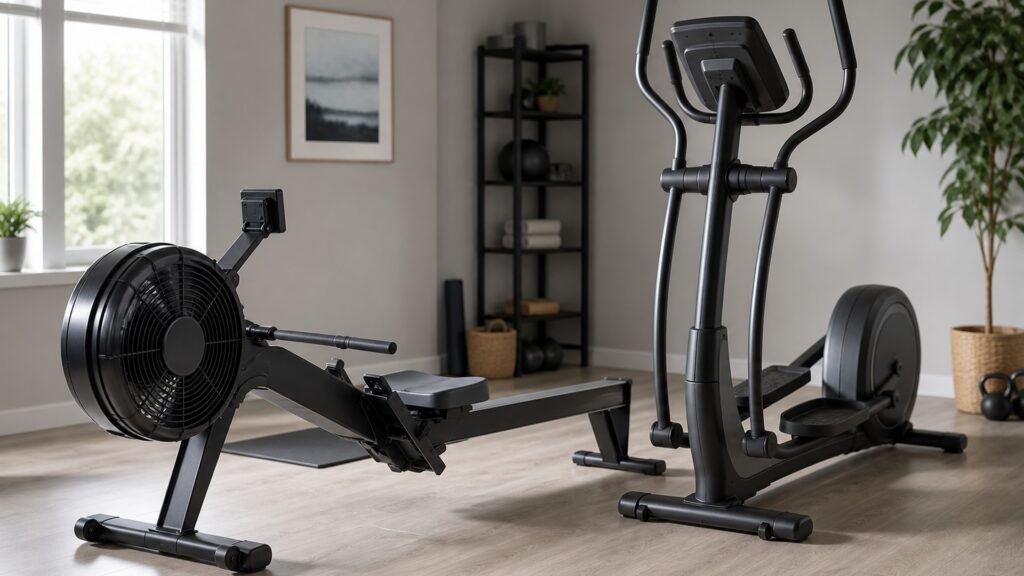
A practical comparison of rowing motion, standing stride, resistance, space, and noise.
Tip: Set the machine to the user first, then judge the workout at the pace and effort the user will repeat.
These concepts connect equipment design to comfort, effort, setup, and workout use.
Air resistance uses a fan to create drag as the handle is pulled.
Damper setting changes how much air enters the flywheel housing.
Stroke sequence is the order of leg drive, body swing, arm pull, and recovery.
Monitor feedback shows rowing data such as time, distance, pace, stroke rate, and watts.
Slide rail is the track that lets the seat move forward and backward during each stroke.
Workout role is the job the rower fills in a routine.
Tip: The right machine is the one whose motion, controls, and setup fit the routine.
An air rower asks the user to push with the legs, swing the body, and pull the handle. That is different from standing on elliptical pedals.
Rowing motion defines the air rower.
A compact elliptical keeps the user standing on guided pedals. The workout feels closer to stepping or gliding than rowing.
Standing stride changes the workout.
On an air rower, harder strokes create more fan drag. Compact ellipticals usually change effort through a resistance setting and stride rhythm.
The effort system feels different.
Air rowers are often long and can be louder because of fan noise. Compact ellipticals may save floor space, but they still need safe standing clearance.
Room fit should be measured directly.
The decision is rowing motion versus compact standing stride. The better machine is the one the user will repeat consistently.
Workout style should lead the choice.
The machines solve different cardio needs.
The user wants rowing motion, fan resistance, and performance feedback.
Intervals, steady rowing, or rowing technique are priorities.
The user wants standing low-impact stride motion.
A smaller standing cardio option fits the room better.
Both can support cardio, but they do not feel the same.
Rowing and standing stride use different body positions.
The full use zone still needs measurement.
They can support controlled steady cardio too.
Fan noise can be noticeable.
Tip: Test the actual fit, motion, and resistance before trusting category claims.
Short answers for practical equipment decisions.
An air rower is the better match.
A compact elliptical is the better match.
The air rower usually needs more stroke practice.
It depends on the exact models and safe use zone.
Choose air rower for rowing motion and compact elliptical for standing stride work.
Air resistance rowers differ from compact ellipticals by using seated fan-resisted rowing instead of standing guided stride motion.
Choose by preferred motion, technique needs, space, noise, and repeatable comfort.
Use these Review Streets paths to compare related categories and practical next decisions.
Review the broader rowing-machine category.
Compare another rowing resistance style.
Explore more cardio equipment options.
Choose a retailer
Prices checked regularly. We may earn a commission at no cost to you.